Fresh Spring Vegetable Pasta Recipe
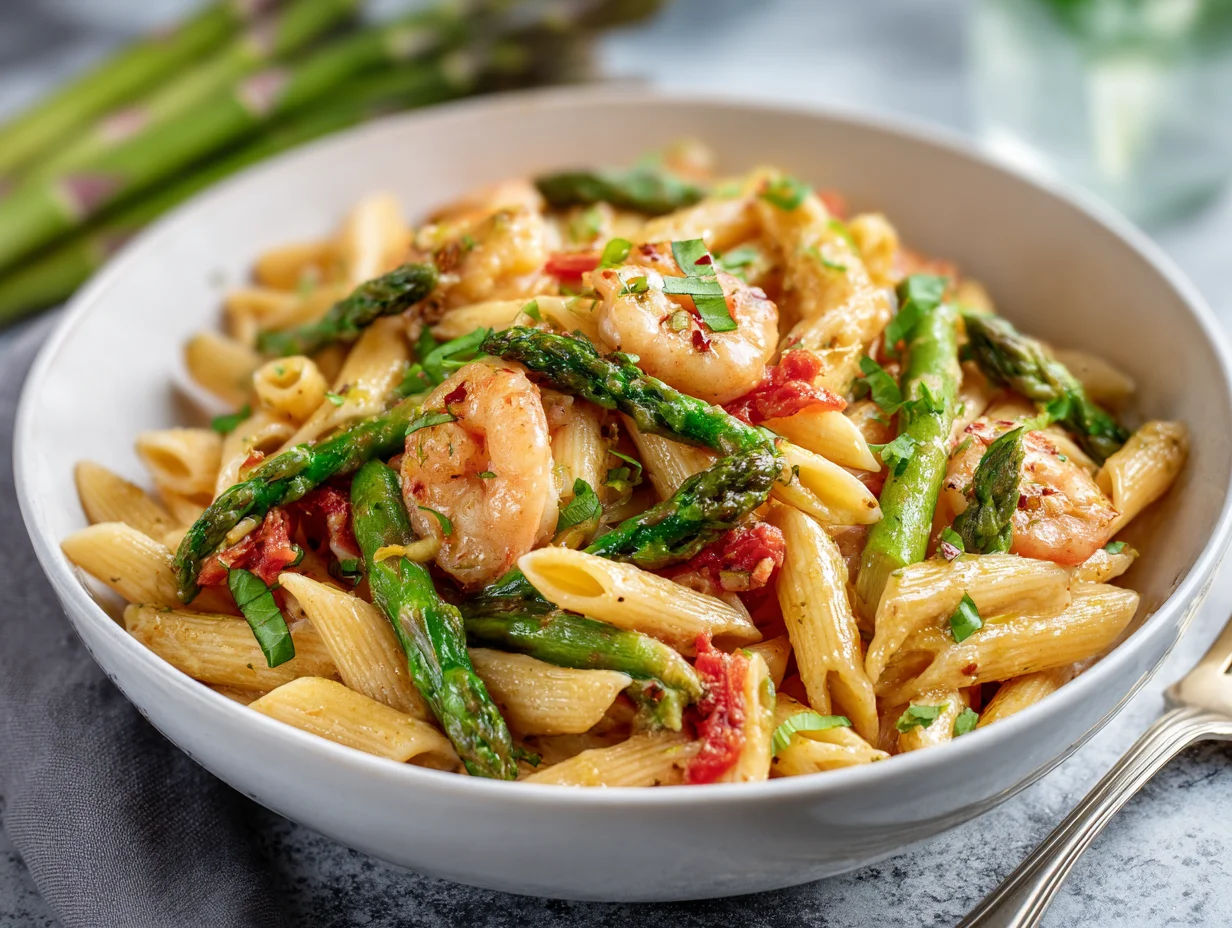
Spring is the perfect season to embrace lighter, vibrant dishes, and this Fresh Spring Vegetable Pasta captures everything we love about warm-weather cooking. Crisp seasonal vegetables, tender pasta, and a delicate, aromatic sauce combine to create a dish that feels both comforting and refreshing. This recipe focuses on balance, allowing the natural sweetness of spring produce to shine without overwhelming flavors. As an expert chef, I designed this pasta to be versatile, quick, and suitable for both weeknight dinners and elegant gatherings. The texture contrast between al dente pasta and gently sautéed vegetables delivers a restaurant-quality experience at home. Whether you’re cooking for family or entertaining guests, this dish offers a visually stunning presentation and a nutrient-packed meal that celebrates seasonal freshness. With simple techniques and premium ingredients, you’ll achieve a refined pasta that tastes light yet deeply satisfying.
Where Spring Vegetables Lose Their Vibrancy
One of the most common mistakes when preparing Spring Vegetable Pasta is overcooking the vegetables. Spring produce such as asparagus, peas, zucchini, and bell peppers are naturally delicate, and prolonged cooking dulls their bright colors, softens their texture, and reduces their nutritional value. Many cooks sauté vegetables too long while waiting for pasta to finish cooking, resulting in mushy ingredients that blend into each other instead of maintaining distinct flavors. Additionally, high heat without proper timing can cause vegetables to caramelize excessively, overpowering the fresh taste that defines this recipe. Another frequent issue is overcrowding the pan, which traps steam and prevents vegetables from lightly sautéing. This leads to uneven cooking and a soggy consistency. Losing that crisp-tender bite removes the signature freshness expected from a spring dish, ultimately turning a vibrant seasonal pasta into a heavy, dull meal.
Precision Timing for Perfect Texture
To solve this issue, focus on staggered cooking and proper heat management. Start by cooking firmer vegetables such as carrots or asparagus first, then add softer ingredients like zucchini and peas toward the end. This layering technique ensures each vegetable reaches its ideal texture. Use a wide sauté pan so vegetables have room to cook evenly without steaming. Maintain medium-high heat and stir gently to preserve structure. Preparing vegetables before boiling pasta also helps streamline timing. Once pasta is nearly ready, sauté vegetables quickly and finish everything together. Adding a small splash of reserved pasta water helps create a light sauce while keeping vegetables vibrant. Avoid covering the pan, as trapped moisture softens textures. With precise timing, vegetables retain their natural sweetness, bright color, and gentle crunch, elevating the overall dish and delivering the fresh, restaurant-quality pasta experience expected from seasonal cooking.
Ingredients List
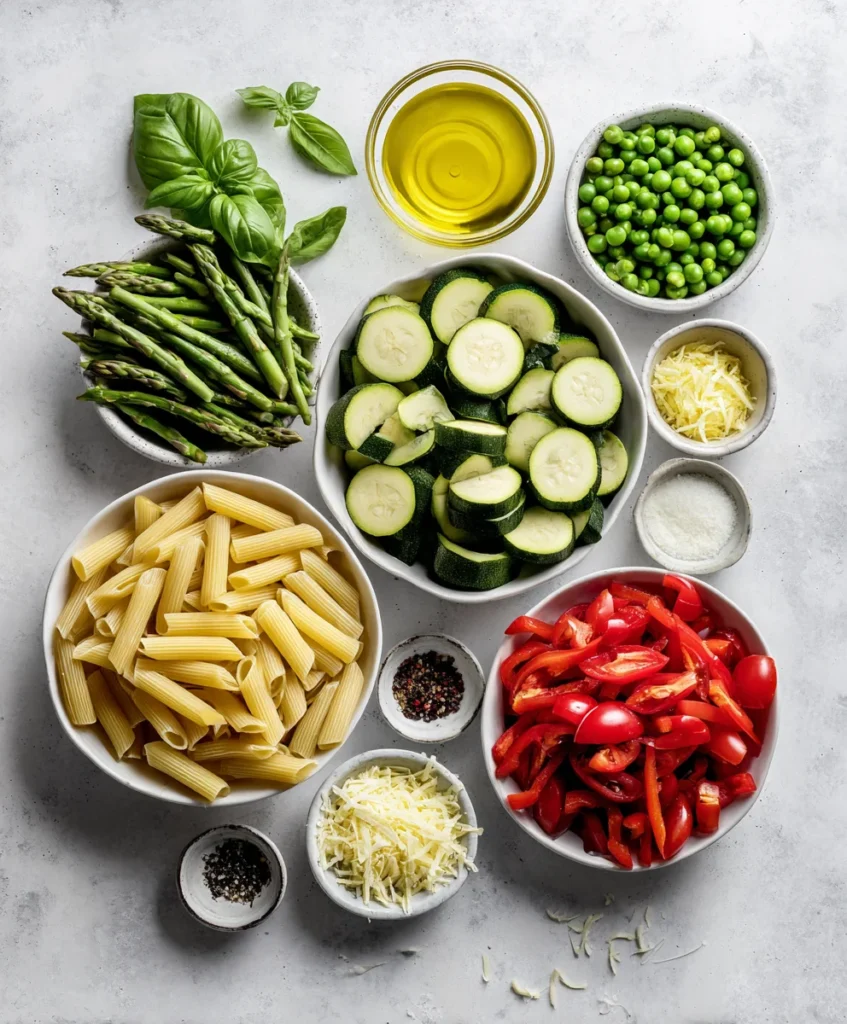
Base Ingredients:
- 12 oz pasta (penne, farfalle, or linguine)
- 1 cup asparagus, cut into bite-sized pieces
- 1 cup zucchini, sliced
- ½ cup cherry tomatoes, halved
- ½ cup green peas (fresh or frozen)
- ¼ cup red bell pepper, thinly sliced
- 3 cloves garlic, minced
- 3 tablespoons olive oil
- ¼ cup grated Parmesan cheese
- Salt to taste
- Black pepper to taste
- Zest of 1 lemon
- 2 tablespoons fresh basil, chopped
Optional Add-ins:
- Grilled chicken slices
- Sautéed shrimp
- Toasted pine nuts
- Crumbled feta cheese
- Fresh parsley
- Chili flakes
- Baby spinach leaves
Step-by-Step Instructions
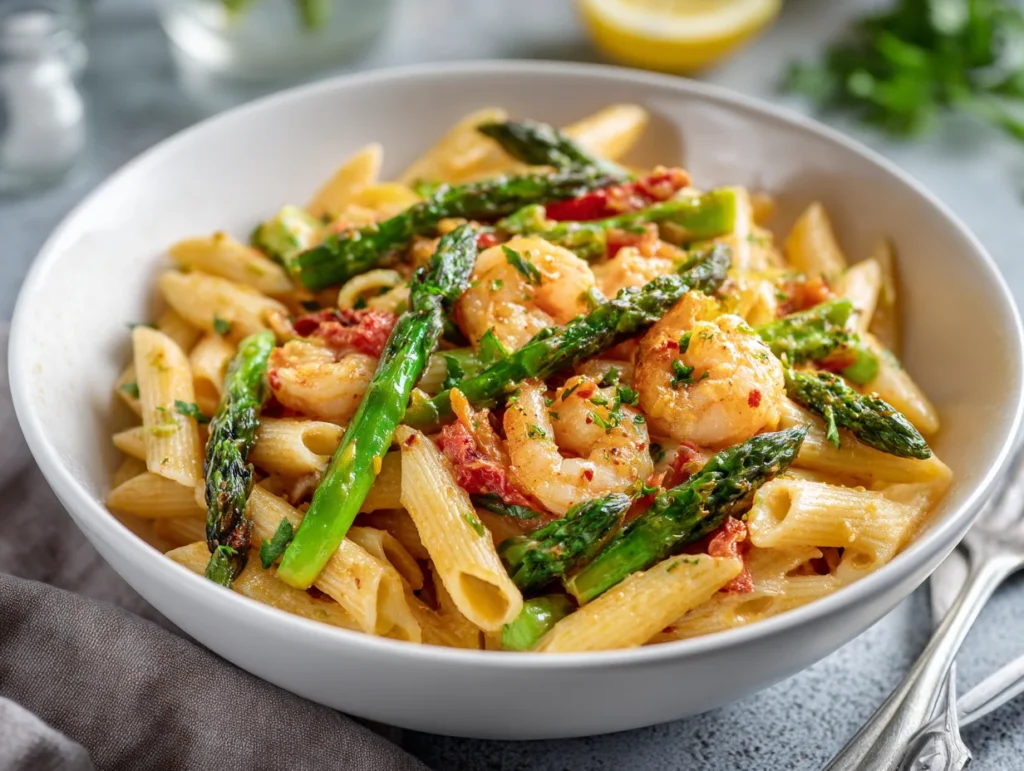
Step 1: Cook the Pasta
Bring a large pot of salted water to a rolling boil. Add the pasta and cook according to package instructions until al dente. Stir occasionally to prevent sticking. Before draining, reserve about one cup of pasta cooking water. This starchy liquid helps create a silky sauce later. Drain the pasta but avoid rinsing, as rinsing removes the starch needed for flavor absorption. Set the cooked pasta aside and lightly toss with a teaspoon of olive oil to prevent clumping. Keeping the pasta slightly firm ensures it holds up when combined with vegetables and sauce.
Step 2: Prepare the Vegetables
While the pasta cooks, wash and slice all vegetables uniformly for even cooking. Trim asparagus into small diagonal pieces, slice zucchini into thin rounds, halve cherry tomatoes, and thinly cut bell peppers. Uniform sizes help maintain consistent texture. Keep softer vegetables separate from firmer ones so they can be added in stages. Having everything prepared in advance allows for quick sautéing, which is essential for preserving the crisp, fresh quality of spring produce. This preparation step also ensures efficient cooking without overworking the vegetables.
Step 3: Sauté Aromatics
Heat olive oil in a large skillet over medium heat. Add minced garlic and cook gently for about thirty seconds until fragrant, avoiding browning. Garlic should release aroma without becoming bitter. Stir continuously to prevent burning. This aromatic base infuses the oil, which coats the vegetables and pasta. Properly cooked garlic enhances the overall flavor without overpowering the freshness. Once fragrant, increase heat slightly and prepare to add the firmer vegetables first. This stage builds depth while maintaining the light character of the dish.
Step 4: Cook Vegetables in Stages
Add asparagus and bell peppers first, sautéing for two minutes. Stir occasionally to keep them crisp. Next, add zucchini and cook for another minute. Finally, add peas and cherry tomatoes, cooking briefly until just tender. Avoid overcooking to maintain color and texture. Season lightly with salt and pepper. The goal is crisp-tender vegetables with vibrant hues. Proper timing preserves the freshness of each ingredient while allowing flavors to meld naturally. Remove from heat once vegetables are cooked but still bright.
Step 5: Combine and Finish
Add cooked pasta to the skillet with vegetables. Toss gently to combine. Pour in a small amount of reserved pasta water to create a light sauce that coats everything evenly. Add lemon zest, Parmesan cheese, and fresh basil. Toss until the cheese melts and the sauce becomes silky. Taste and adjust seasoning if necessary. Finish with an extra drizzle of olive oil for richness. Serve immediately for best texture and flavor, ensuring the dish remains fresh, light, and vibrant.
Cook Time
Total: 25 minutes
Prep: 10 minutes
Bake: 15 minutes
Servings
This recipe comfortably serves four people as a main dish or up to six as a side, depending on portion size. The balance of pasta and vegetables ensures each serving feels satisfying without being heavy. For larger gatherings, the recipe doubles easily without compromising texture or flavor. If serving as part of a multi-course meal, smaller portions work well alongside salads or grilled proteins. This pasta is also ideal for meal prep, as leftovers maintain flavor when stored properly. Families appreciate the versatility, while hosts value the elegant presentation. Adjust serving sizes based on dietary needs or accompanying dishes. Because the recipe emphasizes vegetables, it offers a lighter option compared to traditional cream-based pasta, making it suitable for both lunch and dinner. Its flexibility makes it perfect for casual meals, entertaining guests, or preparing healthy weekly dinners.
Makes approximately 4 main servings
Nutritional Information (approx. per serving)
- Calories: 320 kcal
- Protein: 11g
- Carbohydrates: 45g
- Fiber: 5g
- Fat: 11g
- Saturated Fat: 2g
- Sodium: 280mg
- Vitamin C: 35% daily value
- Vitamin A: 25% daily value
This Spring Vegetable Pasta provides balanced nutrition while remaining light and energizing. The vegetables supply essential vitamins, antioxidants, and fiber that support digestion and immune health. Olive oil contributes heart-healthy fats, while pasta offers sustained energy. The addition of fresh herbs enhances flavor without excessive sodium. This combination makes the dish suitable for those seeking nutritious yet satisfying meals. The moderate calorie count allows flexibility within daily dietary goals. Including colorful vegetables increases phytonutrient intake, which promotes overall wellness. The recipe also adapts easily to whole wheat pasta for added fiber. Overall, it’s a wholesome option that supports healthy eating without sacrificing flavor or enjoyment.
Storage Instructions
Allow the pasta to cool completely before storing to prevent condensation and sogginess. Transfer leftovers into an airtight container and refrigerate for up to three days. When reheating, use a skillet over medium heat instead of a microwave for best texture. Add a splash of water or broth to restore moisture and gently toss until warmed through. Avoid overheating, as this can soften vegetables too much. If using a microwave, cover loosely and heat in short intervals, stirring between each. Do not freeze this dish, as the vegetables may become mushy after thawing. For meal prep, store pasta and vegetables separately if possible, then combine when reheating. This method helps maintain freshness and texture. Proper storage ensures the pasta retains flavor, color, and quality, making leftovers nearly as enjoyable as the freshly prepared dish.
Suggestions
For a richer version, add grilled chicken, shrimp, or salmon for additional protein and flavor depth. Whole wheat or chickpea pasta works well for added fiber and nutrition. Toasted pine nuts or almonds provide a pleasant crunch and elevate presentation. If you enjoy spice, sprinkle chili flakes before serving. For a creamier variation, stir in a spoonful of ricotta or mascarpone. Serving with garlic bread or a light green salad creates a complete meal. Fresh herbs such as parsley, dill, or mint add aromatic complexity. You can also swap vegetables based on availability, keeping the seasonal theme intact. Using high-quality olive oil and freshly grated Parmesan significantly enhances flavor. These thoughtful additions allow customization while maintaining the dish’s fresh spring identity.
Seasonal Relevance
Spring is the ideal time for this pasta because markets are filled with tender, flavorful vegetables like asparagus, peas, and zucchini. These ingredients are at peak freshness, offering better taste and nutritional value. Lighter meals become more appealing as temperatures rise, and this pasta provides comfort without heaviness. Seasonal cooking also supports local produce availability and sustainability. The bright colors reflect the vibrancy of spring, making the dish visually appealing for gatherings and outdoor dining. Lemon zest and fresh herbs complement the natural sweetness of spring vegetables, enhancing their flavor. This recipe transitions easily into early summer with minor ingredient swaps. Embracing seasonal produce ensures optimal taste and encourages variety in cooking, making this pasta a perfect celebration of springtime ingredients.
Conclusion
Fresh Spring Vegetable Pasta is a beautifully balanced dish that highlights seasonal ingredients while remaining simple to prepare. The combination of vibrant vegetables, aromatic herbs, and perfectly cooked pasta creates a meal that feels both elegant and comforting. By focusing on timing and texture, you achieve restaurant-quality results at home. This recipe adapts easily to different dietary preferences, making it suitable for families and entertaining alike. Its light yet satisfying nature makes it ideal for warmer weather, while the colorful presentation adds visual appeal. Proper technique ensures vegetables retain their brightness and nutrients. Whether served as a weeknight dinner or special occasion dish, this pasta delivers freshness, flavor, and versatility. With minimal effort and thoughtful preparation, you can create a dish that celebrates the best of spring cooking.
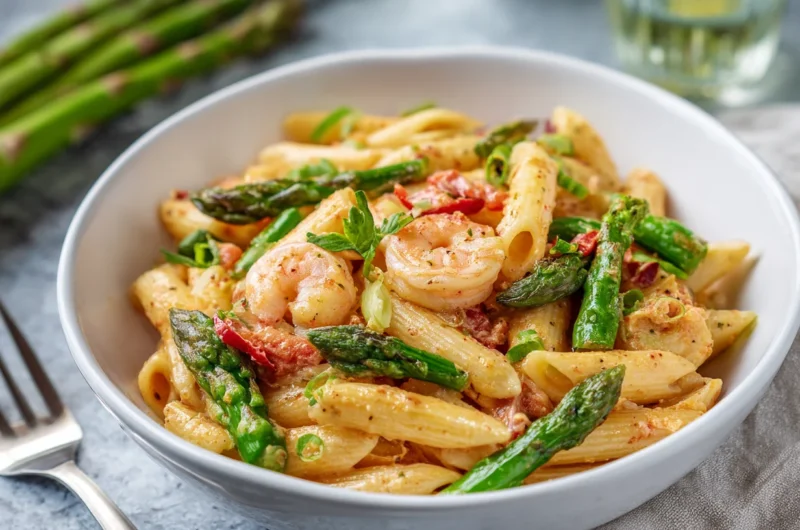
Fresh Spring Vegetable Pasta Recipe
4
servings10
minutes15
minutes320
kcalA light and vibrant spring vegetable pasta featuring crisp asparagus, zucchini, peas, and cherry tomatoes tossed with al dente pasta, garlic, lemon zest, and fresh herbs. This quick seasonal dish delivers fresh flavor, balanced nutrition, and elegant presentation perfect for weeknight meals.
Ingredients
12 oz pasta (penne, farfalle, or linguine)
1 cup asparagus, chopped
1 cup zucchini, sliced
½ cup cherry tomatoes, halved
½ cup green peas
¼ cup red bell pepper, sliced
3 cloves garlic, minced
3 tablespoons olive oil
¼ cup grated Parmesan cheese
Salt and black pepper to taste
Zest of 1 lemon
2 tablespoons fresh basil, chopped
Directions
- Cook pasta in salted boiling water until al dente. Reserve pasta water and drain.
- Heat olive oil in a skillet and sauté garlic until fragrant.
- Add asparagus and bell peppers, cook briefly.
- Stir in zucchini, peas, and cherry tomatoes; cook until crisp-tender.
- Add cooked pasta and splash of reserved pasta water.
- Toss with lemon zest, Parmesan, and fresh basil.
- Season to taste and serve immediately.
Recipe Video
Notes
- Do not overcook vegetables to maintain bright color and texture.
- Use reserved pasta water to create a light silky sauce.
- Add grilled chicken or shrimp for extra protein.
- Whole wheat pasta can be used for added fiber.
FAQs
Can I use frozen vegetables instead of fresh?
Yes, frozen vegetables can work if fresh ones aren’t available. Thaw them first and pat dry to remove excess moisture. Add them later in the cooking process to avoid overcooking. This helps maintain texture and prevents soggy pasta while still delivering good flavor.
Which pasta shape works best for this recipe?
Short pasta shapes like penne, fusilli, or farfalle hold vegetables well and capture the light sauce effectively. However, long pasta such as linguine also works if preferred. Choose a shape with texture to help the sauce cling and enhance each bite.
How can I make this recipe vegan?
Simply omit Parmesan cheese and replace it with nutritional yeast or a vegan cheese alternative. Ensure pasta is egg-free. Add extra olive oil or a splash of plant-based cream for richness. This keeps the dish flavorful while maintaining its fresh spring character.