One Pan Balsamic Chicken and Veggies
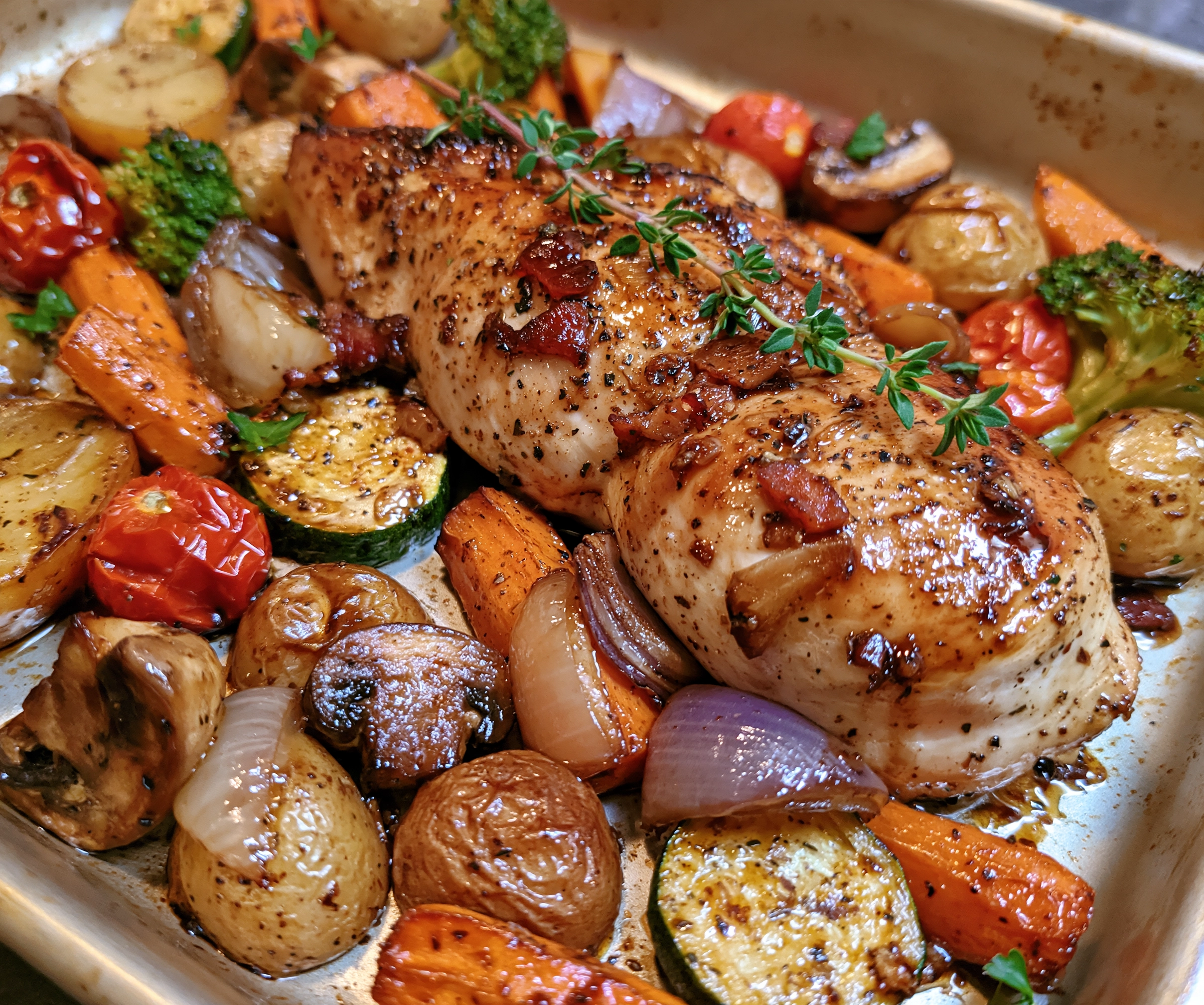
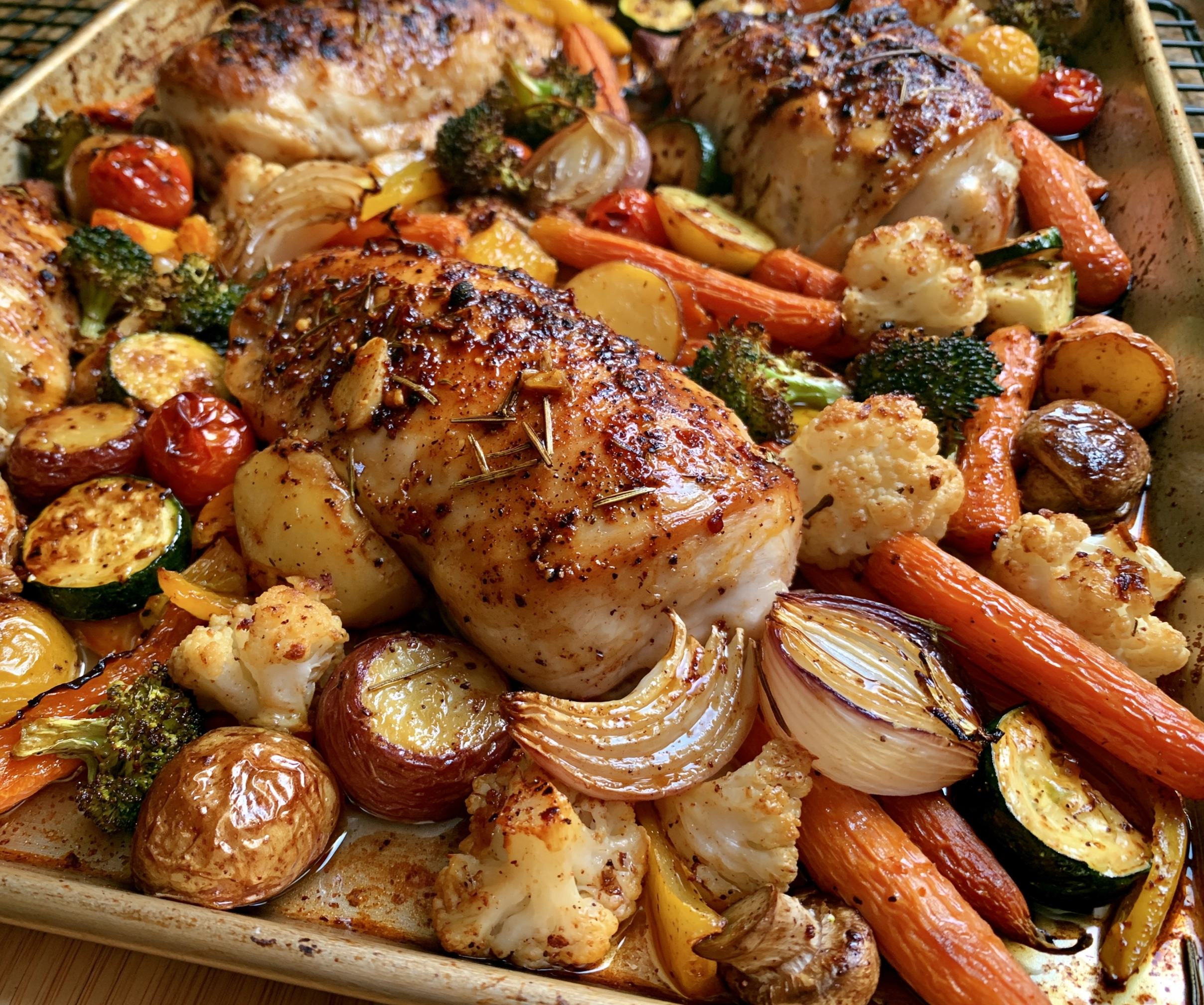
This one pan balsamic chicken and veggies is the sheet pan dinner I reach for when the refrigerator is full and my patience for dishes is not. Whole chicken breasts marinate in a honey-balsamic glaze, then roast with baby potatoes, carrots, zucchini, broccoli, cherry tomatoes, red onion, and mushrooms, staged so everything finishes together, glossy and caramelized.
Five o’clock on a weeknight turns dinner into a negotiation: the chicken is thawed, the crisper drawer is full of vegetables, and nobody wants to wash three pans afterward. This dinner ends the negotiation: one sheet pan, one bowl of glaze, and the oven does the rest.
What makes this version different is the staging. Dense vegetables get a head start, quick ones join later, and the honey-balsamic glaze works three jobs—as marinade, as a brush-on during roasting, and as the drizzle at the end. You’ll know it’s ready when the edges turn dark and caramelized and the chicken reads 165°F.
Pat the cut vegetables dry before they meet the pan. Potatoes and carrots carry surface water after washing, and at 400°F that water turns straight to steam, which lifts the glaze off instead of letting it cling and caramelize. A quick press with a clean kitchen towel takes 30 seconds and is the difference between glossy, bronzed edges and pale, steamed vegetables. The same rule holds for the mushrooms — a damp mushroom never browns.
Why Balsamic Glaze Makes Everything on the Pan Taste Better
Balsamic vinegar on its own is sharp, almost harsh, but heat changes it completely. In a 400°F oven, the bite cooks off and the honey’s sugars caramelize into a glossy coating that clings instead of pooling. The ratio matters: 1/3 cup of vinegar to 2 tablespoons of honey caramelizes beautifully without tasting like dessert.
If a glossy sweet-savory glaze is your love language too, my sticky honey garlic chicken breasts in one pan use the same trick in a skillet. One rule protects this recipe: pour off a portion of glaze before it touches raw chicken. That reserved portion is your brush-on and finishing drizzle.
Ingredients for This One Pan Balsamic Chicken and Veggies
Everything here is a pantry staple or a crisper-drawer regular, and the glaze stirs together in one small bowl.
For the Honey-Balsamic Glaze:
- 1/3 cup balsamic vinegar
- 2 Tbsp honey
- 3 Tbsp olive oil
- 3 garlic cloves, minced
- 1 tsp Italian seasoning
- 1/2 tsp salt
- 1/4 tsp black pepper
- 1 Tbsp Dijon mustard (optional)
For the Chicken:
- 1 1/2 lb boneless, skinless chicken breasts (4 whole breasts)
For the Vegetables:
- 1 lb baby potatoes, halved
- 3 to 4 carrots, cut into sticks
- 1 medium zucchini, cut into 1/2-inch rounds
- 2 cups broccoli florets
- 1 pint cherry tomatoes
- 1 red onion, cut into wedges
- 8 oz mushrooms, halved
- 1 Tbsp olive oil
- Salt and black pepper, for the vegetables
- Fresh thyme sprigs, for finishing
Cut size is the quiet trick here: potato halves and carrot sticks stay small enough to finish with the chicken, while mushroom halves hold up better than slices. Plan on 15 minutes of prep, 30 minutes of marinating, and 40 minutes in the oven.
How to Make One Pan Balsamic Chicken and Veggies Step by Step
The method is whisk, marinate, and stage: the glaze comes together in minutes, the chicken soaks for 30, and the vegetables roast in order of density so the potatoes, chicken, and tomatoes all finish at the same glossy moment.
1. Whisk the Glaze and Marinate the Chicken
Whisk the vinegar, honey, olive oil, garlic, Italian seasoning, salt, pepper, and Dijon, if using, until the honey dissolves. Pour half over the chicken, turn to coat, and refrigerate 30 minutes, or up to 6 hours. Cover the rest and set it aside untouched.
2. Prep the Vegetables by Density
Toss the potato halves, carrot sticks, and onion wedges with half the olive oil, salt, and pepper; toss the zucchini, broccoli florets, and mushrooms with the rest. Keep the tomatoes whole and separate—they join last, so they blister instead of bursting.
3. Give the Dense Vegetables a Head Start
Heat the oven to 400°F and line a rimmed sheet pan with foil or parchment, because balsamic sugars weld onto a bare pan. Spread the potatoes, carrots, and onion in a single layer with space between pieces. Roast 15 minutes, until the edges begin to color.
4. Add the Chicken and Quick Vegetables
Lift the chicken from the marinade and discard the marinade. Set the breasts in the center of the pan, tuck the zucchini, broccoli, and mushrooms around them, and brush everything with reserved glaze. Roast 15 minutes.
5. Add the Tomatoes and Brush Again
Scatter the tomatoes over the pan and brush on more reserved glaze. Roast 10 minutes more, until the tomatoes blister, the glaze darkens at the edges, and the thickest breast reads 165°F. Extra-thick breasts may need 5 more minutes.
6. Rest, Drizzle, and Finish with Thyme
Rest the pan 5 minutes so the juices settle; for deeper edges, broil 2 minutes first. Drizzle the last of the glaze over everything, spoon the pan juices over the vegetables, and finish with fresh thyme sprigs. Serve straight from the pan.
How Do You Get the Chicken and Vegetables to Finish at the Same Time?
They finish together when you stage the pan by density instead of adding everything at once: potatoes and carrots get a 15-minute head start, whole breasts need 25 to 30 minutes, and delicate vegetables join for the final stretch.
Density decides the schedule: potatoes and carrots need 35 to 40 minutes, while the quick vegetables need only 10 to 20 before they slump. The head start lines those clocks up; pound thick breast ends flat so every piece cooks evenly.
Spacing matters as much: a crowded pan steams instead of roasting, and the glaze slides off. Leave air around every piece, splitting everything between two pans if needed. Bronzed edges are the reward.
Serving Ideas, Nutrition, and Easy Swaps
Serve this dinner straight from the pan, and let everyone take a breast plus a scoop of every vegetable, pan juices spooned over the top. For a heartier plate, slide everything over rice or quinoa from our pasta and rice recipes so the grains catch the extra glaze. Building a bigger spread? Add a crisp salad or another roasted vegetable from our salads and sides collection.
Nutrition values are approximate and vary with breast size and how much glaze lands on each plate.
- Calories: approximately 420
- Protein: approximately 38 g
- Carbohydrates: approximately 28 g
- Fat: approximately 16 g
- Chicken Thighs: boneless thighs roast at 425°F for 40 to 45 minutes; give the dense vegetables the same head start.
- Different Vegetables: green beans, bell pepper strips, and sweet potato cubes all work—cut dense ones small, add tender ones late.
- Bottled Glaze: store-bought glaze skips the whisking; brush it on during roasting instead of marinating.
- No Honey: maple syrup in the same 2 Tbsp measure caramelizes the same way.
How Do You Store and Reheat Leftovers?
Leftovers keep for up to 3 days in an airtight container, and the chicken improves overnight in the glaze. Reheat everything together in a 375°F oven for 10 to 12 minutes to bring back the roasted edges.
A microwave reheats a lunch portion in a pinch, though the vegetables soften. For healthy meal prep, marinate the chicken and chop the vegetables the night before—dinner the next day is the staged roast away.

Why This One Pan Balsamic Chicken and Veggies Earns a Spot in Your Rotation
One lined pan, one bowl of glaze, and a staging trick that respects how vegetables cook—that is the secret here. The glaze marinates, brushes, and finishes, the potatoes turn tender, and the chicken stays glossy to the last bite. If sheet pan dinners are your weeknight love language, browse our chicken recipes for the next one worth repeating.
This dinner proves a weeknight sheet pan supper doesn’t require a sink full of dishes or a flavor compromise. Give this recipe a try this week, save it for your busiest nights, and tell me which vegetables you used—I’d love to hear your variations.
Why This Staged Sheet Pan Method Works
The staging is what protects every step that follows. The dense vegetables get their 15-minute head start while the pan is clean and hot, so they roast instead of steaming under the chicken’s juices. The chicken joins only when the pan is already hot, which means its surface sears instead of sitting in pooled liquid, and the glaze is brushed on in thin layers so the honey’s sugars caramelize in stages rather than burning in one long exposure. Each step sets up the next one: dry vegetables take the glaze, the glaze builds color, and the tomatoes arrive last so they blister without collapsing.
The honest limit is the glaze’s own window. Honey sugars go from deeply caramelized to bitter in just a few minutes past the finish, so this dinner does not wait well in a cooling oven — pull the pan at 165°F and serve within 15 to 20 minutes. A crowded pan is the other limit: too many pieces and the steam has nowhere to go, so split everything across two pans rather than squeezing it onto one. The method works because the pan stays hot, dry, and uncrowded; lose any one of those and the glaze slides instead of sticking.
Frequently Asked Questions
Can I use chicken thighs instead of chicken breasts?
Absolutely! Boneless, skinless thighs are juicier and more forgiving than breasts. Roast them at 425°F for 40 to 45 minutes, giving the dense vegetables the head start, and check for 165°F at the thickest point.
What is the difference between balsamic vinegar and balsamic glaze, and can I use plain balsamic vinegar?
Balsamic glaze is balsamic vinegar simmered with a sweetener until syrupy enough to coat a spoon. Plain vinegar works here because the honey sweetens the marinade itself. For a drizzle-only version, simmer 1 cup of vinegar with 2 Tbsp of honey for 7 to 10 minutes, until reduced by half.
Can I use frozen vegetables instead of fresh?
Yes! Thaw frozen vegetables first and pat them completely dry before they go on the pan, because surface water turns to steam and the glaze slides off instead of caramelizing. Add them at the quick-vegetable stage so they roast rather than simmer.
How long should I marinate the chicken, and can I skip marinating?
Thirty minutes is the sweet spot, and up to 6 hours in the refrigerator is fine. On a rushed night, even a 10-minute soak helps, so do not skip it entirely. Always discard the used marinade—the reserved portion is your sauce.
Why did my vegetables come out soggy instead of roasted?
Soggy vegetables almost always mean a crowded pan—trapped steam has nowhere to go. Spread everything in a single layer with space around each piece, splitting between two pans if needed. Dry vegetables and a full 400°F oven make a difference too.
One Pan Balsamic Chicken and Veggies
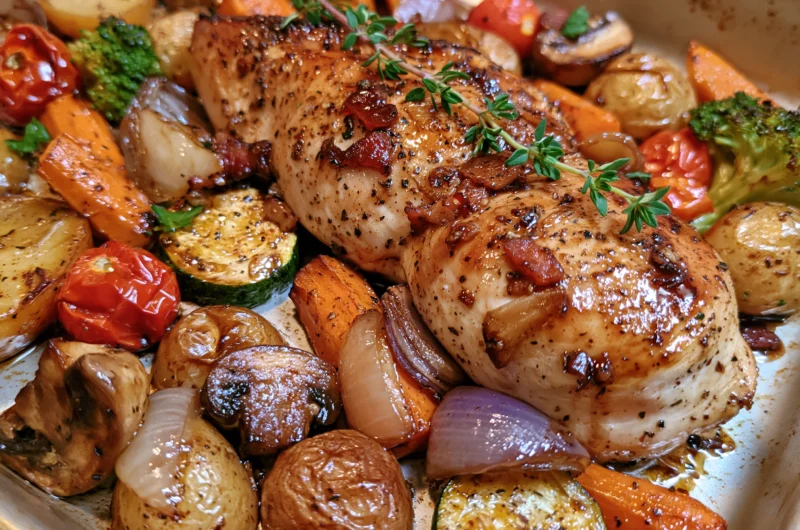
Whole chicken breasts and seven vegetables roasted on one sheet pan in a honey-balsamic glaze—marinated, brushed while roasting, and drizzled at the end for a glossy, caramelized finish.
4
servings15
minutes40
minutes420
kcal1
hour25
minutesIngredients
- For the Honey-Balsamic Glaze:
1/3 cup balsamic vinegar
2 Tbsp honey
3 Tbsp olive oil
3 garlic cloves, minced
1 tsp Italian seasoning
1/2 tsp salt
1/4 tsp black pepper
1 Tbsp Dijon mustard (optional)
- For the Chicken:
1 1/2 lb boneless, skinless chicken breasts (4 whole breasts)
- For the Vegetables:
1 lb baby potatoes, halved
3 to 4 carrots, cut into sticks
1 medium zucchini, cut into 1/2-inch rounds
2 cups broccoli florets
1 pint cherry tomatoes
1 red onion, cut into wedges
8 oz mushrooms, halved
1 Tbsp olive oil
Salt and black pepper, for the vegetables
Fresh thyme sprigs, for finishing
Directions
- Whisk the Glaze and Marinate the Chicken — Whisk the vinegar, honey, olive oil, garlic, Italian seasoning, salt, pepper, and Dijon, if using, until the honey dissolves. Pour half over the chicken, turn to coat, and refrigerate 30 minutes, or up to 6 hours. Cover the rest and set it aside untouched.
- Prep the Vegetables by Density — Toss the potato halves, carrot sticks, and onion wedges with half the olive oil, salt, and pepper; toss the zucchini, broccoli florets, and mushrooms with the rest. Keep the tomatoes whole and separate—they join last, so they blister instead of bursting.
- Give the Dense Vegetables a Head Start — Heat the oven to 400°F and line a rimmed sheet pan with foil or parchment, because balsamic sugars weld onto a bare pan. Spread the potatoes, carrots, and onion in a single layer with space between pieces. Roast 15 minutes, until the edges begin to color.
- Add the Chicken and Quick Vegetables — Lift the chicken from the marinade and discard the marinade. Set the breasts in the center of the pan, tuck the zucchini, broccoli, and mushrooms around them, and brush everything with reserved glaze. Roast 15 minutes.
- Add the Tomatoes and Brush Again — Scatter the tomatoes over the pan and brush on more reserved glaze. Roast 10 minutes more, until the tomatoes blister, the glaze darkens at the edges, and the thickest breast reads 165°F. Extra-thick breasts may need 5 more minutes.
- Rest, Drizzle, and Finish with Thyme — Rest the pan 5 minutes so the juices settle; for deeper edges, broil 2 minutes first. Drizzle the last of the glaze over everything, spoon the pan juices over the vegetables, and finish with fresh thyme sprigs. Serve straight from the pan.
Notes
- Reserved-glaze rule: pour off a clean portion of glaze before it touches raw chicken; marinade that touched raw chicken is always discarded. Storage: leftovers keep up to 3 days in an airtight container; reheat in a 375°F oven for 10 to 12 minutes. Chicken thigh swap: boneless thighs roast at 425°F for 40 to 45 minutes. Bottled glaze shortcut: store-bought glaze skips the whisking; brush it on during roasting instead of marinating.

One Comment