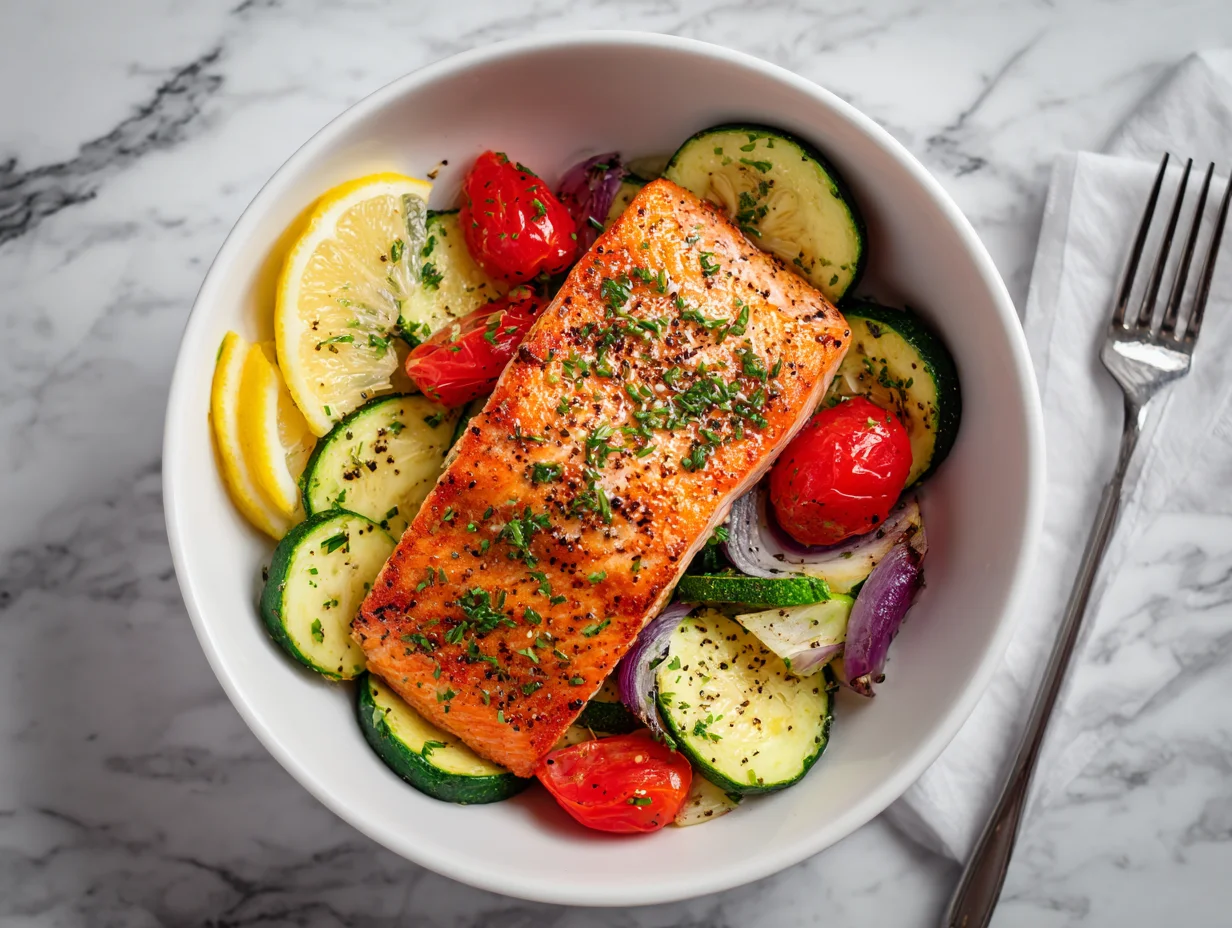
Creamy Baked Salmon with Lemon Butter Cream Sauce Recipe
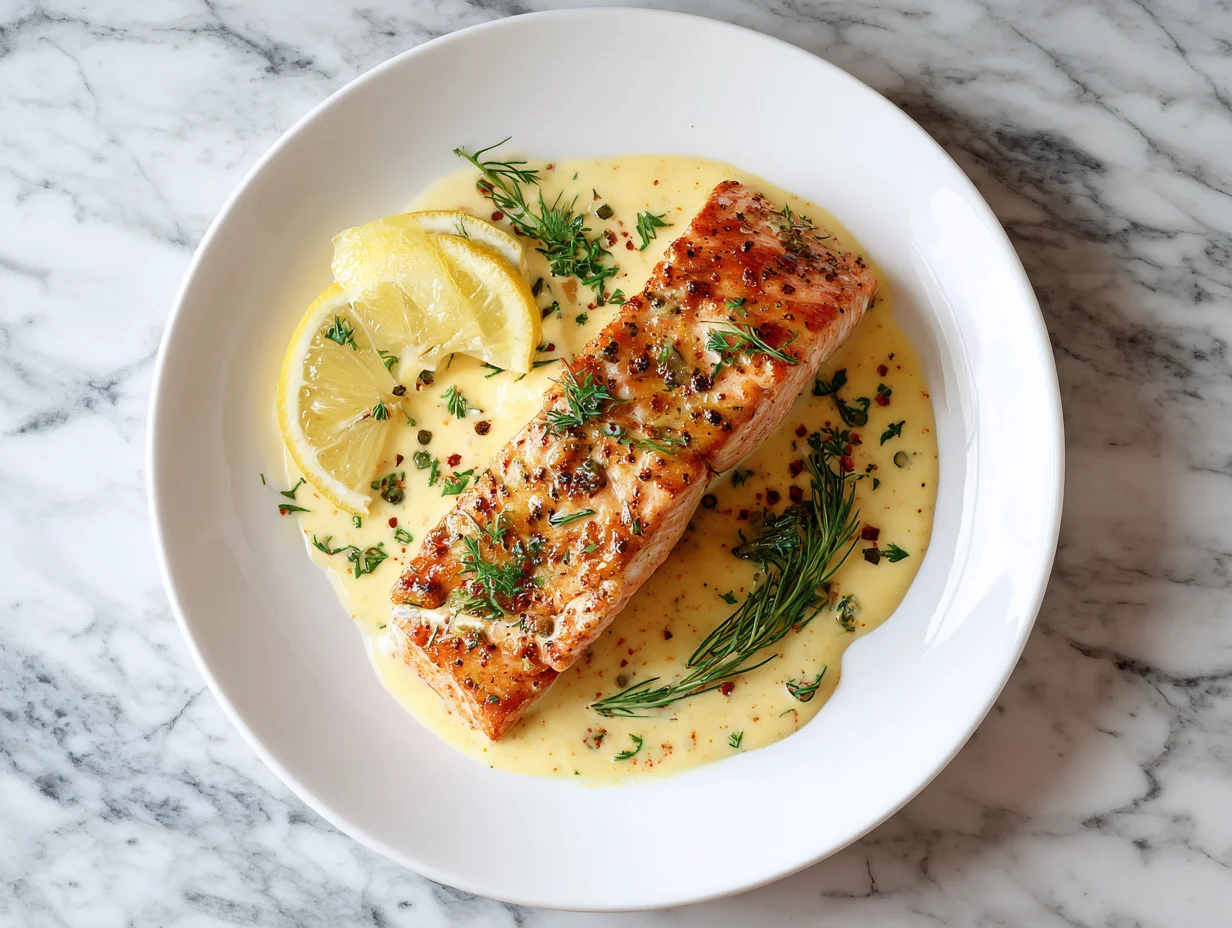
A perfectly cooked salmon dish is the mark of a refined kitchen. This creamy baked salmon with lemon butter cream sauce delivers that standard effortlessly, combining rich, flaky fish with a velvety, citrus-infused sauce that enhances every bite. It’s a dish built on balance—clean protein, healthy fats, and bold yet elegant flavor.
What makes this recipe exceptional is its precision. The salmon is baked just enough to remain moist and tender, while the lemon butter cream sauce adds depth without overwhelming the natural taste of the fish. Every element works in harmony, creating a restaurant-quality experience at home.
Whether you’re preparing a sophisticated dinner or upgrading your weekly meal plan, this recipe ensures consistent, high-end results. Master the technique, and you’ll have a signature dish that delivers both nutrition and indulgence.
👉 If you enjoy creamy salmon dinners, you’ll also love our Creamy Garlic Butter Tuscan Salmon for another rich and flavorful option.
Ingredients You’ll Need
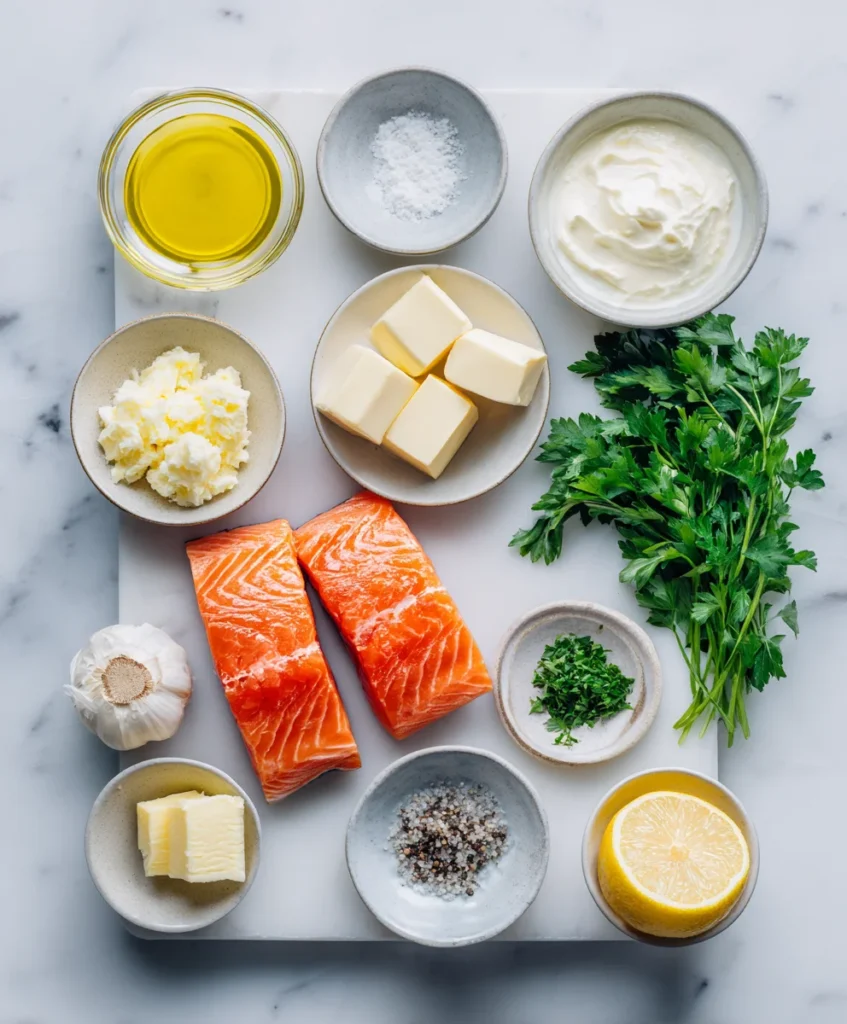
- 2 salmon fillets
- 2 tbsp butter
- 1/2 cup heavy cream
- 2 cloves garlic (minced)
- 1 tbsp lemon juice
- 1 tsp lemon zest
- 1 tbsp olive oil
- Salt to taste
- Black pepper to taste
- Fresh parsley for garnish
Step-by-Step Instructions
Prepare and Season Salmon
Start by patting the salmon fillets dry using a paper towel to remove excess moisture. This step is essential for even cooking and better texture. Drizzle olive oil lightly over the fillets, then season with salt and black pepper evenly on both sides. Place the salmon in a lined baking dish, skin-side down. Allow the fish to rest at room temperature for a few minutes before baking. This ensures even heat distribution and prevents the outer layer from overcooking while the inside remains underdone.
Bake Salmon to Perfection
Preheat your oven to 180°C (350°F). Place the prepared salmon in the oven and bake for 12–15 minutes, depending on thickness. Avoid overbaking, as salmon can quickly become dry and lose its delicate texture. The fish should flake easily with a fork while remaining moist inside. Keep a close eye during the final minutes of baking. Once done, remove from the oven and let it rest briefly. This helps retain juices and ensures a tender, flavorful result.
Prepare Lemon Butter Cream Sauce
In a saucepan, melt butter over medium heat and add minced garlic. Sauté gently until fragrant, ensuring it does not burn. Pour in heavy cream and stir continuously to create a smooth base. Add lemon juice and zest for brightness, balancing the richness of the cream. Allow the sauce to simmer until slightly thickened. Season with salt and pepper according to taste. The consistency should be creamy and pourable, coating the back of a spoon without being too heavy.
👉 For a sweet and savory twist, try our Honey Garlic Salmon that pairs beautifully with simple sides.
Assemble and Serve
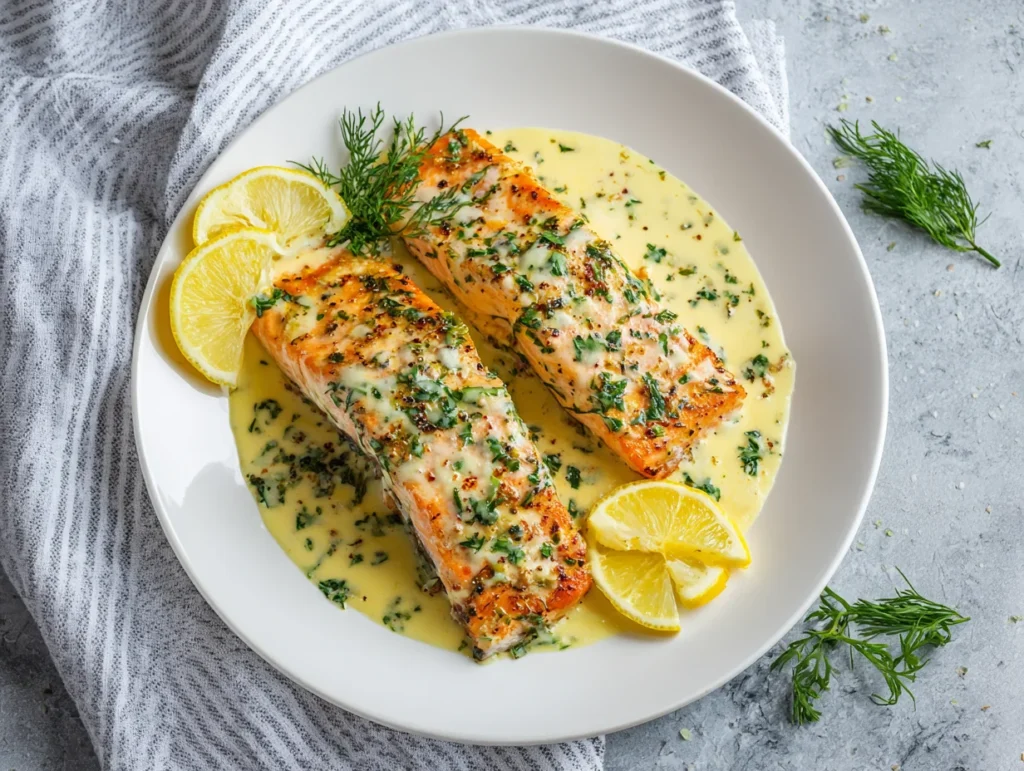
Place the baked salmon fillets on serving plates and generously spoon the warm lemon butter cream sauce over the top. Garnish with freshly chopped parsley for color and freshness. Serve immediately while the sauce is silky and the salmon is warm. For a complete meal, pair with steamed vegetables or a light grain. Presentation matters—keep the plating clean and allow the sauce to enhance, not overpower, the visual appeal of the dish.
Cook Time
Total: 30 minutes
Prep: 15 minutes
Bake: 15 minutes
Servings
This recipe is designed to deliver a balanced portion that satisfies without overwhelming. Each serving offers a perfect combination of protein and healthy fats, making it ideal for both everyday meals and special occasions.
Typically, this dish serves 2 people comfortably, with generous portions of salmon and sauce. For lighter meals or when paired with multiple sides, it can stretch to 3 servings without compromising satisfaction.
For larger gatherings, simply scale the ingredients while maintaining the same cooking techniques. Consistency in preparation ensures each serving maintains its rich flavor and tender texture.
Makes approximately 2–3 servings
Overlooked Errors That Affect Salmon Quality
One of the most common mistakes is overbaking the salmon, which results in a dry and chalky texture. This happens when cooking time is not adjusted based on fillet thickness.
Another issue is skipping the step of drying the salmon before seasoning. Excess moisture prevents proper seasoning adherence and affects the final texture of the fish.
Many cooks also overheat the garlic in the sauce, causing it to burn and develop a bitter flavor that disrupts the smoothness of the cream base.
Lastly, adding too much lemon juice can overpower the dish, making it overly acidic instead of balanced and refined.
Expert Techniques to Correct These Mistakes
Monitor baking time carefully and remove salmon as soon as it flakes easily. Slight undercooking is better than overcooking, as residual heat will finish the process.
Always pat the salmon dry before seasoning to improve texture and flavor absorption. This small step makes a noticeable difference.
Cook garlic on medium heat and stir continuously to avoid burning. Gentle cooking preserves its aroma and sweetness.
Balance lemon flavor gradually by tasting as you go. This ensures the sauce remains bright without becoming overly sharp or acidic.
Nutritional Information (approx. per serving)
- Calories: 400–450 kcal
- Protein: 30g
- Fat: 28g
- Carbohydrates: 4g
- Omega-3 fatty acids: High
Salmon is an excellent source of omega-3 fatty acids, which support heart health and reduce inflammation. This makes the dish both indulgent and beneficial.
The high protein content helps with muscle repair and satiety, making it suitable for balanced diets and fitness-focused lifestyles.
The inclusion of healthy fats and minimal carbohydrates ensures steady energy levels without heaviness, making it ideal for both lunch and dinner.
👉 Looking for a complete sheet-pan style meal? Don’t miss our Salmon with Potatoes and Asparagus for an easy all-in-one dinner.
Storage Instructions
Allow the salmon to cool completely before storing to maintain its texture and prevent condensation. This step helps preserve quality.
Store in an airtight container and refrigerate for up to 2 days. Keep the sauce separate if possible for better reheating results.
Reheat gently on low heat or in short microwave intervals to avoid drying out the fish. Add a splash of cream if needed to refresh the sauce.
Avoid freezing if possible, as it can alter the texture of both the salmon and the cream sauce significantly.
Suggestions
Serve this dish with steamed asparagus or roasted vegetables for a balanced and visually appealing plate. The freshness complements the richness of the sauce.
For a lighter variation, substitute heavy cream with a lower-fat option while maintaining the same technique for consistency.
Add a pinch of chili flakes for subtle heat, enhancing the overall flavor profile without overpowering the dish.
Pair with a light grain like quinoa or rice to create a complete, satisfying meal suitable for any occasion.
Seasonal Relevance
This recipe works beautifully year-round due to the availability of salmon and simple pantry ingredients. Its versatility makes it a reliable choice.
In colder months, the rich cream sauce provides warmth and comfort, making it ideal for cozy dinners and gatherings.
During warmer seasons, serve with lighter sides and fresh herbs to keep the dish refreshing and balanced.
Its adaptability ensures it fits seamlessly into both casual meals and festive occasions throughout the year.
Finl Words
This creamy baked salmon is a perfect example of how technique transforms simple ingredients into something exceptional. Precision is key to achieving the ideal texture and flavor.
By focusing on balance and careful cooking, you can consistently produce a dish that feels both luxurious and nourishing.
It’s a recipe that rewards attention to detail, offering a restaurant-quality experience without unnecessary complexity.
Master it once, and it becomes a dependable centerpiece for both everyday meals and special occasions.
👉 If you like herbaceous and cheesy flavors, check out our Baked Boursin Salmon for a delicious variation.
Frequently Asked Questions
Can I use frozen salmon for this recipe?
Yes, frozen salmon can be used, but it must be fully thawed and patted dry before cooking. Proper thawing ensures even baking and prevents excess moisture from affecting texture and flavor, resulting in a better overall dish quality.
What can I substitute for heavy cream in the sauce?
You can use half-and-half, coconut cream, or a lighter dairy option. Each substitute will slightly change the richness and flavor, so adjust seasoning accordingly to maintain a balanced and smooth lemon butter sauce.
How do I know when salmon is perfectly cooked?
Salmon is done when it flakes easily with a fork and appears slightly opaque in the center. Avoid overcooking, as it quickly becomes dry. Monitoring closely during the final minutes ensures a tender and juicy result.
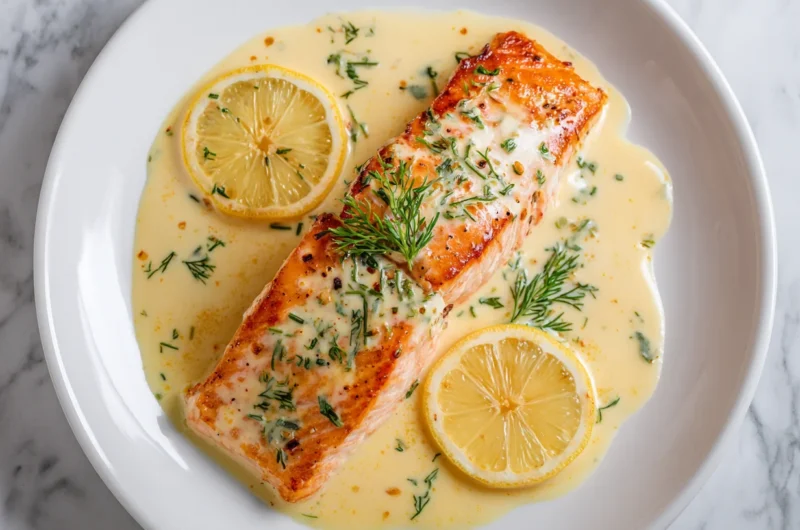
Creamy Baked Salmon with Lemon Butter Cream Sauce Recipe
2
servings15
minutes15
minutes200
kcalA creamy baked salmon recipe featuring tender, flaky fish topped with a rich lemon butter cream sauce. Perfectly balanced with freshness and indulgence, making it an elegant yet simple dish for everyday dinners or special occasions.
👉 Need a perfect veggie side to serve with this dish? Pair it with our Garlic Herb Roasted Potatoes Carrots and Zucchini for a balanced meal.
Ingredients
2 salmon fillets
2 tbsp butter
1/2 cup heavy cream
2 cloves garlic (minced)
1 tbsp lemon juice
1 tsp lemon zest
1 tbsp olive oil
Salt to taste
Black pepper to taste
Fresh parsley
Directions
- Season salmon with olive oil, salt, and pepper.
- Bake at 180°C (350°F) for 12–15 minutes until tender.
- Melt butter and sauté garlic for sauce base.
- Add cream, lemon juice, and zest; simmer until thickened.
- Plate salmon and pour sauce over it.
- Garnish with parsley and serve warm.
Recipe Video
Notes
- Do not overbake salmon to keep it moist
- Use fresh lemon for best flavor balance
- Cook garlic gently to avoid bitterness
- Adjust sauce thickness with cream as needed
- Serve immediately for best texture and taste