One-Pot Creamy Coconut Curry Chicken

This coconut curry chicken simmers bite-size chicken pieces in creamy coconut milk with curry powder, ginger, and garlic until the sauce turns silky and golden. Served over fluffy rice with cilantro and lime, it is a one-pot weeknight meal that tastes slow-cooked. Ready in about 35 minutes, it serves four.
On days when only something warm and fragrant will do, this coconut curry chicken answers. The sauce is the kind that makes the whole house smell incredible—coconut milk, blooming spices, and tender chicken coming together in a single pot. It tastes like it simmered all afternoon, yet it fits a busy weeknight without any fuss.
The beauty lies in the blooming. Cooking the curry powder with garlic and ginger in oil before the coconut milk goes in wakes up every spice, so the sauce turns deep gold and fragrant instead of flat. One pot, simple ingredients, and a comfort rotation classic.
Before you open the coconut milk, shake the can hard for 10 seconds, then open it and stir the contents in the can until smooth. Full-fat coconut milk separates in the can, and if the thick cream goes in first and the thin liquid last, the sauce starts uneven and takes longer to come together. If the can still looks split after stirring, whisk the milk in a measuring jug before it touches the pan — a sauce that starts smooth stays smooth through the simmer.
Why This Coconut Curry Chicken Tastes Slow-Cooked in 35 Minutes
Slow-cooked flavor in 35 minutes sounds like a promise that cannot hold, but this curry earns it through technique, not time. Blooming the spices in oil unlocks their fat-soluble flavors, and full-fat coconut milk carries them into a silky sauce that tastes far richer than its short simmer suggests.
Searing the chicken first adds a second layer: browned edges and fond in the pot dissolve into the sauce as it simmers. It is the same creamy, spice-simmered logic as my Chicken Tikka Masala With Tender Chicken in a Rich, Creamy Masala Sauce, where the sauce does the heavy lifting—here, coconut milk and curry powder lead.
Ingredients for This Coconut Curry Chicken
The list is short on purpose—everything is a pantry staple or an everyday supermarket basic.
Chicken:
- 1 1/2 lb boneless, skinless chicken breasts or thighs, cut into bite-size pieces
- 1 Tbsp neutral oil
Aromatics and Spices:
- 1 small onion, chopped
- 3 garlic cloves, minced
- 1 Tbsp grated fresh ginger
- 2 Tbsp curry powder
- 1/2 tsp salt
- 1/4 tsp black pepper
Sauce:
- 1 can (14 oz) full-fat coconut milk
- 1 cup low-sodium chicken broth
- 1 can (14.5 oz) diced tomatoes
- 2 Tbsp tomato paste
- 1 Tbsp sugar or brown sugar
For Serving:
- 4 cups cooked jasmine or basmati rice, fluffy
- 1 red bell pepper, cut into thin strips
- Fresh cilantro leaves, for garnish
- Lime wedges, for serving
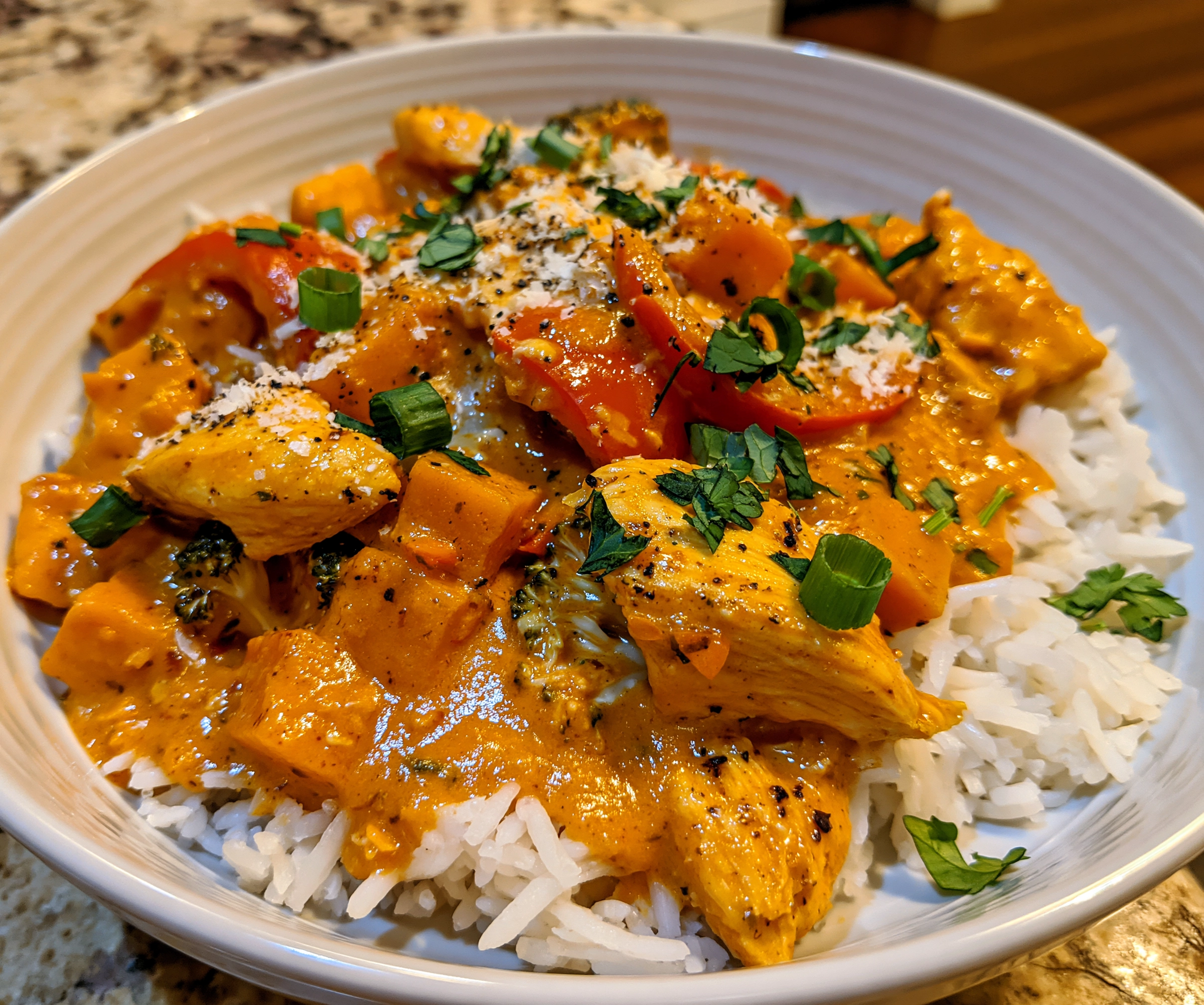
Start with 1 tablespoon of curry powder if your blend runs hot, then adjust upward—blends vary wildly in heat. The red pepper strips go in with the sauce, so they soften into the golden-orange color you see in the photo.
How to Make One-Pot Coconut Curry Chicken Step by Step
The whole method in one breath: sear the bite-size chicken, soften the onion and bloom the spices, add the broth, coconut milk, and tomatoes, simmer covered 15 to 20 minutes, uncover to thicken, and serve over rice.
1. Sear the Chicken to Golden Perfection
Heat the oil in a large skillet or Dutch oven over medium-high heat and sear the seasoned chicken pieces for about 5 minutes, turning once, until golden on the outside. The centers will finish during the simmer, so do not cook them through here. Transfer the pieces to a plate, leaving the fond behind.
2. Soften the Onion and Bloom the Spices
Lower the heat to medium, add the onion, and cook 2 to 3 minutes until soft and translucent. Stir in the garlic, ginger, and curry powder and cook 1 to 2 minutes more, until the mixture smells deeply fragrant. This blooming step is the flavor engine of the whole dish—do not rush it.
3. Build the Sauce
Pour in the broth, scraping up the browned bits from the bottom of the pot, then add the coconut milk, diced tomatoes, tomato paste, and sugar. Stir until smooth and bring to a gentle boil. The sauce should already look golden and promising before the chicken returns.
4. Simmer Covered Until Silky
Return the chicken and any juices to the pot, add the red pepper strips, cover, and simmer 15 to 20 minutes over low heat. The chicken turns tender, the pepper softens into the sauce, and the flavors marry into something that tastes slow-cooked. Keep the simmer gentle—hard boiling can split coconut milk.
5. Uncover to Thicken
Remove the lid for the last few minutes if you want a thicker sauce, stirring occasionally. The sauce should coat a spoon and look silky, not watery. Taste and adjust salt, sugar, and heat now, while the pot is still on the stove.
6. Check, Garnish, and Serve Over Rice
Slide an instant-read thermometer into the thickest piece—it should read 165°F. Spoon the curry beside or over fluffy rice in warm bowls, scatter with cilantro, and serve lime wedges alongside for squeezing. The rice catches every drop of the golden sauce.
How Do You Keep Coconut Curry Sauce Silky Instead of Thin or Split?
Silky sauce comes from full-fat coconut milk, gentle heat, and the right liquid balance. Light coconut milk makes a thinner sauce, too much broth waters it down, and a hard boil after the milk goes in can split the sauce into grainy curds.
If the sauce looks thin, simmer uncovered for a few minutes to reduce it—never add raw flour. If it splits, lower the heat immediately and whisk vigorously; a splash of fresh coconut milk usually brings it back together. Patience at a gentle simmer beats high heat every time.
Serving Ideas, Nutrition, and Easy Swaps
Serve the curry beside or over fluffy rice, exactly as pictured, with cilantro scattered on top and lime wedges for squeezing at the table. A cooling cucumber salad on the side balances the warmth beautifully, and our salads and sides collection has crisp partners. For more grain bases and rice nights, our pasta and rice recipes round out the week beautifully, so dinner feels complete without extra effort.
Nutrition values are always approximate and vary by brand and substitutions. Here is the per-serving picture, based on four servings.
- Calories: approximately 480
- Protein: approximately 34 g
- Carbohydrates: approximately 32 g
- Fat: approximately 24 g
- With Chicken Thighs: thighs stay juicier and forgive extra simmering—swap them in cup for cup with no other change.
- Light Coconut Milk: the sauce turns thinner and less silky; simmer uncovered longer to reduce it back to coating consistency.
- Extra Heat: add a pinch of chili flakes or a sliced serrano with the pepper strips, tasting as you go.
How Do You Store, Make Ahead, and Reheat It?
Curry keeps beautifully: refrigerate in an airtight container for up to 3 days, and the flavor deepens overnight. Reheat gently over low heat, stirring well and adding a splash of broth if the sauce thickened in the fridge.
For longer storage, freeze cooled curry for up to 2 months, leaving the rice out—cook fresh rice when you serve. Thaw overnight in the fridge and reheat gently, never at a hard boil, so the coconut milk stays silky.
Why This Curry Earns a Spot in Your Rotation
One pot, a short simmer, and a sauce that tastes slow-cooked—that is the promise here. The chicken stays tender, the coconut milk turns silky and golden, and the rice underneath catches every drop.
If dinners like this are your weeknight love language, browse our chicken recipes for the next one worth repeating. Give this recipe a try the next time only something warm and fragrant will do. I’d love to hear your variations—thighs instead of breasts, extra heat, a different pepper—so share how you made it yours.
Why This Sear, Bloom, and Gentle Simmer Method Works
Each step in this method protects the next one. Searing first builds browned edges and fond in the pot, and that fond dissolves into the sauce as it simmers, so the chicken seasons the curry instead of just sitting in it. Blooming the spices in oil wakes up their fat-soluble flavors before any liquid arrives, and the full-fat coconut milk then carries those flavors through the whole pot. The gentle covered simmer finishes the chicken without driving the milk too hard, so the sauce turns silky and golden instead of grainy.
The honest limit is the serving window. This sauce is at its best in the first 15 to 20 minutes after it comes off the heat — as it sits, it thickens, and reheating it at a hard boil can split the coconut milk. Serve it soon, and if you reheat leftovers, do it over low heat with a splash of broth, stirring until it loosens. Freeze the curry without the rice, and cook fresh rice when you serve it, so the sauce stays the star instead of turning stiff.
Frequently Asked Questions
Can I use light coconut milk instead of full-fat?
Yes, but the sauce will be thinner and less silky. Full-fat milk is what gives the curry its luxurious body. If you use light milk, simmer uncovered longer to reduce the sauce back to coating consistency, and keep the heat gentle so it does not split.
Chicken breasts or thighs for coconut curry chicken?
Both work beautifully. Breasts cook quickly and stay lean, while thighs stay juicier and forgive extra simmering if dinner runs late. Either cut must reach 165°F in the thickest piece. Thighs are my pick for the most forgiving weeknight version.
How do I know when coconut curry chicken is done?
Slide an instant-read thermometer into the thickest piece—it should read 165°F, with no pink remaining. The sauce should look silky and golden, the chicken tender, and the pepper strips soft. The 15 to 20 minute simmer covers all three at once.
Why is my coconut curry sauce thin or split?
Thin sauce usually means too much liquid or light milk—simmer uncovered to reduce it. Splitting comes from heat that is too high after the milk goes in, so keep the simmer gentle and never boil hard. A splash of fresh coconut milk and vigorous whisking usually rescues a split sauce.
Can I make coconut curry chicken ahead or freeze it?
Absolutely! Refrigerate it for up to 3 days, and the flavor deepens overnight. Freeze cooled curry for up to 2 months without the rice, thaw overnight in the fridge, and reheat gently with a splash of broth. Cook fresh rice when you serve.
One-Pot Creamy Coconut Curry Chicken
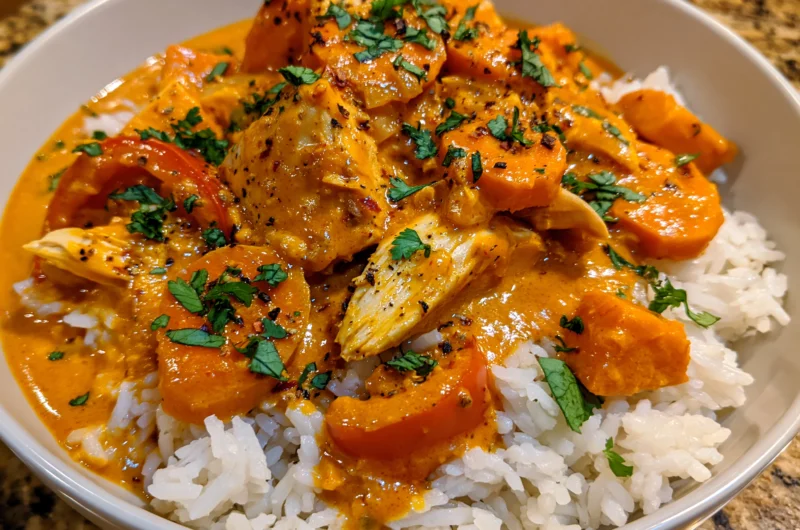
Bite-size chicken simmered in creamy coconut milk with curry powder, ginger, and garlic until silky and golden, with red pepper strips, served over fluffy rice with cilantro and lime.
4
servings10
minutes25
minutes480
kcal35
minutesIngredients
- Chicken
1 1/2 lb boneless, skinless chicken breasts or thighs, cut into bite-size pieces
1 Tbsp neutral oil
- Aromatics and Spices
1 small onion, chopped
3 garlic cloves, minced
1 Tbsp grated fresh ginger
2 Tbsp curry powder
1/2 tsp salt
1/4 tsp black pepper
- Sauce
1 can (14 oz) full-fat coconut milk
1 cup low-sodium chicken broth
1 can (14.5 oz) diced tomatoes
2 Tbsp tomato paste
1 Tbsp sugar or brown sugar
- For Serving
4 cups cooked jasmine or basmati rice, fluffy
1 red bell pepper, cut into thin strips
Fresh cilantro leaves, for garnish
Lime wedges, for serving
Directions
- Sear the Chicken to Golden Perfection — Heat the oil in a large skillet or Dutch oven over medium-high heat and sear the seasoned chicken pieces for about 5 minutes, turning once, until golden on the outside. The centers will finish during the simmer, so do not cook them through here. Transfer the pieces to a plate, leaving the fond behind.
- Soften the Onion and Bloom the Spices — Lower the heat to medium, add the onion, and cook 2 to 3 minutes until soft and translucent. Stir in the garlic, ginger, and curry powder and cook 1 to 2 minutes more, until the mixture smells deeply fragrant. This blooming step is the flavor engine of the whole dish—do not rush it.
- Build the Sauce — Pour in the broth, scraping up the browned bits from the bottom of the pot, then add the coconut milk, diced tomatoes, tomato paste, and sugar. Stir until smooth and bring to a gentle boil. The sauce should already look golden and promising before the chicken returns.
- Simmer Covered Until Silky — Return the chicken and any juices to the pot, add the red pepper strips, cover, and simmer 15 to 20 minutes over low heat. The chicken turns tender, the pepper softens into the sauce, and the flavors marry into something that tastes slow-cooked. Keep the simmer gentle—hard boiling can split coconut milk.
- Uncover to Thicken — Remove the lid for the last few minutes if you want a thicker sauce, stirring occasionally. The sauce should coat a spoon and look silky, not watery. Taste and adjust salt, sugar, and heat now, while the pot is still on the stove.
- Check, Garnish, and Serve Over Rice — Slide an instant-read thermometer into the thickest piece—it should read 165°F. Spoon the curry beside or over fluffy rice in warm bowls, scatter with cilantro, and serve lime wedges alongside for squeezing. The rice catches every drop of the golden sauce.
Notes
- Curry keeps beautifully: refrigerate in an airtight container for up to 3 days, and the flavor deepens overnight. Reheat gently over low heat, stirring well and adding a splash of broth if the sauce thickened in the fridge. For longer storage, freeze cooled curry for up to 2 months, leaving the rice out—cook fresh rice when you serve. Thaw overnight in the fridge and reheat gently, never at a hard boil, so the coconut milk stays silky. Swaps: thighs stay juicier and forgive extra simmering; light coconut milk makes a thinner, less silky sauce (simmer uncovered longer to reduce); extra heat via a pinch of chili flakes or a sliced serrano with the pepper strips.