20-Minute Elegant Chicken Piccata
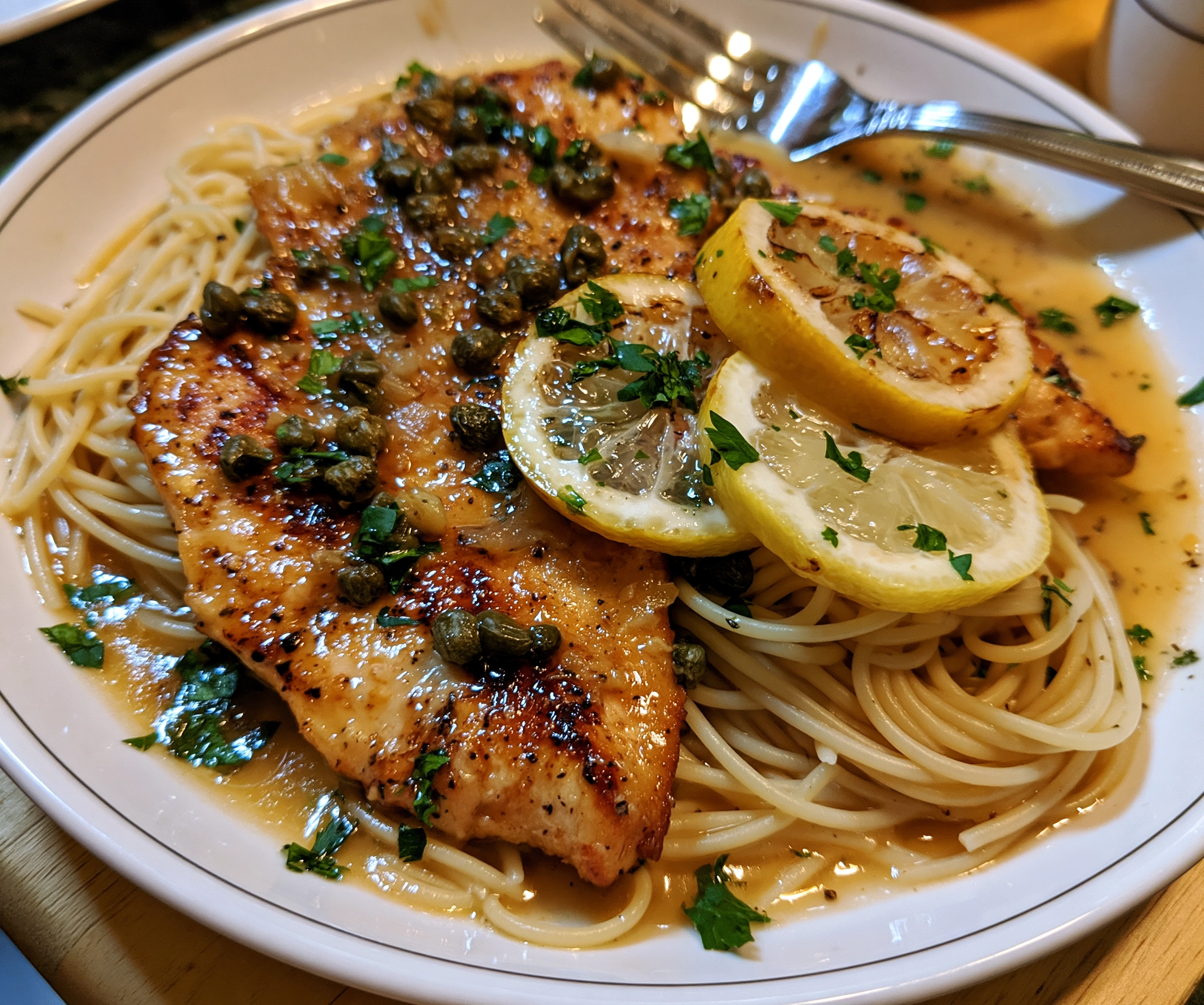
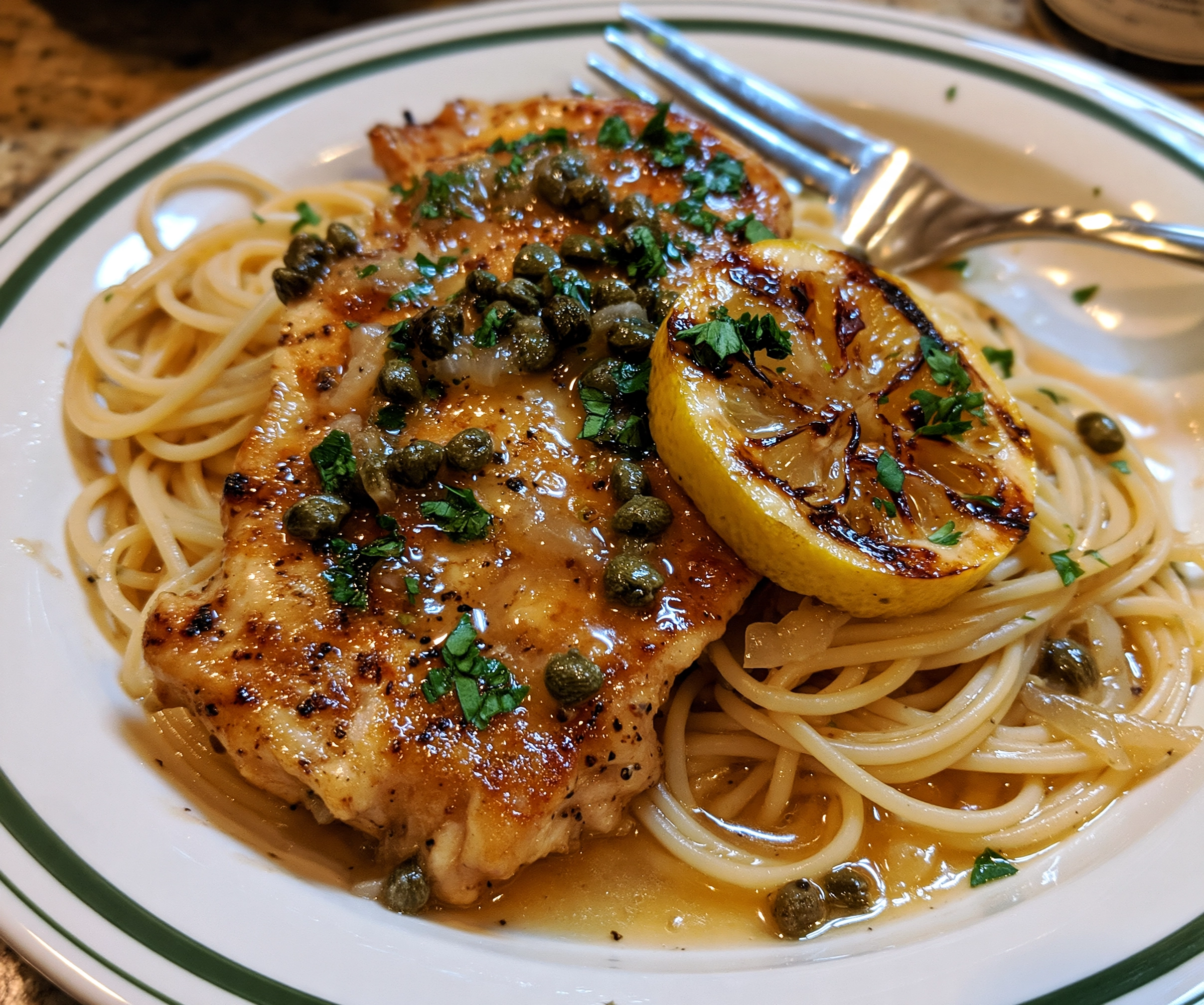
This chicken piccata pairs thin golden pan-seared cutlets with a light, glossy lemon-caper butter sauce, finished with lemon slices and parsley. It serves four with restaurant elegance and weeknight effort, the chicken cooks to a safe 165°F, and the sauce comes together in the same skillet. Angel hair and crusty bread are serving suggestions only, since no pasta appears in the photo.
There’s something magical about a dish that feels fancy but asks little of the cook, and piccata is exactly that. The cutlets sear in minutes, the pan sauce builds from browned bits, wine, lemon, and capers, and cold butter swirled in off the heat turns it glossy. It looks like a special-occasion dinner, yet the whole method rests on one skill: pounding the chicken evenly thin.
The timing deserves honesty up front. Most published versions total 25 minutes, and this card does too, with 10 minutes of prep and 15 minutes of cooking. The 20-minute title holds only when the cutlets are pounded ahead and every ingredient is measured before the pan heats, so plan on 25 minutes for a relaxed first cook.
What Is Chicken Piccata, Really?
Piccata is a structure, not a complicated recipe: thin cutlets, a quick pan-sear, and a light pan sauce built from the fond left behind. Capers bring the briny pop that defines the dish, lemon brings brightness, and cold butter gives the sauce its silk without cream. The sauce stays light, never creamy, which is why the dish feels elegant rather than heavy.
For another lemon-butter skillet chicken, our Silky Lemon Butter Chicken leans richer and saucier, while piccata stays bright and tangy. The difference is the capers and the wine-or-broth reduction, which give piccata its distinctive sharp-savory edge. Once you learn the pan-sauce rhythm, you can repeat it with endless variations.
Ingredients for This Chicken Piccata
For the chicken:
- 4 boneless, skinless chicken breasts, sliced and pounded to 1/4 to 1/2 inch
- 1/3 cup flour
- Salt and black pepper, to taste
For searing:
- 2 tablespoons olive oil
- 2 tablespoons butter
For the sauce:
- 1/2 cup dry white wine or chicken broth
- 1/2 cup chicken broth
- 1/4 cup fresh lemon juice
- 1 teaspoon lemon zest
- 3 tablespoons capers, drained
- 4 tablespoons cold butter, cubed
- 2 tablespoons chopped fresh parsley
- Lemon slices, for garnish
How to Make Chicken Piccata Step by Step
The method is fast by design: sear the cutlets, deglaze the pan, reduce the sauce, and swirl in cold butter off the heat. Have everything measured before you start, since the cooking moves too quickly for mid-recipe prep.
1. Slice and Pound the Cutlets to Even Perfection
Slice each breast horizontally into thin cutlets, then pound between parchment to an even 1/4 to 1/2 inch. Even thickness is the whole secret: thin, uniform cutlets cook in minutes and stay tender, while thick spots stay undercooked. Season with salt and pepper, then give each cutlet a light flour dredge, shaking off the excess so the coating stays whisper-thin.
2. Sear in Butter and Oil Until Golden
Heat the olive oil and butter in a large skillet over medium-high heat until the butter foams. Sear the cutlets for 2 to 5 minutes per side until deep golden, working in batches so the pan stays hot. The chicken is done at 165°F; tent the finished cutlets with foil while you build the sauce, which keeps them warm without overcooking.
3. Deglaze and Scrape Up the Browned Bits
Pour the wine or broth into the hot skillet and scrape up every browned bit with a wooden spoon. Those bits are concentrated flavor, and dissolving them into the liquid is what gives the sauce its savory backbone. Let the liquid bubble for 1 to 2 minutes, reducing slightly and smelling fragrant rather than sharp.
4. Add Lemon, Zest, and Capers, Then Reduce
Stir in the lemon juice, zest, and capers, then simmer for 2 to 5 minutes until the sauce reduces slightly and tastes balanced. The lemon should sing without overwhelming, and the capers should pop in every spoonful. Taste and adjust the salt now, since the butter goes in last and softens sharp edges.
5. Swirl in Cold Butter Until Glossy
Take the pan off the heat and swirl in the cold butter cubes, a few at a time, shaking the pan until the sauce turns glossy and slightly thickened. Cold butter emulsifies into the sauce, while melted butter added over heat would turn greasy. Return the chicken to the pan, spoon sauce over each cutlet, and garnish with parsley and lemon slices.
Can Piccata Really Be Done in 20 Minutes?
Honestly, only under one condition: the cutlets are pounded ahead and every ingredient is measured before the pan heats. With that prep done, the sear and sauce take about 15 minutes of active cooking, so 20 minutes is a real, if brisk, total.
Without that prep, plan on 25 minutes, which is what this card shows: 10 minutes of prep plus 15 minutes of cooking. Most published versions land at 25 to 35 minutes, so the 20-minute title is a streamlined-cook promise, not a from-scratch guarantee. Pound the cutlets the night before, and the title holds easily on a busy evening.
Serving Ideas, Nutrition, and Easy Swaps
Angel hair is the classic partner, since its thin strands catch the glossy sauce beautifully, and crusty bread does the same job for anyone who wants to mop the plate. A simple green salad or steamed asparagus adds freshness without competing with the lemon. For more bases, browse our pasta and rice recipes, our chicken recipes for more mains, and our salads and sides for fresh pairings.
Nutrition (per serving, approximately):
- Calories: approximately 380
- Protein: approximately 38g
- Carbohydrates: approximately 12g
- Fat: approximately 20g
Values are approximate and vary by brand and substitutions, so treat them as a guide.
Wine-free: extra broth plus extra lemon replaces the wine, with a slightly less complex sauce. Pasta: angel hair, tossed in a spoonful of sauce before plating. Cut: chicken thighs work with a longer cook, still to 165°F. No capers: green olives are not the same, so note the flavor change honestly.
How Do You Store, Make Ahead, and Reheat It?
Store leftovers with their sauce in an airtight container in the refrigerator for up to 3 days. Reheat gently over low heat, adding a splash of broth if the sauce thickened, since high heat splits the butter sauce into grease and liquid. Do not freeze the butter sauce, which separates on thawing.
The cutlets can be pounded ahead and chilled for a day, which is the prep step that makes the 20-minute version possible. Cooked cutlets also reheat well if you warm them in the sauce rather than dry, since the sauce protects the meat from drying out.
Why This Chicken Piccata Earns a Spot in Your Rotation
This chicken piccata proves that elegance does not require complicated techniques or a long ingredient list. Thin cutlets, a bright pan sauce, and a glossy butter finish deliver restaurant flavor in one skillet, and the method stays simple enough for a weeknight. It is the kind of recipe that impresses guests while asking little of the cook.
Browse our chicken recipes when you want another dinner built around the same dependable protein. Give this recipe a try this week, and pound the cutlets ahead the first time so the timing feels easy. I’d love to hear your variations, so share how you made it yours.
Frequently Asked Questions
What is piccata sauce made of?
Piccata sauce is a pan sauce built from the fond left after searing: wine or broth, lemon juice and zest, capers, and cold butter swirled in off the heat. It stays light and glossy, never creamy, with a bright, briny, savory-sweet balance. The butter emulsifies into the reduced liquid, giving silk without heaviness.
Can I make it without wine?
Yes! Replace the wine with an equal amount of chicken broth plus an extra squeeze of lemon. The sauce loses a little complexity, since wine adds depth that broth alone cannot match, but it stays bright and delicious. Keep the capers and butter the same, since they carry the dish’s character.
How thin should the cutlets be?
Pound them to an even 1/4 to 1/2 inch, with 1/4 inch giving the fastest, most even cook. Thicker cutlets take longer and risk drying out at the edges before the centers finish. Even thickness matters more than the exact number, so check with your fingers as you pound.
Why did my butter sauce split?
The sauce splits when the butter goes in over too much heat, or when the pan is too hot when the butter is added. Always take the pan off the heat first, then swirl in cold butter a few cubes at a time. If it splits, whisk in a splash of cold water or broth off the heat to bring it back together.
What do you serve with chicken piccata?
Angel hair tossed in a spoonful of sauce is the classic partner, and crusty bread mops the plate beautifully. A simple green salad or steamed asparagus adds freshness without competing with the lemon. Mashed potatoes also work, catching the glossy sauce like a soft bed.
20-Minute Elegant Chicken Piccata
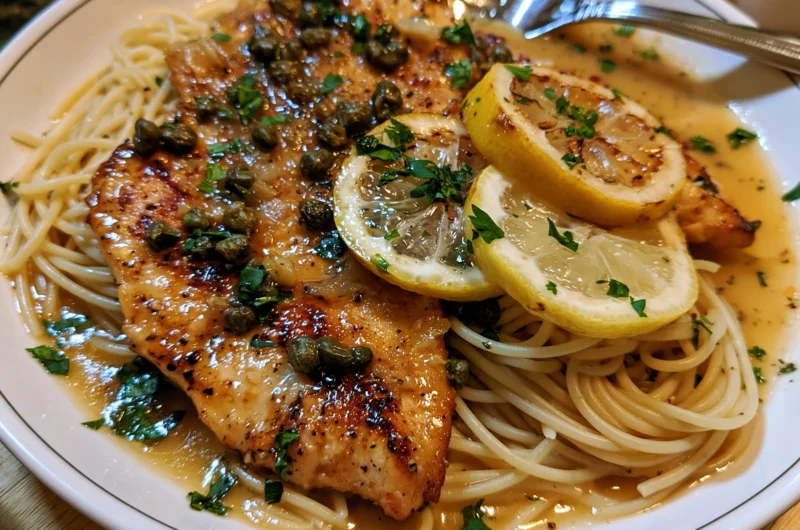
Thin golden chicken cutlets in a light, glossy lemon-caper butter sauce with lemon slices and parsley.
4
servings10
minutes15
minutes380
kcal25
minutesIngredients
- For the chicken
4 boneless, skinless chicken breasts, sliced and pounded to 1/4 to 1/2 inch
1/3 cup flour
Salt and black pepper, to taste
- For searing
2 tablespoons olive oil
2 tablespoons butter
- For the sauce
1/2 cup dry white wine or chicken broth
1/2 cup chicken broth
1/4 cup fresh lemon juice
1 teaspoon lemon zest
3 tablespoons capers, drained
4 tablespoons cold butter, cubed
2 tablespoons chopped fresh parsley
Lemon slices, for garnish
Directions
- Slice and Pound the Cutlets to Even Perfection: Slice each breast horizontally into thin cutlets, then pound between parchment to an even 1/4 to 1/2 inch. Even thickness is the whole secret: thin, uniform cutlets cook in minutes and stay tender, while thick spots stay undercooked. Season with salt and pepper, then give each cutlet a light flour dredge, shaking off the excess so the coating stays whisper-thin.
- Sear in Butter and Oil Until Golden: Heat the olive oil and butter in a large skillet over medium-high heat until the butter foams. Sear the cutlets for 2 to 5 minutes per side until deep golden, working in batches so the pan stays hot. The chicken is done at 165°F; tent the finished cutlets with foil while you build the sauce, which keeps them warm without overcooking.
- Deglaze and Scrape Up the Browned Bits: Pour the wine or broth into the hot skillet and scrape up every browned bit with a wooden spoon. Those bits are concentrated flavor, and dissolving them into the liquid is what gives the sauce its savory backbone. Let the liquid bubble for 1 to 2 minutes, reducing slightly and smelling fragrant rather than sharp.
- Add Lemon, Zest, and Capers, Then Reduce: Stir in the lemon juice, zest, and capers, then simmer for 2 to 5 minutes until the sauce reduces slightly and tastes balanced. The lemon should sing without overwhelming, and the capers should pop in every spoonful. Taste and adjust the salt now, since the butter goes in last and softens sharp edges.
- Swirl in Cold Butter Until Glossy: Take the pan off the heat and swirl in the cold butter cubes, a few at a time, shaking the pan until the sauce turns glossy and slightly thickened. Cold butter emulsifies into the sauce, while melted butter added over heat would turn greasy. Return the chicken to the pan, spoon sauce over each cutlet, and garnish with parsley and lemon slices.
Notes
- Store leftovers with their sauce in an airtight container in the refrigerator for up to 3 days. Reheat gently over low heat, adding a splash of broth if the sauce thickened, since high heat splits the butter sauce into grease and liquid. Do not freeze the butter sauce, which separates on thawing. The cutlets can be pounded ahead and chilled for a day, which is the prep step that makes the 20-minute version possible. Cooked cutlets also reheat well if you warm them in the sauce rather than dry, since the sauce protects the meat from drying out.