
Elegant Roasted Beet Feta Stack Recipe
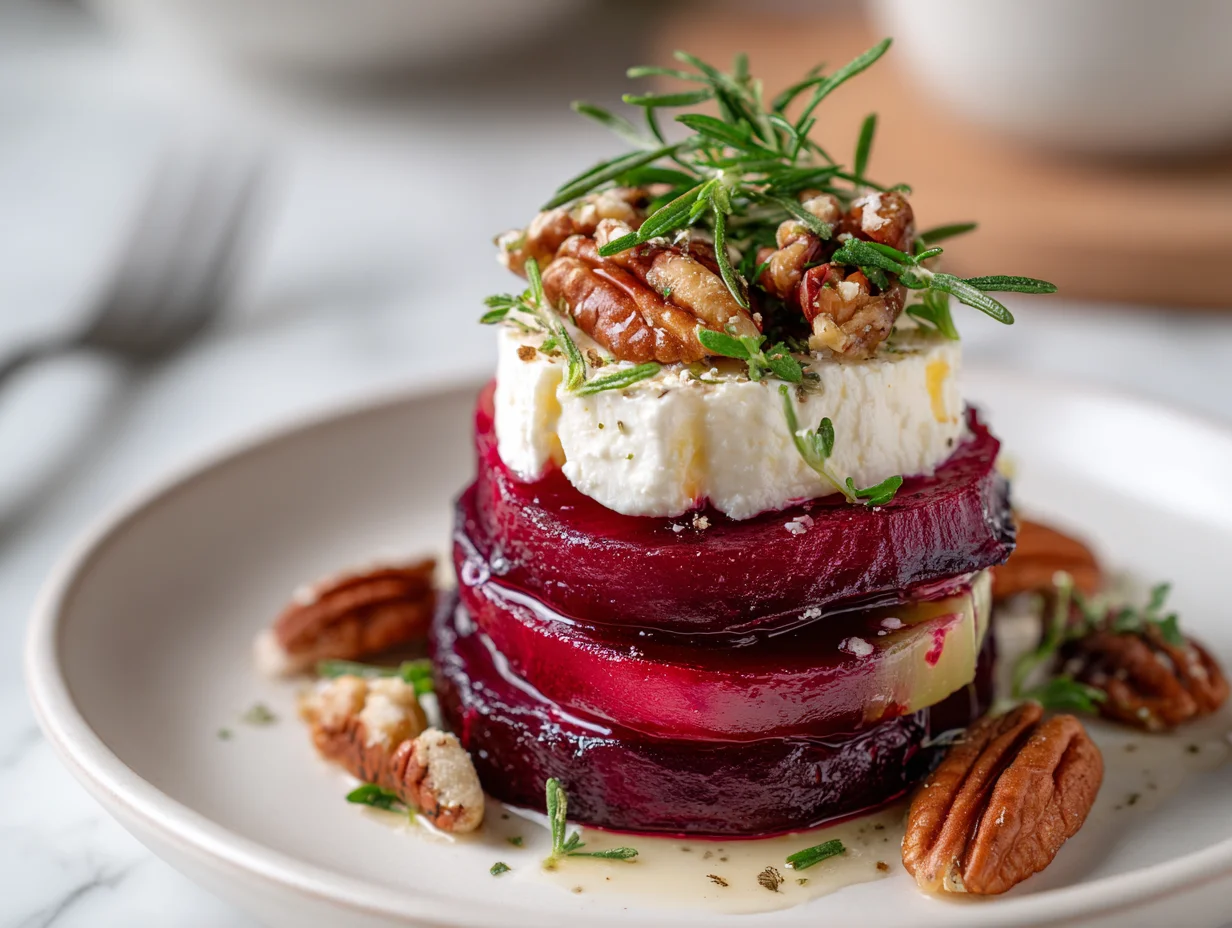
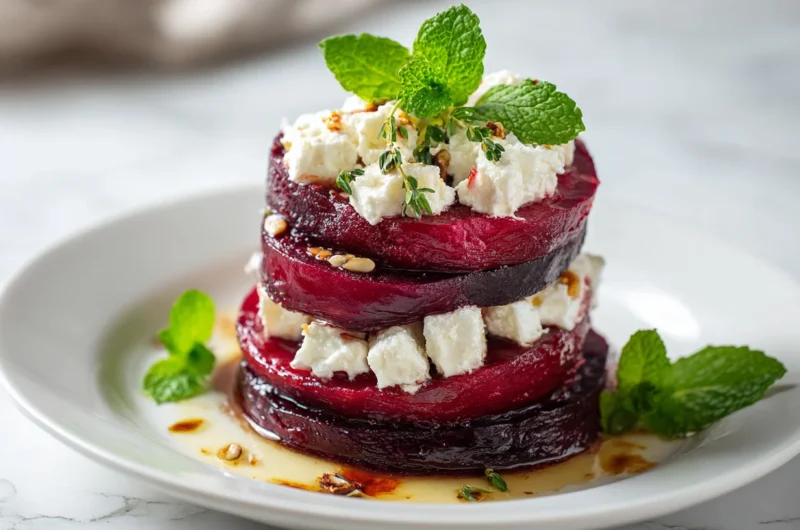
Roasted Beet Feta Stack is not just a dish; it is a refined balance of earthy sweetness, creamy saltiness, and visual elegance on a plate. Built around slow roasted Beetroot and rich Feta, this recipe transforms simple ingredients into a restaurant level appetizer that feels luxurious yet deeply comforting.
What makes this dish stand out is its precision in layering and flavor harmony. Each slice of beet carries natural sweetness that intensifies during roasting, while feta adds a sharp, creamy contrast. The result is a structured stack that looks artistic and tastes balanced in every bite.
This recipe is ideal for dinner parties, festive tables, or even a healthy gourmet starter at home. It is designed for cooks who appreciate detail, presentation, and flavor depth. With minimal ingredients and careful technique, you can achieve a dish that feels professionally plated.
👉 If you enjoy layered beet and cheese dishes, try Roasted Beet Feta Napoleons.
Common Mistake in Roasted Beet Feta Stack Preparation
Many home cooks rush the roasting process of beets, which results in uneven texture and weak flavor development. Beets need slow, controlled heat to caramelize naturally. Skipping this step or reducing roasting time leaves them earthy but not sweet. This affects the entire balance of the stack and reduces overall depth.
Another frequent mistake is slicing beets too thick or unevenly. When layers are inconsistent, stacking becomes unstable and visually unappealing. Thick slices overpower feta, while thin ones may break during assembly. Precision slicing is essential for structure, especially in a plated appetizer like this.
Some also overuse seasoning, masking the natural flavor of roasted Beetroot. This recipe depends on subtle enhancement, not heavy spice. Excess salt or strong spices can overshadow the creamy salt profile of Feta and disrupt harmony.
Lastly, assembling the stack too early before serving leads to moisture release. This causes slipping layers and a soggy base. Timing and temperature control are critical to maintain clean presentation and stable structure.
Solution to Common Mistake in This Recipe
To correct roasting issues, always wrap beets properly and roast them at a steady medium temperature until tender. Slow heat allows natural sugars to develop fully, enhancing sweetness and improving pairing with feta. Cooling them slightly before slicing also helps maintain structure and flavor clarity.
For better slicing accuracy, use a sharp chef’s knife and trim both ends before cutting. Aim for uniform rounds to ensure stability. Consistency in size improves layering and ensures each bite has balanced proportions of beet and feta.
When it comes to seasoning, keep it minimal and intentional. A light drizzle of olive oil and a pinch of salt is enough. This allows the natural character of roasted Beetroot and creamy Feta to shine without competition.
For assembly timing, build the stack just before serving. Keep components ready but separate. This prevents moisture buildup and ensures each layer stays firm, fresh, and visually defined on the plate.
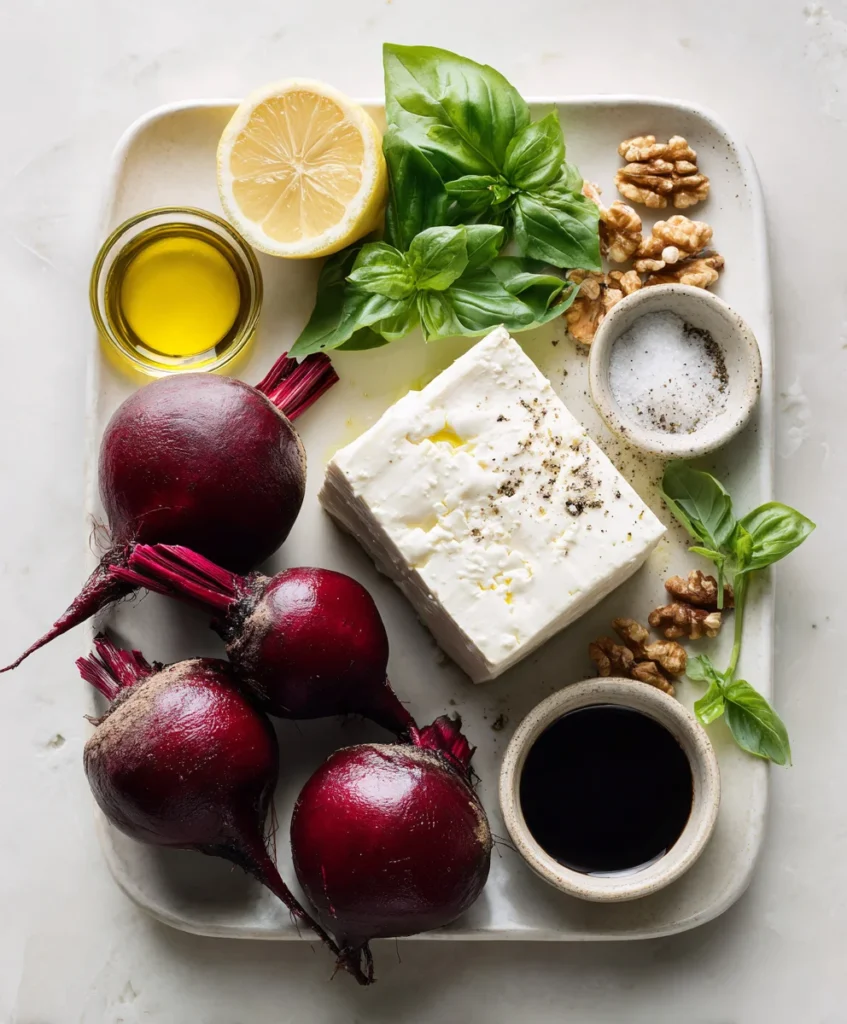
Ingredients You’ll Need
Base Ingredients:
- Fresh beetroot (medium-sized, evenly shaped)
- Feta cheese block
- Olive oil (extra virgin preferred)
- Salt (sea salt recommended)
- Black pepper (freshly ground)
- Lemon juice (optional for brightness)
Optional Add-ins:
- Fresh arugula leaves
- Toasted walnuts
- Balsamic glaze drizzle
- Fresh thyme or dill
- Honey (for slight sweetness contrast)
- Microgreens for garnish
Step-by-Step Instructions
Step 1 – Preparing and Roasting Beets
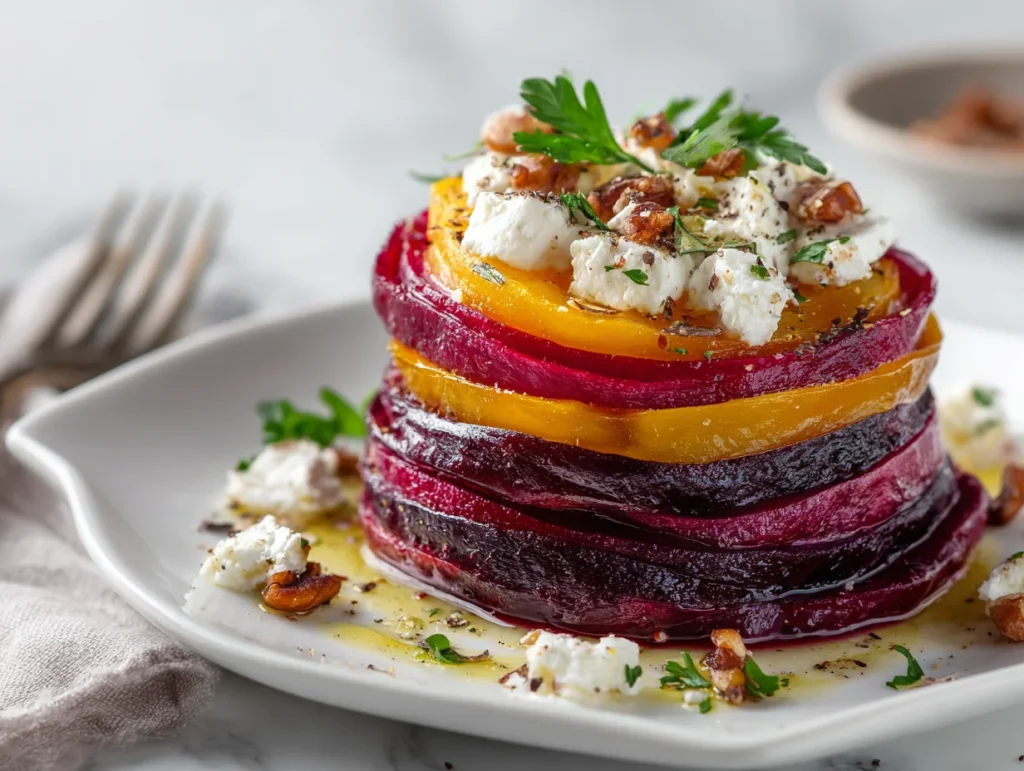
Wash and trim the Beetroot thoroughly, ensuring all dirt is removed without peeling too deeply. Wrap each beet individually in foil with a drizzle of olive oil and a pinch of salt. Roast at a steady medium temperature until they become tender when pierced. This slow roasting process enhances natural sweetness and creates a soft yet structured texture ideal for stacking.
Step 2 – Cooling and Slicing Precision
Once roasted, allow beets to cool slightly before handling to preserve firmness. Peel the skin gently using your hands or a soft cloth. Slice evenly into round discs using a sharp knife for clean edges. Consistent thickness ensures stability in stacking and prevents collapse. This step is crucial for maintaining both visual symmetry and balanced flavor distribution with feta layers.
👉 For a fresh salad with similar Mediterranean flavors, check out Cucumber Caprese Salad.
Step 3 – Preparing Feta Layers
Slice Feta into matching rounds or small blocks that align with beet slices. Keep them chilled until assembly to maintain firmness. Lightly season with a touch of olive oil if desired. The feta should complement the sweetness of beets without overpowering them. Proper sizing ensures clean stacking and enhances the structured appearance of the final dish.
Step 4 – Assembling the Stack
Begin layering by placing beet slice first, followed by feta, repeating the pattern carefully. Apply gentle pressure to stabilize structure without crushing layers. Add optional herbs or greens between layers for freshness. Finish with a light drizzle of balsamic glaze or olive oil. Serve immediately to maintain freshness, texture integrity, and visual elegance on the plate.
Cook Time
Total: 55–65 minutes
Prep: 15–20 minutes
Bake: 40–45 minutes
Servings
This recipe is designed to serve 4 people as a refined appetizer portion. Each serving delivers a carefully balanced stack that highlights both flavor and presentation. It is ideal for plated dining experiences or shared starter courses.
For smaller gatherings, the recipe can be easily halved without affecting quality. The structure remains consistent even when scaled down. This flexibility makes it suitable for both intimate dinners and larger events where presentation matters.
When serving multiple guests, preparation can be done in advance except for final assembly. This ensures freshness and maintains the visual integrity of each stack right before plating.
Makes approximately 4 elegant stacks.
Nutritional Information (approx. per serving)
- Calories: 180–220 kcal
- Protein: 6–8 g
- Carbohydrates: 15–18 g
- Fats: 10–14 g
- Fiber: 3–4 g
- Sodium: Moderate
Beets support natural detoxification and improve blood flow due to their rich nitrate content. They are also high in fiber, aiding digestion and promoting gut health. This makes the dish both nourishing and light on the stomach.
Feta provides calcium and protein, supporting bone strength and muscle repair. Its bold flavor allows satisfaction in smaller portions, reducing overeating. Combined with beets, it creates a balanced nutritional profile that is both indulgent and health conscious.
Overall, this dish offers a functional balance of energy and nutrients. It is suitable for mindful eating without compromising on taste or presentation.
👉 For a healthy, protein-packed vegetarian option, see Double Bean Mediterranean Salad.
Storage Instructions
Prepared beet slices should be stored in an airtight container in the refrigerator. Keep them separate from feta to maintain texture integrity. Proper refrigeration preserves freshness for up to three days without loss of flavor quality.
Feta should always be stored submerged in light brine or wrapped tightly to prevent drying. This helps maintain its creamy consistency. Avoid freezing as it alters texture and reduces quality when thawed.
Assembled stacks should not be stored for long periods. Moisture from beets can weaken structure over time. It is best to assemble only what will be served immediately.
For meal prep, keep all components ready separately. Assemble just before serving to ensure freshness, stability, and optimal taste experience.
Suggestions
For enhanced flavor depth, pair the stack with a light balsamic reduction. The slight acidity complements the earthy sweetness of roasted Beetroot and enhances visual appeal on the plate.
You can also add crunchy elements like toasted nuts or seeds. These provide texture contrast against soft beet and creamy Feta. It creates a more dynamic eating experience.
Serving on a chilled plate improves structure retention and presentation quality. It helps maintain clean edges and prevents premature softening during plating.
For a gourmet twist, incorporate fresh herbs or microgreens between layers. This adds freshness and elevates the dish into a fine dining style appetizer suitable for special occasions.
Seasonal Relevance
This recipe is especially suitable for autumn and winter when beets are at peak sweetness and availability. Seasonal produce enhances flavor naturally and reduces the need for heavy seasoning.
During colder months, roasted beets provide warmth and comfort, making this dish ideal for festive gatherings. The richness of feta balances seasonal heartiness with freshness.
In spring, lighter variations with herbs and greens make the stack feel refreshing. It adapts easily across seasons while maintaining its elegant structure.
Because of its versatility, this dish remains relevant year-round, adjusting only in garnish and presentation style to match seasonal ingredients.
Final Words
The Roasted Beet Feta Stack is a celebration of simplicity transformed into elegance. It proves that minimal ingredients can still deliver maximum visual and culinary impact when handled with care and precision.
Every layer in this dish reflects intention, from the slow roasted beets to the creamy feta balance. It is not just food; it is a crafted experience designed for thoughtful dining.
Whether served at a formal dinner or a casual gathering, it consistently impresses with its color, structure, and taste harmony. It embodies modern culinary artistry.
Mastering this recipe builds confidence in presentation cooking, turning everyday ingredients into a refined gourmet statement.
👉 For a colorful roasted vegetable twist, explore Roasted Beets Carrots Burrata Salad.
Elegant Roasted Beet Feta Stack Recipe
4
servings20
minutes45
minutes180
kcalElegant Roasted Beet Feta Stack is a refined appetizer combining earthy roasted beets with creamy feta. It delivers balanced flavor, striking presentation, and restaurant-quality plating, perfect for festive dinners or sophisticated gatherings at home.
👉 For an elegant appetizer featuring burrata, try Burrata Balls Appetizer.
Ingredients
Fresh beetroot (medium-sized)
Feta cheese block
Olive oil
Sea salt
Black pepper
Lemon juice (optional)
Balsamic glaze (optional)
Fresh herbs or microgreens (optional)
Directions
- Roast wrapped beets until tender, then cool and peel. Slice evenly into rounds. Cut feta into matching shapes. Layer beet and feta alternately, add seasoning lightly, and finish with herbs or balsamic glaze. Serve immediately for best structure.
Notes
- Roast beets slowly for natural sweetness.
- Keep slices uniform for stable stacking
- Assemble just before serving to prevent moisture softening.
- Chill feta before cutting for cleaner layers
- Use minimal seasoning to preserve natural flavor balance.
Frequently Asked Questions
What type of beet works best for this recipe?
Medium-sized fresh red beets are ideal because they roast evenly and offer natural sweetness. Avoid oversized beets as they may become uneven in texture. Smaller beets are easier to slice and stack, giving a more refined presentation and consistent flavor balance in every layer.
Can I prepare this dish ahead of time?
You can prepare all components in advance, including roasting and slicing beets. However, assembly should be done just before serving. This prevents moisture buildup and ensures that the stack remains firm, visually appealing, and fresh in taste when presented.
Is this recipe suitable for a light diet?
Yes, this recipe is suitable for light and mindful eating. It uses nutrient-rich beets and moderate feta portions. The dish is naturally balanced in calories and provides fiber, protein, and healthy fats, making it both satisfying and suitable for health-conscious diets.