
Savory Salmon with Potatoes and Asparagus Recipe
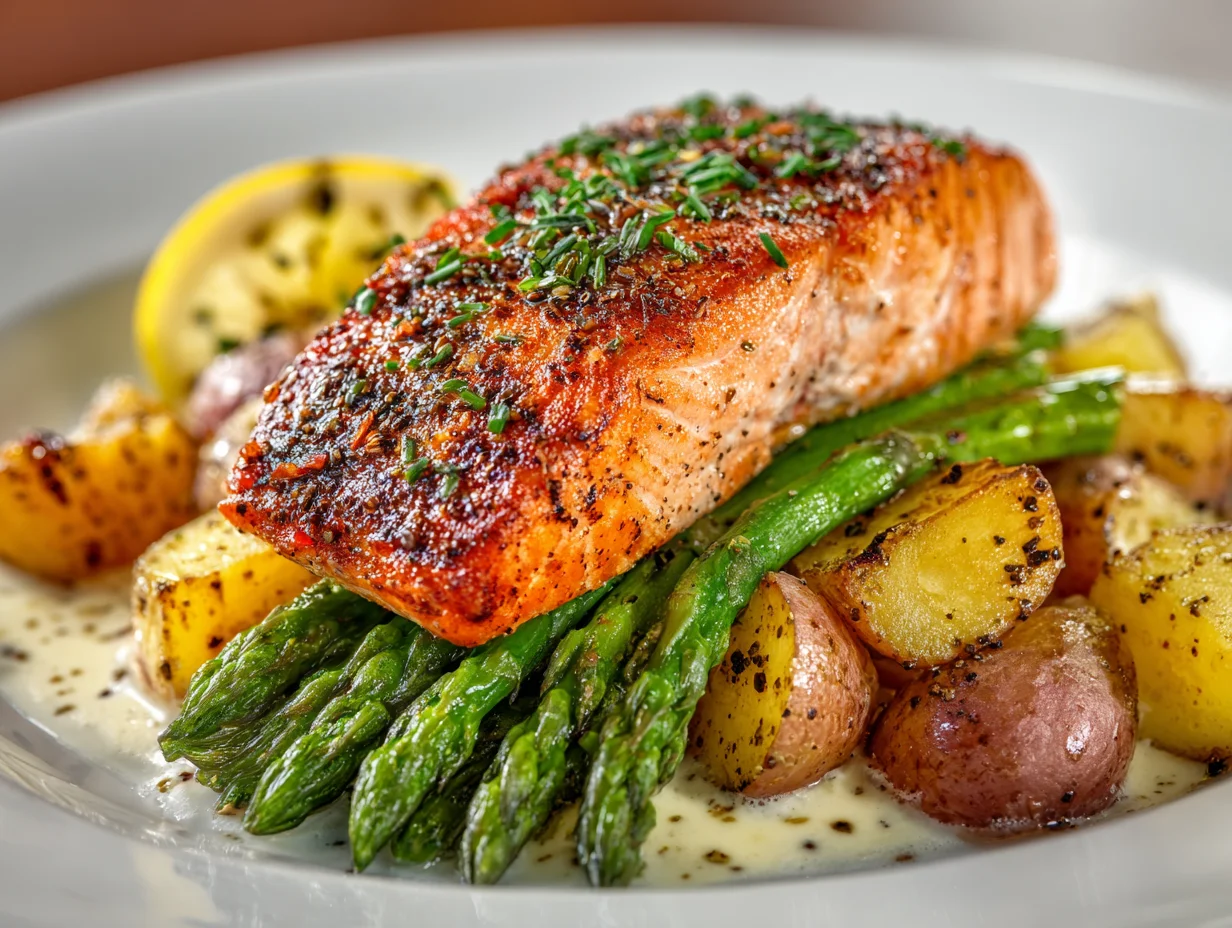
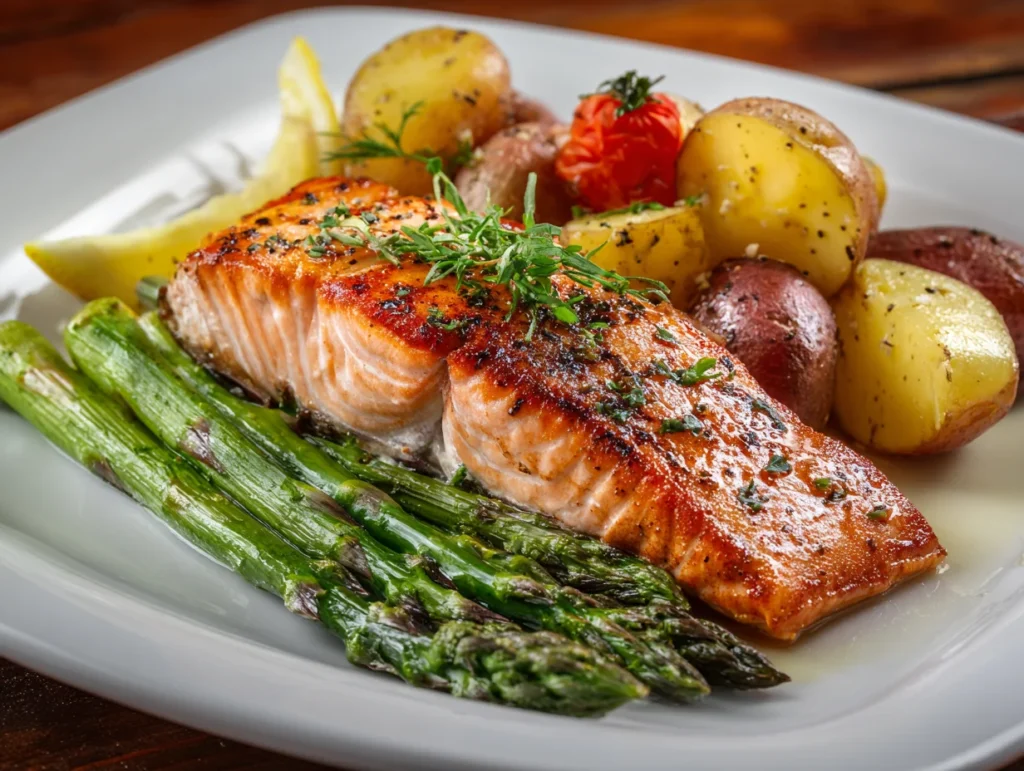
A perfectly cooked salmon fillet should flake effortlessly, remain moist at its core, and carry a delicate richness that feels both refined and comforting. In this Savory Salmon with Potatoes and Asparagus Recipe, we build a complete, restaurant-quality meal on a single tray—balancing crisp roasted potatoes, tender asparagus, and beautifully caramelized salmon.
This is not just a weeknight dinner; it’s a lesson in timing, heat control, and ingredient harmony. When executed correctly, each component finishes simultaneously, delivering contrast in texture and depth in flavor.
Ingredients List
- 4 salmon fillets (6 oz each), skin-on
- 1 ½ pounds baby Yukon Gold potatoes, halved
- 1 bunch fresh asparagus, trimmed
- 3 tablespoons extra virgin olive oil
- 3 cloves garlic, finely minced
- 1 teaspoon Dijon mustard
- Zest of 1 lemon
- 2 tablespoons fresh lemon juice
- 1 teaspoon fresh thyme leaves (or ½ teaspoon dried)
- 1 teaspoon fresh rosemary, finely chopped
- Salt and freshly ground black pepper, to taste
- Lemon wedges, for serving
Step-by-Step Instructions
Prepare the Potatoes
Preheat the oven to 400°F (200°C). Toss halved potatoes with 2 tablespoons olive oil, salt, pepper, and half of the thyme and rosemary. Spread evenly on a large baking sheet and roast for 20 minutes.
Build the Flavor Base
In a small bowl, whisk together the remaining olive oil, garlic, Dijon mustard, lemon zest, lemon juice, and remaining herbs. This mixture will gently infuse the salmon without overpowering its natural richness.
Add the Salmon
After the potatoes have roasted for 20 minutes, remove the tray. Push potatoes to one side and place salmon fillets skin-side down. Brush generously with the lemon-herb mixture.
Incorporate the Asparagus
Toss asparagus lightly with olive oil, salt, and pepper. Arrange beside the salmon in a single layer to ensure even roasting.
Roast to Perfection
Return the tray to the oven and roast for 10–12 minutes, depending on thickness. The salmon is done when it flakes easily with a fork and reaches an internal temperature of 125–130°F (52–54°C) for medium.
Rest and Finish
Allow the salmon to rest for 3–5 minutes before serving. Finish with a squeeze of fresh lemon and a pinch of flaky sea salt.
Cook Time
Total: 35–40 minutes
Prep: 10–15 minutes
Bake: 25–30 minutes
Servings
Makes approximately 4 servings
Nutritional Information (approx. per serving)
- Calories: 480–520 kcal
- Protein: 38g
- Carbohydrates: 32g
- Fat: 24g
- Fiber: 5g
- Omega-3 Fatty Acids: High
Storage Instructions
Store leftovers in an airtight container in the refrigerator for up to 3 days. Reheat gently at 300°F (150°C) to prevent drying out the salmon. Potatoes can also be reheated in a skillet for added crispness. Freezing is not recommended for optimal texture.
Suggestions
- Pair with a crisp Sauvignon Blanc or sparkling water with lemon.
- Add a light yogurt-dill sauce for additional brightness.
- Substitute sweet potatoes for a slightly sweeter, autumn-inspired variation.
- Finish with toasted almonds for subtle crunch and visual refinement.
Seasonal Relevance
This dish transitions beautifully across seasons. In spring, asparagus is at peak freshness. In summer, it offers a lighter alternative to grilled meats. During autumn and winter, roasted potatoes provide warmth and comfort while salmon delivers nourishing richness.
Conclusion
Savory Salmon with Potatoes and Asparagus is the epitome of intelligent simplicity. It respects ingredient integrity, utilizes precise timing, and delivers a complete meal with minimal cleanup. When prepared thoughtfully, it rivals restaurant-quality seafood dishes while remaining accessible for the home kitchen.
Master this technique, and you master the art of balanced roasting.
Savory Salmon with Potatoes and Asparagus Recipe
4
servings15
minutes30
minutes500
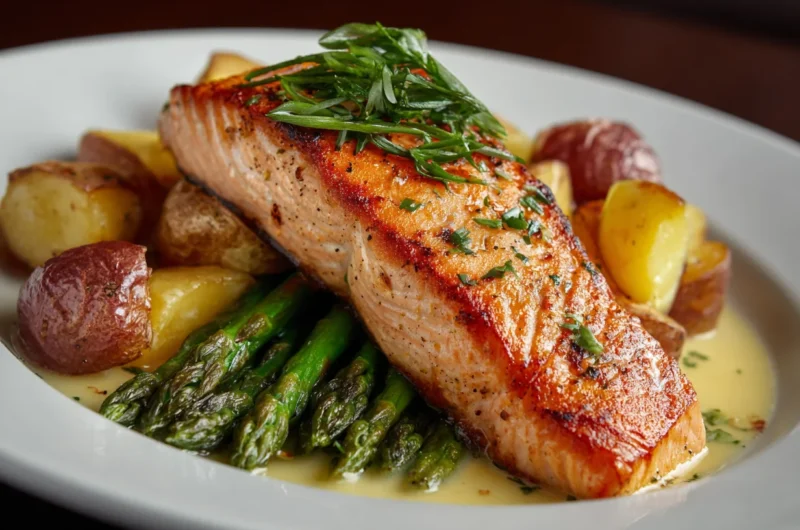
kcalA perfectly balanced sheet-pan dinner featuring tender, flaky salmon roasted alongside crispy baby potatoes and fresh asparagus. Infused with lemon, garlic, and herbs, this savory salmon recipe delivers restaurant-quality flavor with minimal cleanup, ideal for both elegant dinners and refined weeknight meals.
Ingredients
4 salmon fillets (6 oz each), skin-on
1 ½ pounds baby Yukon Gold potatoes, halved
1 bunch fresh asparagus, trimmed
3 tablespoons extra virgin olive oil
3 cloves garlic, minced
1 teaspoon Dijon mustard
Zest of 1 lemon
2 tablespoons fresh lemon juice
1 teaspoon fresh thyme (or ½ teaspoon dried)
1 teaspoon fresh rosemary, chopped
Salt and freshly ground black pepper, to taste
Lemon wedges, for garnish
Directions
- Preheat oven to 400°F (200°C). Line a large baking sheet with parchment paper.
- Toss halved potatoes with 2 tablespoons olive oil, salt, pepper, and half the herbs. Roast for 20 minutes.
- In a small bowl, whisk remaining olive oil, garlic, Dijon mustard, lemon zest, lemon juice, and remaining herbs.
- Remove tray from oven, push potatoes aside, and place salmon fillets skin-side down. Brush with lemon-herb mixture.
- Toss asparagus lightly with olive oil, salt, and pepper. Arrange beside salmon.
- Return to oven and roast for 10–12 minutes, until salmon flakes easily and asparagus is tender.
- Rest salmon for 3–5 minutes before serving. Finish with fresh lemon juice if desired.
Recipe Video
Notes
- For crispier potatoes, cut them smaller and roast slightly longer before adding salmon.
- Use a thermometer for precision; salmon is best at 125–130°F for medium doneness.
- This recipe works well with fresh dill or parsley as alternative herbs.
FAQs
1. Can I use frozen salmon fillets?
Yes, but thaw them completely in the refrigerator and pat dry thoroughly before cooking to ensure proper roasting and caramelization.
2. How do I prevent overcooking the salmon?
Use a thermometer and remove the salmon slightly before it reaches your desired doneness, as residual heat will continue cooking it during resting.
3. Can I make this dish dairy-free and gluten-free?
Absolutely. The recipe is naturally dairy-free and gluten-free as written, making it suitable for most dietary preferences.