Tender Low-and-Slow Crockpot Brisket

This crockpot brisket starts with a simple spice rub and a bed of sliced onions, then cooks low and slow for 8 to 10 hours until it slices cleanly and stays juicy. You need only about 1 cup of liquid, a good rest before slicing, and a sharp knife held against the grain. The result is tender, deeply savory brisket with rich cooking juices spooned over the top, ready for sandwiches, tacos, or a classic Sunday dinner.
Crockpot brisket is the dinner I make when I want something impressive without spending the whole day in the kitchen. You season the meat in the morning, tuck it into the slow cooker, and come home to a house that smells like a steakhouse. The long, gentle heat does the real work, turning tough connective tissue into silky, sliceable tenderness while you get on with your day. There is something magical about lifting the lid after hours of waiting and finding the meat ready to fall into perfect slices.
The beauty of this recipe lies in its simplicity. A short spice rub, a bed of onions, and just enough broth are all you need, because brisket brings its own rich flavor to the pot. You do not need fancy equipment or a long list of ingredients, and the method is forgiving as long as you respect two rules: keep the liquid low and let the meat rest before you slice it. Follow those, and this crockpot brisket delivers every single time.
Why the Crockpot Is the Easiest Way to Cook Crockpot Brisket
The crockpot is the easiest way to cook crockpot brisket because steady, low heat melts collagen slowly without drying the meat out. Brisket is a hardworking cut, and it needs time more than it needs high heat.
A slow cooker holds a gentle temperature for hours, so the tough fibers relax gradually and the fat bastes the meat from the inside out. High heat, by contrast, tightens the fibers and squeezes moisture out before the collagen melts, which is why oven brisket can turn dry while the crockpot version stays forgiving. If you love slow-braised beef, our Beef Bourguignon follows the same low-and-slow idea with red wine and bacon. Here, the same patience gives you sliced brisket with deep, beefy flavor and juices worth spooning over every serving.
Ingredients
For the rub:
- 2 tablespoons brown sugar
- 1 tablespoon smoked paprika
- 2 teaspoons garlic powder
- 2 teaspoons onion powder
- 1 teaspoon black pepper
- 1 teaspoon salt
- 1/2 teaspoon cayenne pepper (optional, for gentle heat)
For the brisket:
- 1 (3 to 4 lb) beef brisket flat
- 2 tablespoons olive oil
- 2 large onions, sliced
- 1 cup beef broth
- 2 tablespoons Worcestershire sauce
- 3 cloves garlic, smashed
Step-by-Step: Crockpot Brisket From Sear to Slice
This crockpot brisket follows five simple stages: season, sear, build the onion bed, cook low and slow, and rest before slicing. Each stage has one job, and none of them takes more than a few minutes of hands-on time. The slow cooker handles the long middle, so your morning prep stays close to 15 minutes.
1. Mix the Rub and Season Generously
Stir the brown sugar, smoked paprika, garlic powder, onion powder, black pepper, salt, and cayenne together in a small bowl. Pat the brisket dry with paper towels, then rub the mixture all over the meat, pressing it into the surface so it sticks. A dry surface takes the rub better than a wet one, and the sugar in the rub helps the crust darken beautifully during the sear.
2. Sear for Deep, Savory Color
Heat the olive oil in a large skillet over medium-high heat until it shimmers. Sear the brisket for 3 to 5 minutes per side, without moving it, until a deep brown crust forms. That crust is concentrated flavor from the Maillard reaction, a browning process that creates savory compounds. Do not skip this step, even on a busy morning, because it builds the flavor the whole dish rests on.
3. Build the Onion Bed
Spread the sliced onions over the bottom of the crockpot, then pour in the beef broth and Worcestershire sauce. Add the smashed garlic cloves, then lay the seared brisket on top with the fat side up. The onions lift the meat out of the liquid and melt into a sweet, jammy base, while the fat cap on top slowly bastes the meat as it cooks. Use only about 1 cup of liquid here, since the brisket releases plenty of its own juices.
4. Cook Low and Slow
Cover the crockpot and cook on low for 8 to 10 hours, or on high for 4 to 5 hours if you are short on time. Low is my go-to because it gives the collagen the longest, gentlest melt, and the slices hold together better. Resist lifting the lid to peek, since every peek drops the temperature and adds cooking time. The brisket is done when a fork slides in with little resistance and the meat yields easily.
5. Rest, Then Slice Against the Grain
Lift the brisket onto a cutting board and tent it loosely with foil for 15 minutes. Resting lets the juices settle back into the meat instead of running out onto the board, and it makes slicing much cleaner. Slice against the grain (more on finding it below) into 1/4-inch slices, then spoon the warm cooking juices over the top before serving.
Slicing Against the Grain, Done Right
Slicing against the grain means cutting across the direction the muscle fibers run, so each slice has short fibers that feel tender instead of stringy. Look for fine lines running in one direction, like grain in wood.
Turn the brisket so those lines run left to right, then slice across them, not along them.
Some briskets change grain direction partway through, especially near the thicker end. If the lines suddenly shift, simply turn that section and keep cutting across the new direction. A long, sharp knife helps here, and slow, even strokes beat sawing back and forth. This one habit is the difference between brisket that melts in your mouth and brisket that feels chewy no matter how long it cooked.
Serving and Storing Your Brisket
Serve the sliced brisket with its cooking juices spooned over the top, alongside the soft, sweet onions from the pot. It is wonderful piled onto crusty rolls for sandwiches, tucked into warm tortillas for tacos, or plated as a Sunday dinner with mashed potatoes. For sides, browse our salads and sides for something fresh to balance the richness, and serve the meat over rice from our pasta and rice recipes when you want the juices to soak into something.
Leftovers keep in the fridge for 3 to 4 days in an airtight container, ideally with some cooking liquid poured over them. Reheat gently in a covered pan over low heat, or in a 300°F oven until just warm, so the slices stay moist. Freeze sliced brisket with its juices for up to 3 months, thawing overnight in the fridge.
- Nutrition (approximately, per serving): 420 calories, 28 g protein, 3 g carbohydrates, 32 g fat
- Values vary by brand and cut, and the numbers above cover the brisket and cooking juices only, not rolls or sides.
Mistakes That Dry Brisket Out
The most common mistake with crockpot brisket is adding too much liquid, which boils the meat instead of braising it. Stick to about 1 cup of broth, and trust that the brisket will release its own juices.
A second mistake is lifting the lid again and again to check, which drops the temperature and stretches the cook time. Let the slow cooker do its quiet work undisturbed.
Skipping the rest is the third mistake, and it costs you juices you spent all day building. Fifteen minutes of patience on the cutting board keeps the slices moist and makes them easier to cut. Finally, always slice against the grain, and never slice with it, since even perfectly cooked brisket turns chewy when the fibers stay long. Avoid these four traps and your brisket stays juicy from the first slice to the last.
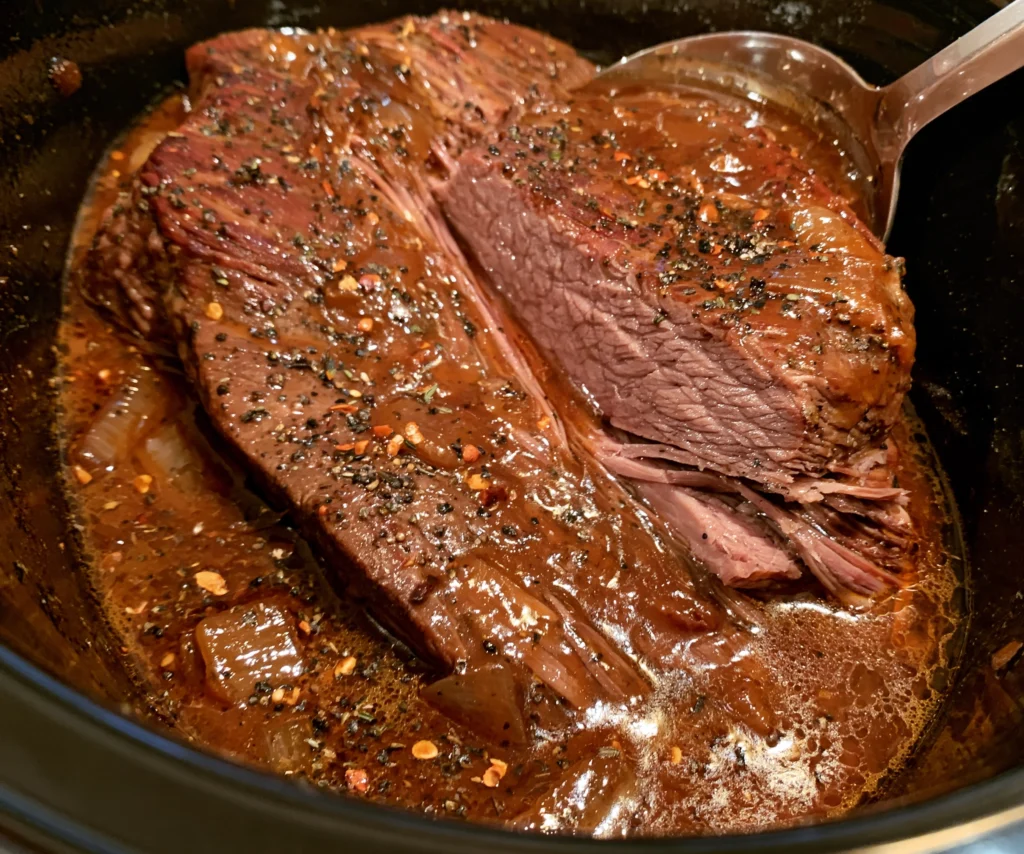
Time to Set It and Forget It
This crockpot brisket proves that an impressive Sunday dinner does not require a complicated technique or a day chained to the stove. A simple rub, a bed of onions, and a long, gentle cook give you tender slices and rich juices with about 15 minutes of real effort. If you are hungry for more slow-cooked comfort, browse our beef recipes for the next one to try.
Give this recipe a try this week and let me know how it turns out. I would love to hear your variations, whether you piled it onto sandwiches, tucked it into tacos, or served it straight up with the onions from the pot.
Frequently Asked Questions
Should I cook brisket on low or high in the crockpot?
Low is the better choice for crockpot brisket, since 8 to 10 hours on low gives the collagen the longest, gentlest melt and slices that hold together. High works in 4 to 5 hours when you are short on time, but the texture can turn slightly less even. If your schedule allows it, start it on low in the morning and let it cook undisturbed.
How do I know when crockpot brisket is done?
Brisket is done when a fork slides into the thickest part with little resistance and the meat yields easily when you twist. For sliceable brisket, that usually happens around 190°F to 200°F on an instant-read thermometer. If the fork still meets firm resistance, give it another hour, since tough brisket almost always means it needs more time, not less.
Why is my brisket tough after 8 hours?
Tough brisket after 8 hours usually means it simply is not finished yet, because collagen melts on its own schedule and every cut is a little different. Check that the lid sealed well and the cooker was truly on low, then cook for another 1 to 2 hours and test again. Slicing with the grain can also make tender meat feel tough, so double-check your slicing direction too.
Can I cook brisket without searing it first?
Yes, you can skip the sear and the brisket will still turn tender, but you will lose the deep, savory crust flavor that browning builds. If you are truly pressed for time, rub the meat well and add an extra splash of Worcestershire sauce for depth. When you have even 10 minutes to spare, though, the sear is worth it for the flavor it adds to the whole pot.
How do I store and reheat leftover brisket without drying it out?
Store leftover brisket in the fridge for 3 to 4 days with some cooking liquid poured over the slices, which keeps them moist. Reheat gently in a covered pan over low heat, or in a 300°F oven until just warm, adding a splash of broth if the pan looks dry. For longer storage, freeze the slices with their juices for up to 3 months and thaw overnight in the fridge.
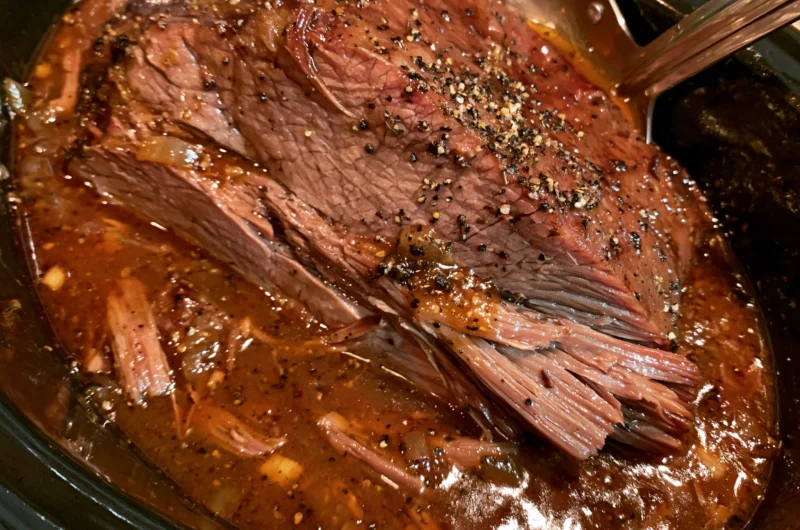
Tender Low-and-Slow Crockpot Brisket
Tender, deeply savory brisket with rich cooking juices, slow-cooked on a bed of onions — ready for sandwiches, tacos, or Sunday dinner.
8
servings15
minutes8
hours420
kcal8
hours30
minutesIngredients
- For the rub
2 tablespoons brown sugar
1 tablespoon smoked paprika
2 teaspoons garlic powder
2 teaspoons onion powder
1 teaspoon black pepper
1 teaspoon salt
1/2 teaspoon cayenne pepper (optional, for gentle heat)
- For the brisket
1 (3 to 4 lb) beef brisket flat
2 tablespoons olive oil
2 large onions, sliced
1 cup beef broth
2 tablespoons Worcestershire sauce
3 cloves garlic, smashed
Directions
- Mix the Rub and Season Generously: Stir the rub ingredients together, pat the brisket dry, and rub the mixture all over the meat.
- Sear for Deep, Savory Color: Sear in shimmering olive oil over medium-high heat for 3 to 5 minutes per side until a deep brown crust forms.
- Build the Onion Bed: Spread the onions in the crockpot, add broth, Worcestershire, and garlic, and lay the brisket on top, fat side up.
- Cook Low and Slow: Cover and cook on low for 8 to 10 hours, or on high for 4 to 5 hours, until a fork slides in with little resistance.
- Rest, Then Slice Against the Grain: Tent loosely with foil for 15 minutes, slice against the grain into 1/4-inch slices, and spoon the warm cooking juices over the top.
Notes
- Keep the liquid low — about 1 cup of broth only.
- Do not lift the lid to peek.
- Rest 15 minutes before slicing, always against the grain.
- Fridge 3 to 4 days; freezer with juices up to 3 months.