Classic Sunday Pot Roast
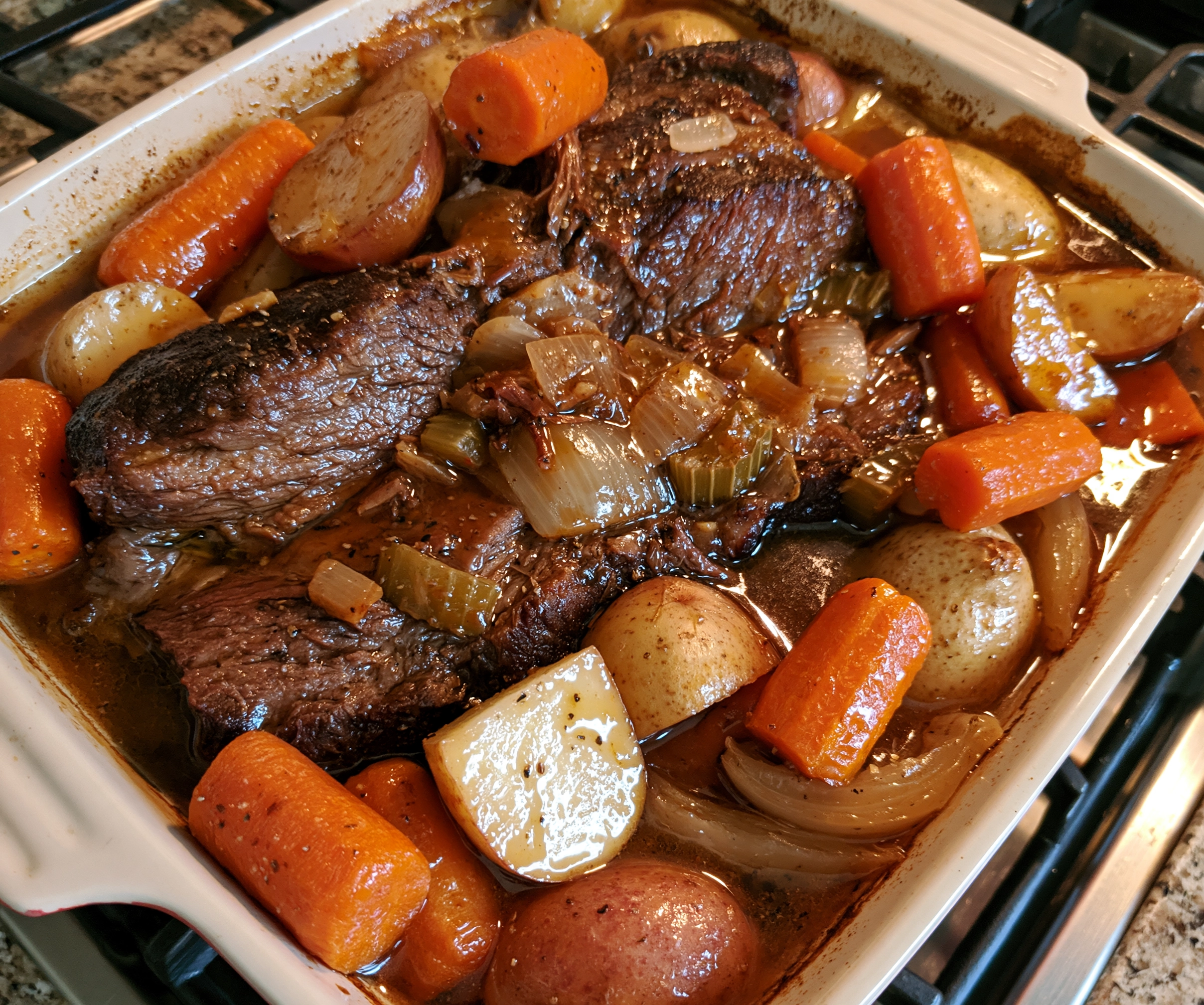
This pot roast starts with a well-marbled chuck roast, seared until deeply browned, then braised low in the oven with broth and aromatics. Vegetables go in midway so they cook through without turning to mush, and the pot juices become a rich gravy. The result is fork-tender beef with carrots and potatoes, ready for a Sunday table any day of the week.
Pot roast is the dinner that taught me patience tastes better than hurry. You sear a chuck roast on a quiet afternoon, slide the pot into the oven, and let time turn a tough cut into something spoon-tender. The house fills with the smell of beef, garlic, and thyme, and by evening the meat falls apart under a fork. There is something magical about a meal that asks so little and gives back so much comfort.
The beauty of this recipe lies in its honesty. There are no shortcuts worth taking here, just a good cut, a hot pan, and a low oven. The vegetables cook in the same pot, soaking up flavor from the braise, and the gravy practically makes itself from the juices left behind.
It is the kind of dinner that makes an ordinary Sunday feel special. This dish delivers every single time, and it tastes even better the next day.
Why Chuck Roast Makes the Best Pot Roast
Chuck roast is the best choice because its marbling and connective tissue melt slowly into tender, juicy meat. Leaner cuts dry out over a long braise, but chuck has enough fat to baste itself from within. At about 200°F, the collagen turns to gelatin, which gives the meat its spoon-tender texture and the gravy its silky body.
Look for a boneless chuck roast of 3 to 4 pounds with visible white marbling running through the meat. A roast labeled chuck eye or chuck shoulder works beautifully too, since both come from the same hardworking shoulder area. If you love beef braised until tender, our Old-Fashioned Vegetable Beef Soup follows the same slow-cooking idea in soup form.
Ingredients
For the roast:
- 1 (3 to 4 lb) boneless beef chuck roast
- 2 tablespoons olive oil
- 1 teaspoon salt
- 1 teaspoon black pepper
For the braise:
- 2 onions, quartered
- 4 cloves garlic, smashed
- 2 tablespoons tomato paste
- 2 cups beef broth
- 1 cup red wine (optional, replace with extra broth if you prefer)
- 2 sprigs fresh thyme
- 2 bay leaves
For the vegetables:
- 4 carrots, cut into 2-inch pieces
- 1 1/2 lb baby potatoes, halved
- 2 tablespoons cornstarch mixed with 2 tablespoons cold water (for the gravy, if needed)
Step-by-Step: Pot Roast Oven Braise
This recipe follows five stages: sear, build the braise, cook low, add the vegetables, and make the gravy. The hands-on work stays close to 20 minutes, and the oven handles the long middle. Keep the pot covered and the heat gentle, and the meat will tell you when it is ready.
1. Sear Until Deeply Browned
Pat the roast dry and season it all over with salt and pepper. Heat the olive oil in a Dutch oven over medium-high heat until it shimmers, then sear the roast for 4 to 5 minutes per side without moving it. A deep brown crust builds savory flavor through the Maillard reaction, a browning process that creates rich, roasted notes. Do not skip the sear, since it seasons the whole pot, not just the surface.
2. Build the Braise
Set the roast aside and soften the quartered onions in the same pot for 3 to 4 minutes, scraping up the browned bits from the bottom. Stir in the tomato paste and garlic and cook for 1 minute until fragrant, then pour in the red wine and let it bubble for 2 minutes. Add the beef broth, thyme, and bay leaves, then return the roast to the pot with any juices from the plate.
3. Braise Low and Slow
Cover the pot and slide it into a 300°F oven for about 2 hours. The gentle heat melts the collagen slowly, and the covered pot keeps the moisture in. Resist lifting the lid to peek, since every peek drops the temperature and adds time. The meat should feel noticeably softer when you check it at the 2-hour mark.
4. Add the Vegetables Midway
After about 2 hours, nestle the carrots and potatoes around the roast in the pot, spooning some braising liquid over them. Cover and return the pot to the oven for 1 1/2 to 2 hours more, until the vegetables are tender and the meat yields easily to a fork. Adding the vegetables midway is the key move here, and the next section explains why it matters.
5. Rest and Make the Gravy
Lift the roast and vegetables onto a platter and tent loosely with foil for 15 minutes. Skim any fat from the surface of the braising liquid, then simmer it on the stove for 5 minutes to concentrate the flavor. If you want a thicker gravy, whisk in the cornstarch slurry and simmer for 1 to 2 minutes until it coats a spoon.
When to Add the Vegetables
Vegetables belong in the pot midway through the braise, not at the start, because 3 1/2 to 4 hours turns carrots and potatoes to mush. Added at the 2-hour mark, they cook for 1 1/2 to 2 hours, which is exactly enough.
This timing keeps each vegetable distinct on the plate instead of dissolving into the gravy.
Cut the carrots into generous 2-inch pieces and halve the baby potatoes, since small pieces overcook even in the shorter window. Tuck them around the roast rather than piling them on top, so they sit in the liquid and cook evenly. If a piece still feels firm at the end, give the pot another 15 minutes covered before serving.
Serving and Storing Your Roast
Serve the sliced or pulled roast with its own carrots and potatoes, spooning the warm gravy over everything. The pin’s promise holds here: this is a complete plate from one pot, and it needs little beside it. A basket of crusty bread never hurts, since the gravy deserves something to mop it up. For a fresh contrast, browse our salads and sides for a crisp salad, and check our soup recipes when the leftovers inspire a second meal.
Leftovers keep in the fridge for 3 to 4 days in an airtight container with some gravy poured over them. Reheat gently in a covered pan over low heat, or in a 300°F oven until just warm. For longer storage, freeze the meat with gravy for up to 3 months, thawing overnight in the fridge before reheating.
- Nutrition (approximately, per serving): 520 calories, 38 g protein, 22 g carbohydrates, 30 g fat
- Values vary by brand and cut, and the numbers above cover the roast, vegetables, and gravy.
Troubleshooting Tough or Dry Roast
Tough roast almost always means it needs more time, not less, since collagen melts on its own schedule. If the fork still meets resistance at 4 hours, cover the pot and cook for another 30 to 60 minutes.
Dry roast usually means the heat ran too hot or the meat was sliced too soon, so keep the oven at 300°F and rest the roast for 15 minutes.
Mushy vegetables mean they went in too early, so hold them until the midway point next time. Thin gravy is an easy fix: simmer the liquid to reduce it, or whisk in the cornstarch slurry until it coats a spoon. None of these problems require starting over, and all of them teach you something for the next roast.
Time for Sunday Dinner
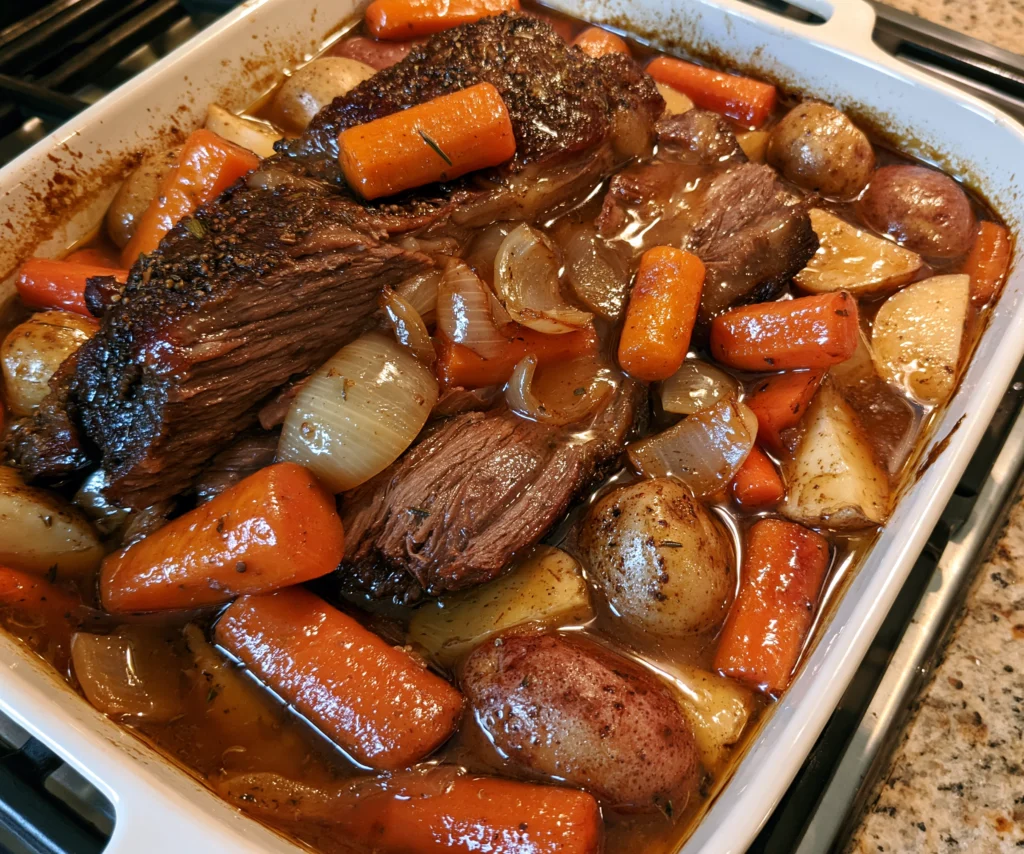
This pot roast proves that a classic Sunday dinner does not require complicated technique or a shelf of special ingredients. A chuck roast, a hot pan, and a low oven give you fork-tender beef, vegetables from the same pot, and gravy worth spooning over everything. If you are hungry for more beef comfort, browse our beef recipes for the next slow-cooked favorite.
Give this recipe a try this Sunday and let me know how it turns out. I would love to hear your variations, whether you kept it classic with carrots and potatoes or added your own root vegetables to the pot.
Frequently Asked Questions
What cut of beef is best for pot roast?
Chuck roast is the best cut for pot roast because its marbling and connective tissue melt into tender, juicy meat over a long braise. Look for a boneless chuck roast of 3 to 4 pounds, or a chuck eye or chuck shoulder roast, which come from the same area. Leaner cuts like round dry out over hours, so save those for quick cooking instead.
How long does pot roast take in the oven?
It takes about 3 1/2 to 4 hours in a 300°F oven, including about 2 hours before the vegetables go in and 1 1/2 to 2 hours after. The total time depends on the size of your roast and how tightly your pot seals. Judge doneness by the fork test, since the meat should yield easily when it is truly ready.
When should I add potatoes and carrots to pot roast?
Add potatoes and carrots about 2 hours into the braise, so they cook for 1 1/2 to 2 hours and turn tender without turning to mush. Added at the start, they would spend nearly 4 hours in the pot and dissolve into the gravy. Cut them into generous pieces and tuck them into the liquid around the roast for even cooking.
Why is my pot roast tough?
Tough pot roast usually means it needs more time, since collagen melts slowly and every roast finishes on its own schedule. Cover the pot and cook for another 30 to 60 minutes, then test again with a fork. Slicing against the grain also helps, since long fibers can make even tender meat feel chewy.
Can I make pot roast in a slow cooker instead?
Yes, it adapts beautifully to the slow cooker, with the same chuck roast cooked on low for 8 to 10 hours. The method differs from the oven version: the slow cooker needs less liquid, and the vegetables can go in at the start if they are cut large. A dedicated slow-cooker version keeps the timing and liquid levels honest for that method.
Classic Sunday Pot Roast
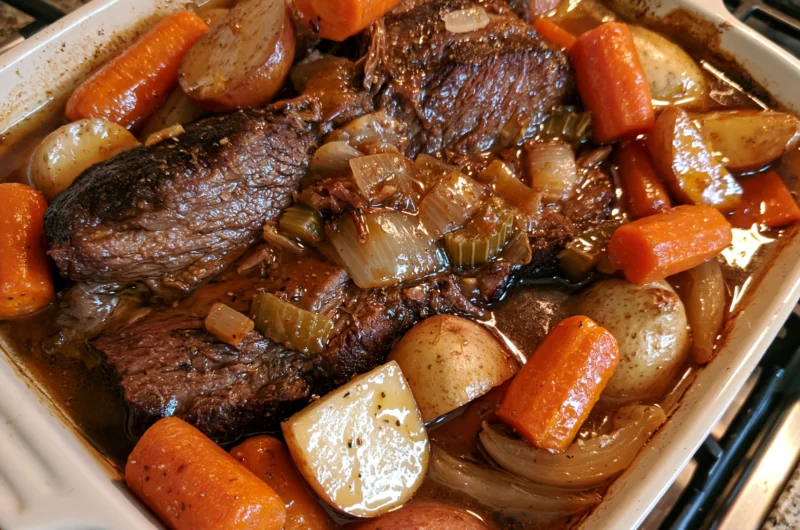
Fork-tender chuck roast with carrots and potatoes in rich gravy — a complete Sunday plate from one pot.
6
servings20
minutes3
hours30
minutes520
kcal4
hoursIngredients
- For the roast:
1 (3 to 4 lb) boneless beef chuck roast
2 tablespoons olive oil
1 teaspoon salt
1 teaspoon black pepper
- For the braise:
2 onions, quartered
4 cloves garlic, smashed
2 tablespoons tomato paste
2 cups beef broth
1 cup red wine (optional, replace with extra broth if you prefer)
2 sprigs fresh thyme
2 bay leaves
- For the vegetables:
4 carrots, cut into 2-inch pieces
1 1/2 lb baby potatoes, halved
2 tablespoons cornstarch mixed with 2 tablespoons cold water (for the gravy, if needed)
Directions
- Sear Until Deeply Browned: Pat the roast dry, season, and sear in shimmering olive oil for 4 to 5 minutes per side.
- Build the Braise: Soften the onions, stir in tomato paste and garlic, deglaze with wine, add broth, thyme, and bay, and return the roast.
- Braise Low and Slow: Cover and bake at 300°F for about 2 hours.
- Add the Vegetables Midway: Nestle carrots and potatoes around the roast and bake 1 1/2 to 2 hours more until tender and fork-yielding.
- Rest and Make the Gravy: Tent 15 minutes, skim fat, simmer the liquid 5 minutes, and whisk in the cornstarch slurry if a thicker gravy is wanted.
Notes
- Vegetables go in midway (at the 2-hour mark), never at the start. Red wine is optional. Rest 15 minutes before serving. Fridge 3 to 4 days with gravy; freezer with gravy up to 3 months.


One Comment