Creamy Cajun Chicken Pasta with Blackened Chicken

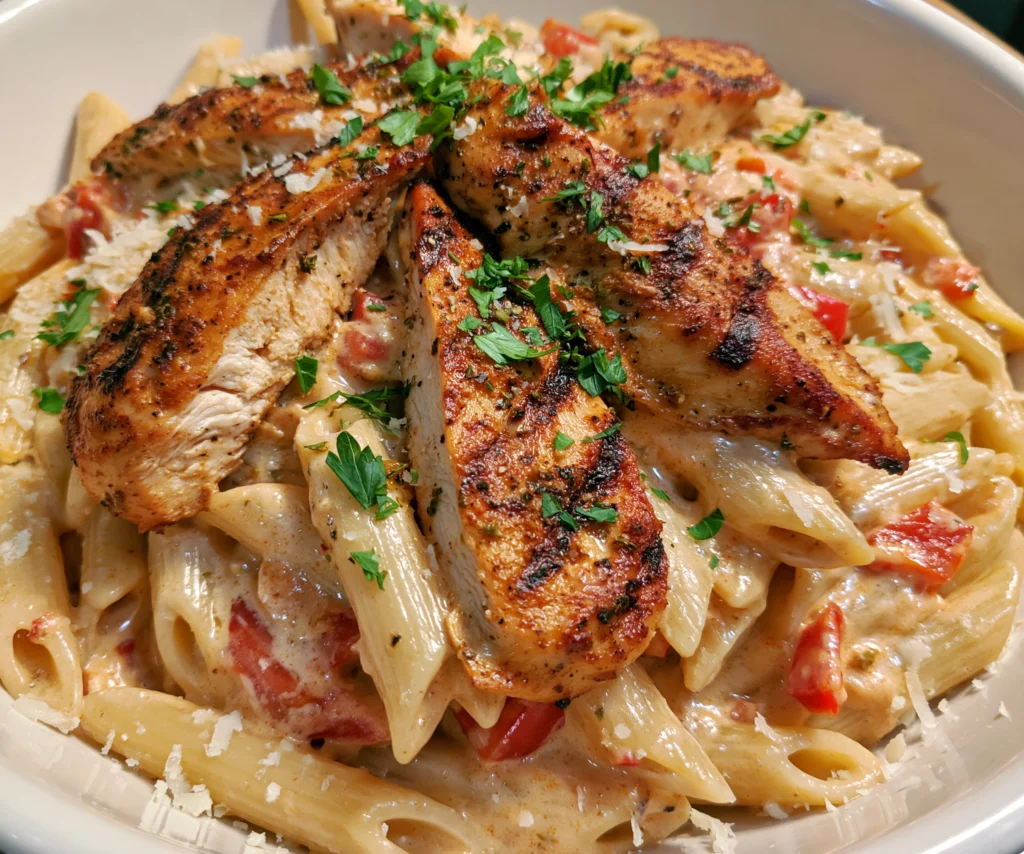
This Cajun chicken pasta layers penne in a silky, Cajun-spiced cream sauce with sweet red bell peppers, then tops it with sliced blackened chicken in a dark, smoky crust from a homemade spice blend. It tastes like a restaurant Friday night but lands on your table in about 30 minutes, serves six, and keeps 3 to 4 days in the fridge.
There’s something magical about spice-coated chicken hitting a ripping-hot skillet—the paprika blooms, the edges turn dark and crusty, and the kitchen smells like a Friday night out. This Cajun chicken pasta captures that moment at home: a deep, smoky crust, penne in silky cream sauce, and dinner in about 30 minutes.
The blend is pure pantry staples, mixed in a minute and used twice—once on the chicken, once in the sauce. If creamy pasta dinners are your love language, our pasta and rice recipes are full of inspiration—but start here, because the crust alone is worth it.
What Is Blackened Chicken, and Why Does It Make This Pasta?
Blackened chicken is chicken coated in a bold spice blend and seared in a very hot skillet until the spices form a dark, smoky crust—never burnt, just deeply caramelized. That crust is the point: its smoky heat slices through the rich cream sauce and keeps every bite balanced instead of heavy.
The blend does three jobs: smoked paprika brings the deep, woodsy base, cayenne the heat, and thyme and oregano the herbal note that keeps the crust from tasting flat. Sear it hard and the spices darken past golden, almost like the chicken sat over an open flame.
Ingredients for This Cajun Chicken Pasta Recipe
For the Blackening Seasoning:
- 2 tablespoons smoked paprika
- 1 tablespoon cayenne pepper
- 1 tablespoon onion powder
- 2 teaspoons garlic powder
- 1 teaspoon salt
- 1 teaspoon black pepper
- 1 teaspoon dried thyme
- 1 teaspoon dried oregano
For the Chicken and Pasta:
- 1 1/2 to 2 pounds boneless, skinless chicken breasts
- About 2 tablespoons blackening seasoning, for coating
- 2 tablespoons olive oil
- 12 ounces penne pasta
For the Creamy Cajun Sauce:
- 2 tablespoons butter
- 1 medium yellow onion, diced
- 2 red bell peppers, cut into chunks
- 4 garlic cloves, minced
- 1/4 cup chicken broth, for deglazing
- 1 1/2 cups heavy cream
- 1 to 2 teaspoons blackening seasoning
- 3/4 cup freshly grated Parmesan, plus more for serving
- 1/4 cup chopped fresh parsley
Short on herbs? About 3 tablespoons of store-bought Cajun seasoning replaces the blend—taste before salting. Fresh-grated Parmesan melts smoothest; pre-shredded can go grainy.
Prep is 10 minutes, cooking about 20—roughly 30 minutes total, with the pasta water heating while you season the chicken.
How to Make Cajun Chicken Pasta Step by Step
The dish flows in one motion: blacken the chicken, boil the penne while it rests, then build the cream sauce in the same skillet so every browned bit lands in the sauce. Slice the chicken over the top, and dinner is ready in about 30 minutes.
1. Pound and Coat the Chicken in Blackening Magic
Pat the chicken dry, then pound each breast between parchment to an even 1/2 inch—uneven thickness is why blackened chicken cooks unevenly. Coat both sides with the blend, pressing it in so it clings.
2. Boil the Penne and Save That Pasta Water
Cook the penne in well-salted water until just al dente, about 1 minute shy of the package directions—it finishes in the sauce. Before draining, save 1 cup of the starchy cooking water to loosen the sauce later.
3. Blacken the Chicken to a Deep, Smoky Crust
Heat the oil in a large cast-iron skillet over medium-high until shimmering; sear the chicken 3 to 4 minutes per side without moving it. A steady sizzle means the crust is forming—a crowded pan steams instead of searing, a lesson my beef stir fry taught me. Cook to 165°F, rest 5 minutes, then slice into strips.
4. Soften the Peppers and Onion in the Same Skillet
Melt the butter in the same skillet and soften the onion and peppers for 4 to 5 minutes, scraping up the dark bits—called fond—as you stir. Add the garlic for the last minute, then the broth.
5. Simmer the Cream Sauce to Silky Perfection
Pour in the cream and extra seasoning and bring it to a gentle simmer—small bubbles, never a rolling boil. Simmer 3 to 4 minutes until it coats a spoon, then off the heat, stir in the Parmesan until glossy. Loosen with splashes of pasta water if needed.
When the sauce needs loosening, add the pasta water a spoonful at a time and stir between spoonfuls. A full cup poured in at once thins the sauce past the point where the Parmesan can bring it back, and the penne will finish absorbing liquid in the pan anyway. Two or three spoonfuls is usually enough for a sauce that coats the back of a spoon and still clings to the penne.
6. Toss, Top, and Serve with Love
Add the drained penne and toss until every tube gleams. Lay the sliced chicken over the top—never toss it in, so the crust stays crisp—and finish with Parmesan and parsley. Serve straight from the skillet with warm garlic bread.
How Do You Keep the Cream Sauce Silky, Not Broken or Thin?
A Cajun cream sauce stays silky when the cream simmers gently—never boils hard—and the Parmesan goes in off the heat. Boiling splits cream sauces and turns cheese stringy, so keep the bubbles small and lazy. Stir the cheese in gradually and the sauce turns glossy instead of grainy.
If the sauce looks thin, give it two more minutes at that gentle simmer—cream thickens as it reduces. A split sauce usually comes back off the heat with warm pasta water and a steady whisk. Let the cream sit out while the chicken cooks—cold cream can shock a hot pan.
Serving Ideas, Nutrition, and Easy Swaps
Serve it the way the photos promise: glossy penne in deep bowls, the sliced chicken fanned over the top, warm garlic bread alongside, and extra Parmesan on the table.
A crisp green salad cuts the richness, and our salads and sides collection is full of fresh pairings for a plate this hearty.
One generous serving lands at approximately these numbers, give or take your exact ingredients:
- Calories: approximately 690
- Protein: approximately 44g
- Carbohydrates: approximately 48g
- Fat: approximately 38g
Slow Cooker: Everything but the dairy cooks on low for 2 1/2 to 3 1/2 hours; stir in the cream and Parmesan at the end, toss with separately cooked penne, and sear first for the crust.
Extra Vegetables: Mushrooms, broccoli, zucchini, or spinach stir right into the simmering sauce.
Lighter: Half-and-half instead of cream gives a slightly thinner sauce—keep the simmer extra gentle.
Gluten-Free: Use gluten-free penne and pull it 1 minute early; it softens faster in the sauce.
Protein Swap: Shrimp blackens in about 2 minutes per side; andouille sausage makes it heartier.
How Do You Store and Reheat Leftovers?
Leftovers keep 3 to 4 days in an airtight container in the fridge, and the sauce deepens in flavor overnight. It looks thick and set when cold—that’s the cream firming up, not a problem. A splash of broth, cream, or milk while reheating brings it back to silky.
Reheat gently over medium-low, stirring often, or in short microwave bursts so the cream never boils. I don’t recommend freezing it—the sauce separates as it thaws and the penne goes soft. For make-ahead nights, store chicken, sauce, and pasta separately and combine as you reheat.
Why This Dish Earns a Spot in Your Rotation
This is the dinner that turns an ordinary Tuesday into a small occasion—smoky, creamy, a little fiery, and done in half an hour. Cajun chicken pasta proves that restaurant-quality flavor doesn’t require a reservation or a sink full of pans. If creamy chicken pastas are your thing, try my Marry Me Chicken Pasta next.
Give this recipe a try, save it for your next pasta night, and browse our chicken recipes when you’re ready for a new favorite. I’d love to hear your variations—extra vegetables, a different protein, your own heat level—so tell me how you made it yours.
Why This Blackened Chicken Method Works
This method works because every step protects the one after it. Pounding the chicken to an even 1/2 inch means the crust forms at the same rate across the whole breast, so no thin edge burns while the thick end stays pale. Searing without moving the chicken lets the spice blend darken into a real crust instead of steaming off, and resting before slicing keeps the juices in the meat. Building the sauce in that same skillet turns the dark browned bits into flavor, and stirring the Parmesan in off the heat keeps it glossy instead of grainy.
The honest limit is that the crust is a one-time thing: it is at its best in the first 15 minutes after slicing, and it softens the moment the chicken sits in the sauce or goes into the fridge. This is also a dish that does not wait well — the cream sauce thickens as it cools and can split if it is reheated hard, so serve it straight from the skillet and reheat leftovers gently over medium-low with a splash of broth. If your skillet is not truly hot or the chicken is crowded, the spices steam instead of blackening, and no amount of extra seasoning fixes that crust.
Frequently Asked Questions
Can I Make Cajun Chicken Pasta in the Slow Cooker?
Yes! Everything but the dairy goes in on low for 2 1/2 to 3 1/2 hours—chicken, peppers, onion, garlic, and 1/2 cup broth. Stir in the cream and Parmesan for the last 20 to 30 minutes; toss with penne cooked separately.
How Do I Make It Less Spicy for Kids?
Absolutely! Cut the cayenne to 1 teaspoon or skip it, and use a lighter hand with the blend. A little extra cream in each bowl cools the rest down.
Can I Use Chicken Thighs or Shrimp Instead of Breasts?
Yes, both work beautifully. Boneless thighs stay extra juicy on the same timing; shrimp need only about 2 minutes per side, laid on top at serving so they stay plump.
Can I Make the Sauce with Half-and-Half Instead of Heavy Cream?
Definitely! Half-and-half gives a lighter sauce that still turns silky if it never boils hard. Simmer a minute longer and adjust with pasta water.
How Long Do Leftovers Last, and Can I Freeze Cajun Chicken Pasta?
Leftovers keep 3 to 4 days in the fridge; reheat gently with a splash of broth or cream. Freezing isn’t ideal—the sauce can separate as it thaws.
Creamy Cajun Chicken Pasta with Blackened Chicken
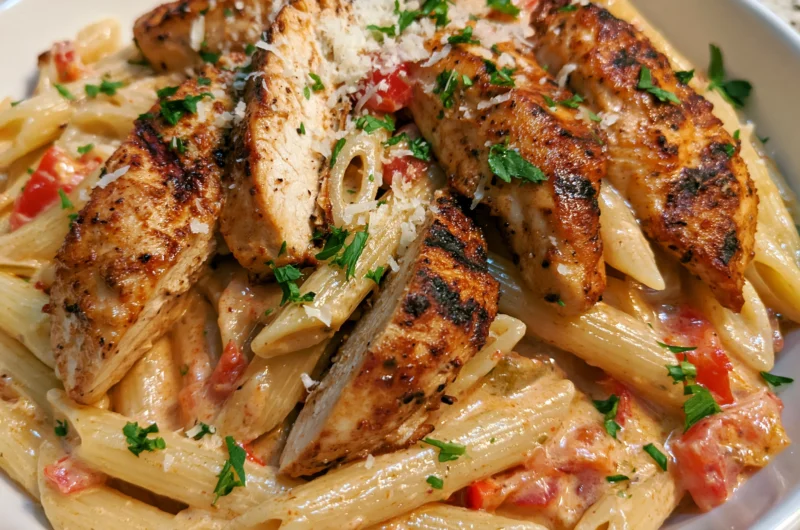
Penne in a silky Cajun cream sauce with red pepper chunks, topped with sliced blackened chicken, Parmesan and parsley.
6
servings10
minutes20
minutes690
kcal30
minutesIngredients
- For the Blackening Seasoning:
2 tablespoons smoked paprika
1 tablespoon cayenne pepper
1 tablespoon onion powder
2 teaspoons garlic powder
1 teaspoon salt
1 teaspoon black pepper
1 teaspoon dried thyme
1 teaspoon dried oregano
- For the Chicken and Pasta:
1 1/2 to 2 pounds boneless, skinless chicken breasts
About 2 tablespoons blackening seasoning, for coating
2 tablespoons olive oil
12 ounces penne pasta
- For the Creamy Cajun Sauce:
2 tablespoons butter
1 medium yellow onion, diced
2 red bell peppers, cut into chunks
4 garlic cloves, minced
1/4 cup chicken broth, for deglazing
1 1/2 cups heavy cream
1 to 2 teaspoons blackening seasoning
3/4 cup freshly grated Parmesan, plus more for serving
1/4 cup chopped fresh parsley
Directions
- Pat chicken dry; pound each breast between parchment to an even 1/2 inch; coat both sides with blackening seasoning, pressing it in.
- Cook penne in well-salted water until just al dente, about 1 minute shy of the package; reserve 1 cup pasta water, then drain.
- Sear chicken in hot oil in a cast-iron skillet over medium-high, 3 to 4 minutes per side without moving, to 165°F; rest 5 minutes and slice into strips.
- Melt butter in the same skillet; soften onion and red peppers 4 to 5 minutes, scraping up the fond; add garlic for the last minute, then the broth to deglaze.
- Pour in the cream and 1 to 2 teaspoons seasoning; gentle simmer 3 to 4 minutes until it coats a spoon; off the heat, stir in Parmesan until glossy, loosening with pasta water as needed.
- Toss the penne through the sauce until gleaming; lay the sliced chicken over the top; finish with Parmesan and parsley; serve with warm garlic bread.
Notes
- Leftovers keep 3 to 4 days refrigerated; reheat gently over medium-low with a splash of broth, cream or milk. Freezing is not recommended—the sauce can separate.