20-Minute Chicken Lo Mein That Beats Takeout
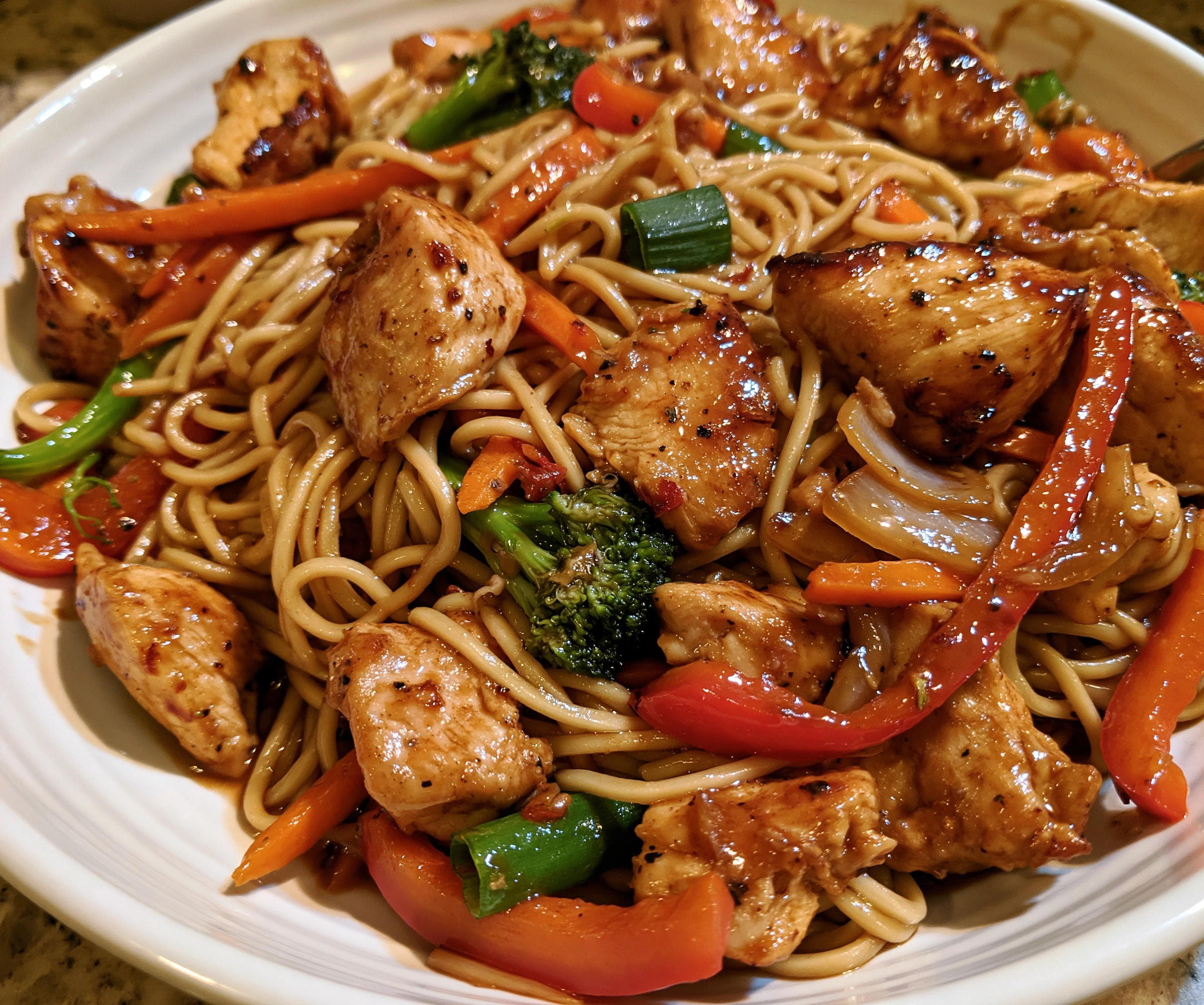
This chicken lo mein tosses glossy egg noodles, velveted chicken pieces, and crisp broccoli, peppers, and carrots in a savory soy-ginger sauce—never fried, just tossed until every strand shines. The sauce ratio is simple: 4 tablespoons soy to 1 teaspoon sesame oil and 1 teaspoon sugar. It serves four in about 30 minutes, and leftovers keep 3 to 4 days.
There’s something magical about a wok hitting full heat on a tired Tuesday—the ginger blooms in the oil, the soy sauce darkens at the edges, and your whole kitchen smells like your favorite takeout spot. This chicken lo mein is my answer to those evenings: slurpable noodles, juicy chicken, and vegetables that stay crisp at the edges. Once everything is chopped and the chicken has rested in its marinade, the cooking flies by in about 20 minutes.
The secret is the same one every good stir-fry teaches: high heat, a pan that is never crowded, and sauce that goes in at the very end so the noodles gloss instead of drowning. Velveting—that quick cornstarch-and-soy coating on the chicken—keeps every piece silky and tender against the heat. Line everything up before you start, because once the wok is hot, this dinner moves fast. For more noodle-night inspiration, browse our pasta and rice recipes when you plan the week.
Lo Mein vs. Chow Mein: What’s the Difference?
Lo mein means “tossed noodles,” and that name is the whole method: the noodles are boiled until tender, then tossed with the sauce, chicken, and vegetables at the very end, so they stay soft, slippery, and generously sauced. Nothing gets fried on its own, and nothing turns crisp. The noodles are the delivery system for the sauce, and the sauce is the point, every single time.
Chow mein means “fried noodles”: there, the noodles enter the hot wok earlier and fry—sometimes until lacy and crisp—under a much lighter coating of sauce. Same egg-noodle family, two very different dinners. If you love a saucy bowl where every strand shines, this recipe is built for you: a proper sauce ratio, tender velveted chicken, and vegetables that keep their bite.
Ingredients for This Chicken Lo Mein Recipe
The beauty lies in how ordinary this list is—soy sauce, ginger, garlic, and vegetables you can find in any grocery store. The sauce is the one place to measure carefully, because that ratio is the difference between takeout gloss and a salty puddle. Mix it before anything touches the heat, whisking the cornstarch into the soy sauce first so it dissolves completely smooth.
For the Chicken and Marinade:
- 1 pound boneless, skinless chicken breast or thighs, cut into bite-size pieces
- 2 teaspoons cornstarch
- 1 tablespoon light soy sauce
- 1 teaspoon oyster sauce
- 2 teaspoons neutral oil (such as avocado or vegetable oil)
For the Lo Mein Sauce:
- 3 tablespoons light soy sauce
- 1 tablespoon dark soy sauce (for color and depth—regular soy works too)
- 1 tablespoon oyster sauce
- 1/4 cup low-sodium chicken broth or water
- 2 teaspoons cornstarch
- 1 teaspoon granulated sugar
- 1 teaspoon toasted sesame oil
- 1/4 teaspoon white pepper
For the Noodles and Vegetables:
- 1 pound fresh lo mein egg noodles (or 8 to 10 ounces dried thin egg noodles)
- 3 tablespoons neutral high-heat oil, divided
- 2 cups small broccoli florets
- 1 large red bell pepper, cut into thin strips
- 2 medium carrots, julienned (about 1 1/2 cups)
- 1/2 small onion, thinly sliced
- 4 scallions, cut into 1 1/2-inch pieces, whites and greens separated
- 2 cloves garlic, minced
- 1 tablespoon grated fresh ginger
- 1 teaspoon neutral oil, for tossing the noodles
Prep takes 15 to 20 minutes including the marinade rest, cooking takes about 10 minutes, and the total is about 30 minutes. The sauce keeps 3 days in a jar in the fridge, and the vegetables can be sliced a day ahead—weeknight dinner ideas do not get much easier than that.
How to Make Chicken Lo Mein Step by Step
Sear the velveted chicken over high heat until golden, stir-fry the garlic, ginger, and vegetables until tender-crisp, then return everything to the wok with the boiled noodles and sauce. Toss for 1 to 2 minutes until glossy, finish with the scallion greens, and serve immediately.
1. Prep Everything Before the Wok Heats
Stir-frying waits for no one, so slice the chicken, julienne the carrots, and line everything up by the stove before a single drop of oil heats. This dish cooks in about 10 minutes once the wok is hot, and there is no pause in the middle to chop a forgotten pepper. Set a pot of water on to boil while you work.
2. Velvet the Chicken for Silky Tenderness
Toss the chicken with the cornstarch, soy sauce, oyster sauce, and oil until lightly coated, then rest 10 to 20 minutes. Velveting—this simple restaurant coating—seals in the juices so the chicken stays silky instead of drying out over fierce heat. The pieces will look a little tacky, and that’s exactly what you want.
Cut the chicken across the grain into even, bite-size pieces before velveting, since uneven pieces cook at different speeds and the small ones dry out while the large ones finish. If the coating feels dry after resting, add just 1 teaspoon of water and toss again — the mixture should cling in a thin, even film, not sit in clumps.
3. Whisk the Sauce and Boil the Noodles
Whisk the sauce ingredients in a small bowl until the cornstarch disappears, and keep it by the stove. Boil the noodles just shy of the package directions—about 1 minute less—because they finish in the wok. Drain, rinse briefly, and toss with the teaspoon of oil so the strands stay loose and separate.
4. Sear the Chicken Over High Heat
Heat 2 tablespoons of the oil in a wok or large skillet over high heat until it shimmers, add the chicken in a single layer, and leave it alone for the first minute. Sear 2 to 3 minutes, turning once or twice, until deeply golden and cooked through to 165°F, the USDA’s safe temperature for chicken. Spread the pieces out—crowded chicken steams instead of browning, the same lesson I learned writing my beef stir fry recipe—then move it all to a plate.
5. Stir-Fry the Vegetables to Tender-Crisp Perfection
Add the remaining tablespoon of oil, then the garlic and ginger, and stir 10 to 30 seconds, until the aroma turns sweet and sharp. Add the broccoli, bell pepper, carrots, onion, and scallion whites, and stir-fry 2 to 3 minutes over high heat. You want the broccoli vivid green and the peppers glossy with charred edges, still crisp at the center—that bite is what makes the dish.
Do not pour the sauce in with the vegetables. Sauce added too early turns the wok into a steamer, and the vegetables lose their crisp edges before the noodles ever arrive. Keep the heat high, keep the vegetables moving, and save the sauce for the final toss, when the noodles are already back in the pan.
6. Toss It All Together in Glossy Magic
Return the noodles and chicken with their juices, and pour the sauce evenly over the top. Toss with a scooping motion for 1 to 2 minutes until every strand turns glossy, adding a splash of broth if anything
looks dry. Scatter in the scallion greens, toss 30 seconds more, and serve straight from the wok while the noodles still shine.
How Do You Keep Lo Mein Noodles From Clumping or Going Dry?
Keep the noodles just shy of done, rinse them briefly, and toss them with a little oil so the strands stay separate until the wok is ready. Use the full sauce ratio—4 tablespoons of soy to 1 teaspoon each of sesame oil and sugar—and finish with a splash of broth if the bowl looks dry.
Most clumping starts at the pot, not the wok. Noodles boiled past tender keep releasing starch as they sit, and that starch glues the strands into one heavy mat. Pulling them a minute early and rinsing for a few seconds washes the surface starch away without cooling them much.
Dryness usually means the sauce ran short for the volume of noodles. The recipe is measured for 1 pound of fresh noodles, so extra vegetables call for a spoonful of broth to stretch the sauce—not more soy, which only adds salt. Taste at the end and adjust the sesame oil—a few drops wake everything up.
Serving Ideas, Nutrition, and Easy Swaps
Serve this chicken lo mein straight from the wok in wide bowls, with the vegetables tumbling over the noodles. A serving is about 2 generous cups, and it needs very little beside it—a crisp cucumber salad from our salads and sides collection cuts the richness beautifully. A squeeze of lime or a drizzle of chili oil at the table lets everyone finish their own bowl.
Nutrition Per Serving (1 of 4), approximately:
- Calories: about 550
- Protein: about 36g
- Carbohydrates: about 68g
- Fat: about 15g
These numbers are approximately right, and values vary by brand and substitutions. The chicken and egg noodles make this a good source of protein, while the vegetables add fiber and crunch.
- Gluten-Free: Swap both soy sauces for tamari and use rice noodles instead of egg noodles, handling them gently since they are more delicate.
- Noodle Swap: Spaghetti works 1 to 1 by weight; add 1 teaspoon of baking soda per quart of pasta water for a chewier, more noodle-like bite.
- Spicy: Stir chili crisp or sriracha into the finished noodles, or add a pinch of red pepper flakes with the garlic and ginger.
- Protein Swap: Shrimp, thin-sliced beef, pork, or pressed tofu all follow the same method—adjust the sear time to the protein.
How Do You Store and Reheat Leftovers?
Refrigerate leftovers within 2 hours in an airtight container, where they keep for 3 to 4 days. Reheat them in a skillet over medium heat with 1 to 2 tablespoons of water, tossing until steaming and back to 165°F—the water loosens the sauce so the noodles gloss again.
Once the noodles are hot again, taste before adding anything else. A few drops of toasted sesame oil at the end wakes the sauce back up, while extra soy sauce at this stage only makes the leftovers saltier, since the sauce has already concentrated in the fridge.
You can freeze this chicken lo mein for up to 2 to 3 months, but the noodles soften and the vegetables lose their crispness, so it is best fresh or from the fridge. Let leftovers cool a little before sealing the container—trapped steam turns noodles mushy. Reheat only the portion you plan to eat, since repeated reheating dries everything out.
Why This Dish Earns a Spot in Your Rotation
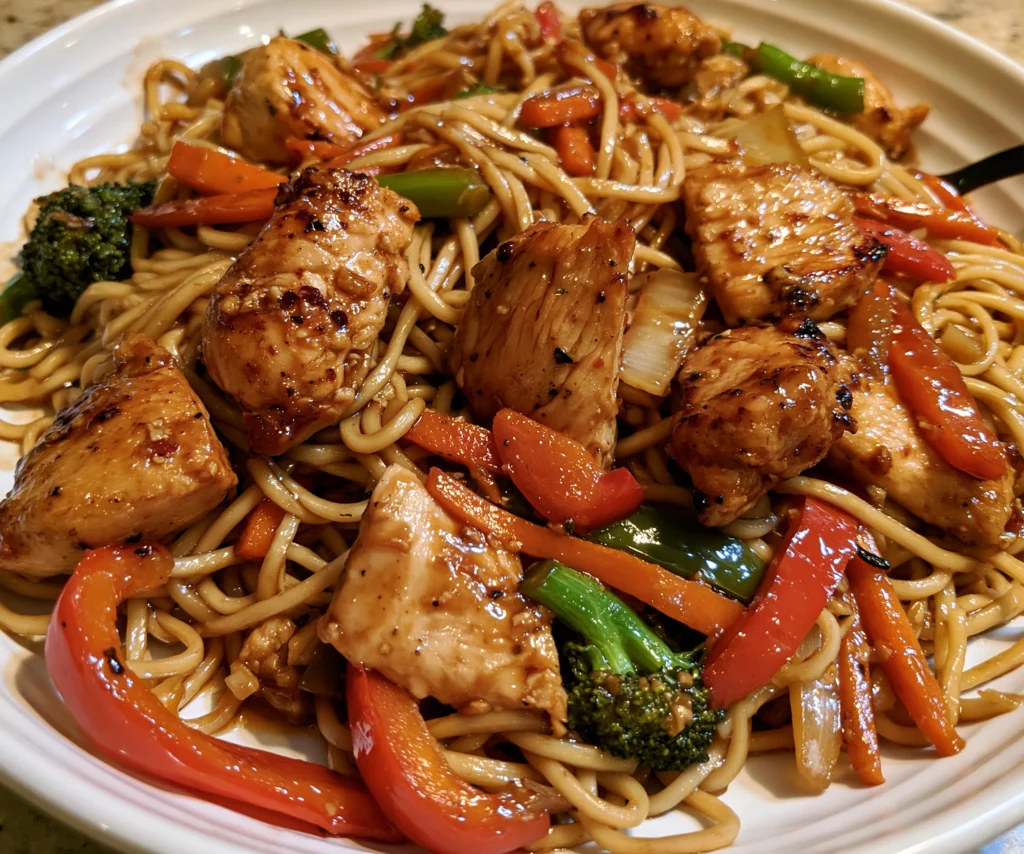
This chicken lo mein proves that takeout night doesn’t require a delivery app or a long wait on the porch. You get the glossy sauce, the tender chicken, and the crisp vegetables from one wok and a handful of pantry staples, with leftovers that reheat like a dream. If bold, savory chicken dinners are your love language, our chicken tikka masala belongs on your list next, and there are plenty more weeknight wins in our chicken recipes. Give this recipe a try this week, pin it so you can find it again, and I’d love to hear your variations in the comments.
Frequently Asked Questions
What noodles are best for chicken lo mein?
Fresh lo mein egg noodles—yellow wheat-and-egg noodles sold in the refrigerated section—are the takeout standard and need only a brief boil to loosen. Dried thin egg noodles are next best, at 8 to 10 ounces for this recipe. Either way, cook them just shy of done so they finish glossy in the wok instead of soft.
Can I use spaghetti instead of lo mein noodles?
Yes! Spaghetti swaps in 1 to 1 by weight and makes a weeknight staple of whatever is already in the pantry. Add 1 teaspoon of baking soda per quart of pasta water and the strands turn chewier and more noodle-like, closer to the real thing. The texture stays a touch firmer, but the sauce clings beautifully.
How do I keep the noodles from sticking together?
Three habits do the work: pull the noodles about 1 minute before the package says, rinse them briefly after draining, and toss them with a teaspoon of oil while they wait. Keep them loose at room temperature rather than piled in a hot colander, where they steam and glue together. A properly hot wok at the end keeps them separate and glossy.
Can I make chicken lo mein gluten-free?
Absolutely! Swap tamari or gluten-free soy sauce for both the light and dark soy sauces, keeping the same ratio. Rice noodles replace the egg noodles here—handle them gently, because they are more delicate and break if you toss too hard. Everything else stays exactly the same.
How long do leftovers last, and what’s the best way to reheat them?
Leftovers keep 3 to 4 days in the fridge in an airtight container, refrigerated within 2 hours of cooking. The skillet is the best reheat: medium heat, 1 to 2 tablespoons of water, and a toss until everything steams and reaches 165°F. The microwave works in short bursts with a stir in the middle, but skip the oven—it dries the noodles out.
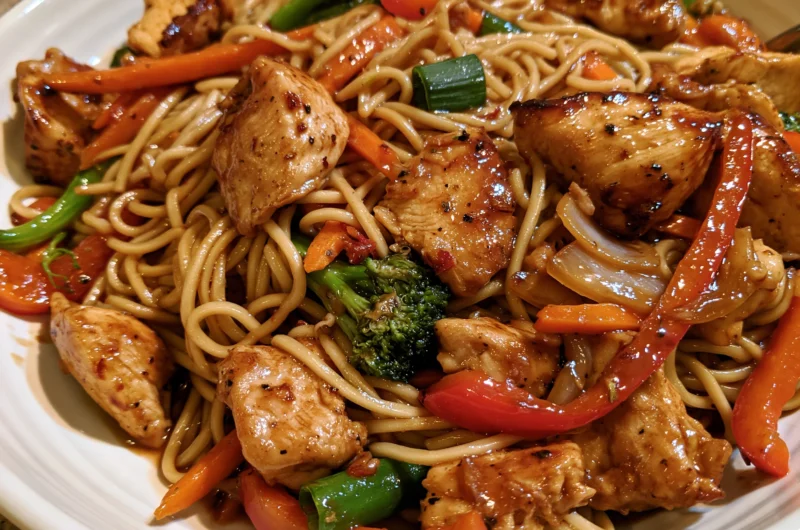
20-Minute Chicken Lo Mein That Beats Takeout
Glossy egg noodles tossed with velveted chicken, broccoli, bell pepper, carrots, and scallions in a savory soy-ginger sauce—fresher and faster than takeout, ready in about 30 minutes.
4
servings20
minutes10
minutes550
kcal30
minutesIngredients
- For the Chicken and Marinade:
1 pound boneless, skinless chicken breast or thighs, cut into bite-size pieces
2 teaspoons cornstarch
1 tablespoon light soy sauce
1 teaspoon oyster sauce
2 teaspoons neutral oil (such as avocado or vegetable oil)
- For the Lo Mein Sauce:
3 tablespoons light soy sauce
1 tablespoon dark soy sauce (for color and depth—regular soy works too)
1 tablespoon oyster sauce
1/4 cup low-sodium chicken broth or water
2 teaspoons cornstarch
1 teaspoon granulated sugar
1 teaspoon toasted sesame oil
1/4 teaspoon white pepper
- For the Noodles and Vegetables:
1 pound fresh lo mein egg noodles (or 8 to 10 ounces dried thin egg noodles)
3 tablespoons neutral high-heat oil, divided
2 cups small broccoli florets
1 large red bell pepper, cut into thin strips
2 medium carrots, julienned (about 1 1/2 cups)
1/2 small onion, thinly sliced
4 scallions, cut into 1 1/2-inch pieces, whites and greens separated
2 cloves garlic, minced
1 tablespoon grated fresh ginger
1 teaspoon neutral oil, for tossing the noodles
Directions
- Prep Everything Before the Wok Heats: Line up the sliced chicken, julienned carrots, and all ingredients by the stove, and set a large pot of water on to boil.
- Velvet the Chicken for Silky Tenderness: Toss the chicken with the cornstarch, soy sauce, oyster sauce, and oil, and rest 10 to 20 minutes.
- Whisk the Sauce and Boil the Noodles: Whisk the sauce until smooth, boil the noodles 1 minute shy of the package directions, drain, rinse briefly, and toss with 1 teaspoon of oil.
- Sear the Chicken Over High Heat: Sear the chicken in 2 tablespoons of hot oil in a single layer for 2 to 3 minutes, until golden and 165°F inside, then move it to a plate.
- Stir-Fry the Vegetables to Tender-Crisp Perfection: Stir-fry the garlic and ginger 10 to 30 seconds, then add the broccoli, pepper, carrots, onion, and scallion whites for 2 to 3 minutes until tender-crisp.
- Toss It All Together in Glossy Magic: Return the noodles and chicken with the sauce, toss 1 to 2 minutes until glossy, finish with the scallion greens, and serve at once.
Notes
- Leftovers keep 3 to 4 days in the fridge; reheat in a skillet with 1 to 2 tablespoons of water until steaming and back to 165°F.
- The sauce can be whisked up to 3 days ahead and the vegetables sliced a day early.
- Freezing works for up to 2 to 3 months, but the noodles soften.
- Gluten-free: tamari plus rice noodles. Spaghetti swaps in 1 to 1 by weight with 1 teaspoon of baking soda per quart of pasta water.




6 Comments