25-Minute Creamy Chicken Alfredo
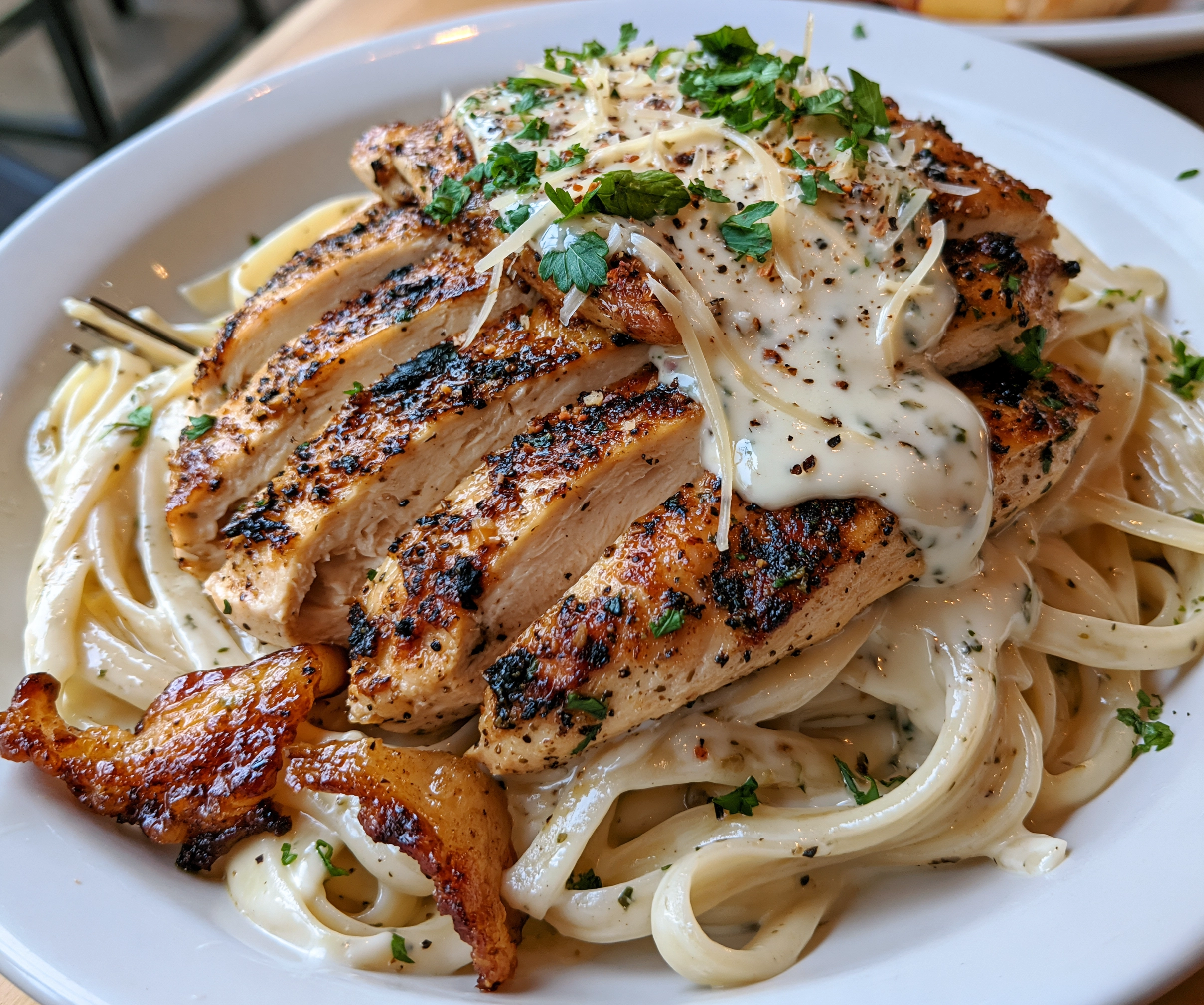
This chicken alfredo pairs tender sliced chicken with fettuccine in a silky from-scratch sauce of butter, garlic, cream, and Parmesan. No jars, no shortcuts on flavor, just 25 minutes to creamy perfection by searing the chicken while the pasta water boils. It serves four in a single comforting bowl, with the chicken cooked to a safe 165°F.
There’s something magical about real Alfredo, and the magic is how simple it actually is. Butter melts, garlic softens, cream simmers briefly, and Parmesan whisked in off the heat turns the whole thing silky. No flour, no eggs, no jarred sauce with a list of stabilizers, just four ingredients treated gently. The result tastes luxurious because it is luxurious, not because it is complicated.
Two moves make the difference between silky and clumpy: rest the chicken before slicing, so the juices stay in the meat, and reserve pasta water before draining, since its starch loosens the sauce to a perfect coating consistency. Learn those two habits, and from-scratch Alfredo becomes faster than opening a jar.
What Real Alfredo Sauce Is (and Isn’t)
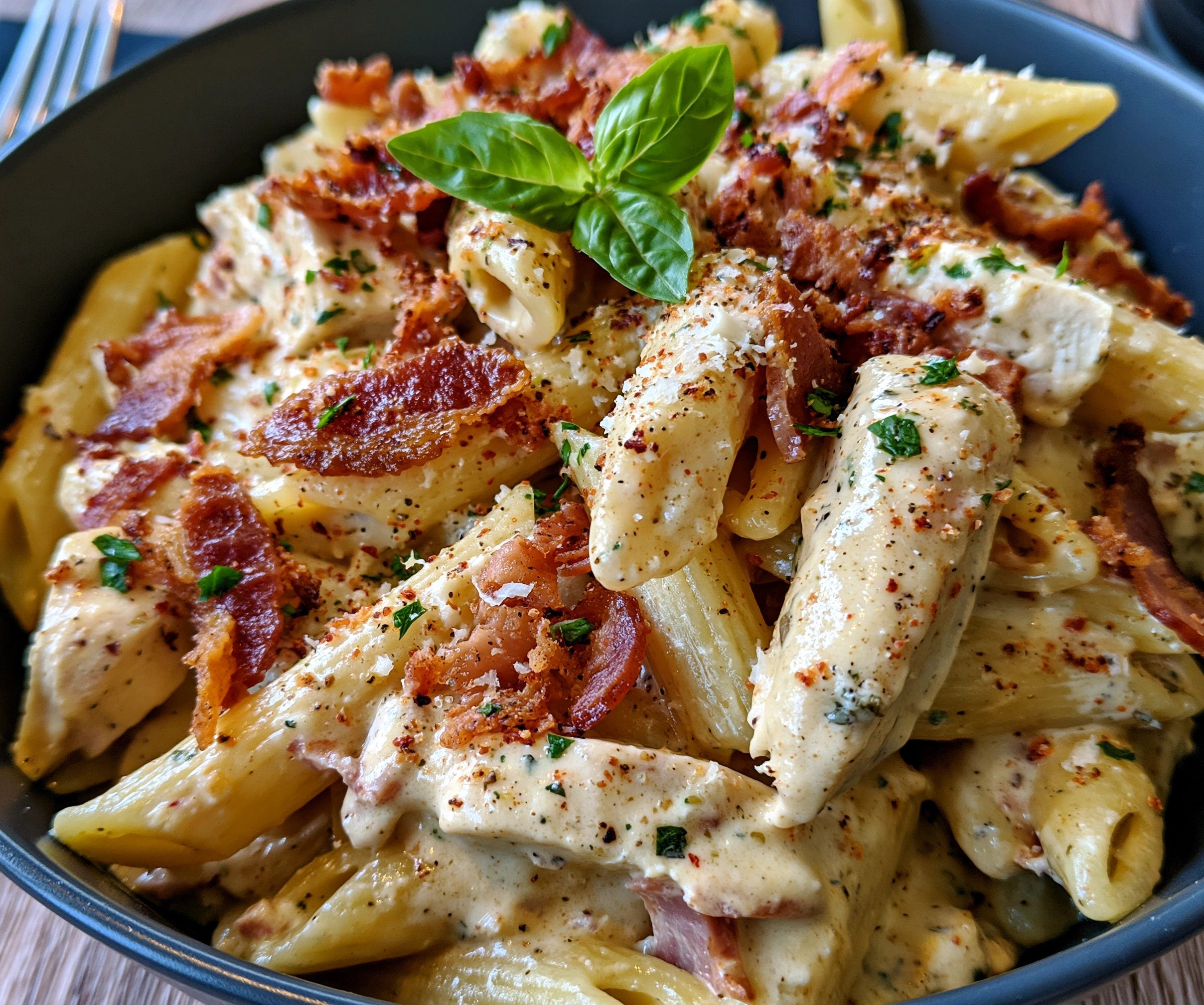
Real Alfredo sauce is butter, cream, and Parmesan, with garlic for aroma and black pepper for warmth. It is not a flour roux, which turns it into a white sauce, and it is not an egg-yolk sauce, which belongs to carbonara. It is also not a jar sauce, which trades silk for shelf life. The version here follows the butter-cream-Parmesan line strictly, and the photo confirms it: a silky white sauce coating fettuccine, with no yellow tint or floury thickness.
For another creamy chicken pasta, our Marry Me Chicken Pasta adds sun-dried tomatoes and a richer, tangier sauce. This Alfredo stays pure and classic, letting butter and Parmesan carry the whole dish. Freshly grated Parmesan matters enormously here, since pre-grated cheese resists melting and turns grainy.
Ingredients for This Chicken Alfredo
For the chicken:
- 4 boneless, skinless chicken breasts, pounded to even thickness
- 1 tablespoon olive oil
- Salt and black pepper, to taste
- 1/2 teaspoon garlic powder
For the pasta:
- 12 ounces fettuccine
- Salt, for the water
For the sauce:
- 4 tablespoons butter
- 4 cloves garlic, minced
- 1 1/2 cups heavy cream
- 1 1/2 cups freshly grated Parmesan, plus extra for serving
- 1/2 teaspoon black pepper
- Chopped fresh parsley, for garnish
How to Make Chicken Alfredo Step by Step
The rhythm saves time: sear the chicken while the pasta water boils, make the sauce while the chicken rests, and toss everything together at the end. Reserve pasta water before draining, since it is the tool that fixes a too-thick sauce.
1. Sear the Chicken to Golden Perfection
Season the breasts with salt, pepper, and garlic powder, then sear in olive oil over medium-high heat for 5 to 6 minutes per side until deep golden. The chicken is done at 165°F in the thickest part; rest it for 5 minutes, then slice across the grain into strips. Resting keeps the juices in the meat, so the slices stay tender instead of dry.
2. Boil the Fettuccine and Reserve Pasta Water
Boil the fettuccine in well-salted water until al dente, following the package time minus 1 minute, since it will finish in the sauce. Before draining, reserve 1/2 to 2 cups of the starchy pasta water, which is liquid gold for loosening the sauce. Drain the pasta without rinsing, since rinsing washes away the starch that helps the sauce cling.
3. Melt Butter and Soften the Garlic Gently
Melt the butter in a large skillet over medium heat, then cook the garlic for 30 seconds to 1 minute, stirring constantly, without browning. Browned garlic turns bitter and darkens the sauce, while gently softened garlic perfumes the butter. Keep the heat moderate and the garlic moving, and pull the pan off the heat if it colors too fast.
4. Simmer Cream, Then Whisk in Parmesan Off the Heat
Pour in the cream and simmer for 2 to 4 minutes until slightly thickened, then take the pan off the heat entirely. Whisk in the Parmesan a handful at a time, stirring until each addition melts smoothly before adding the next. Taking the pan off the heat is the critical step, since high heat after the cheese goes in turns the sauce grainy.
5. Toss Pasta and Chicken in Sauce and Serve
Add the drained fettuccine to the sauce with a splash of reserved pasta water, tossing until every strand glistens. Fold in the sliced chicken, loosening with more pasta water as needed until the sauce coats rather than pools. Serve immediately with extra Parmesan and parsley, since Alfredo waits for no one and thickens as it cools.
Why Does Alfredo Sauce Go Grainy?
Grainy sauce comes from three causes: heat too high after the cheese goes in, pre-grated cheese that resists melting, or no pasta water to loosen the emulsion. Fix all three, and the sauce stays silky every time.
Freshly grated Parmesan melts cleanly because it has no anti-caking coating, while pre-grated cheese clumps no matter how carefully you stir. If the sauce still looks grainy, whisk in a splash of warm pasta water off the heat, which usually brings the emulsion back together. And never boil the sauce after the cheese is in, since boiling breaks the emulsion beyond repair.
Serving Ideas, Nutrition, and Easy Swaps
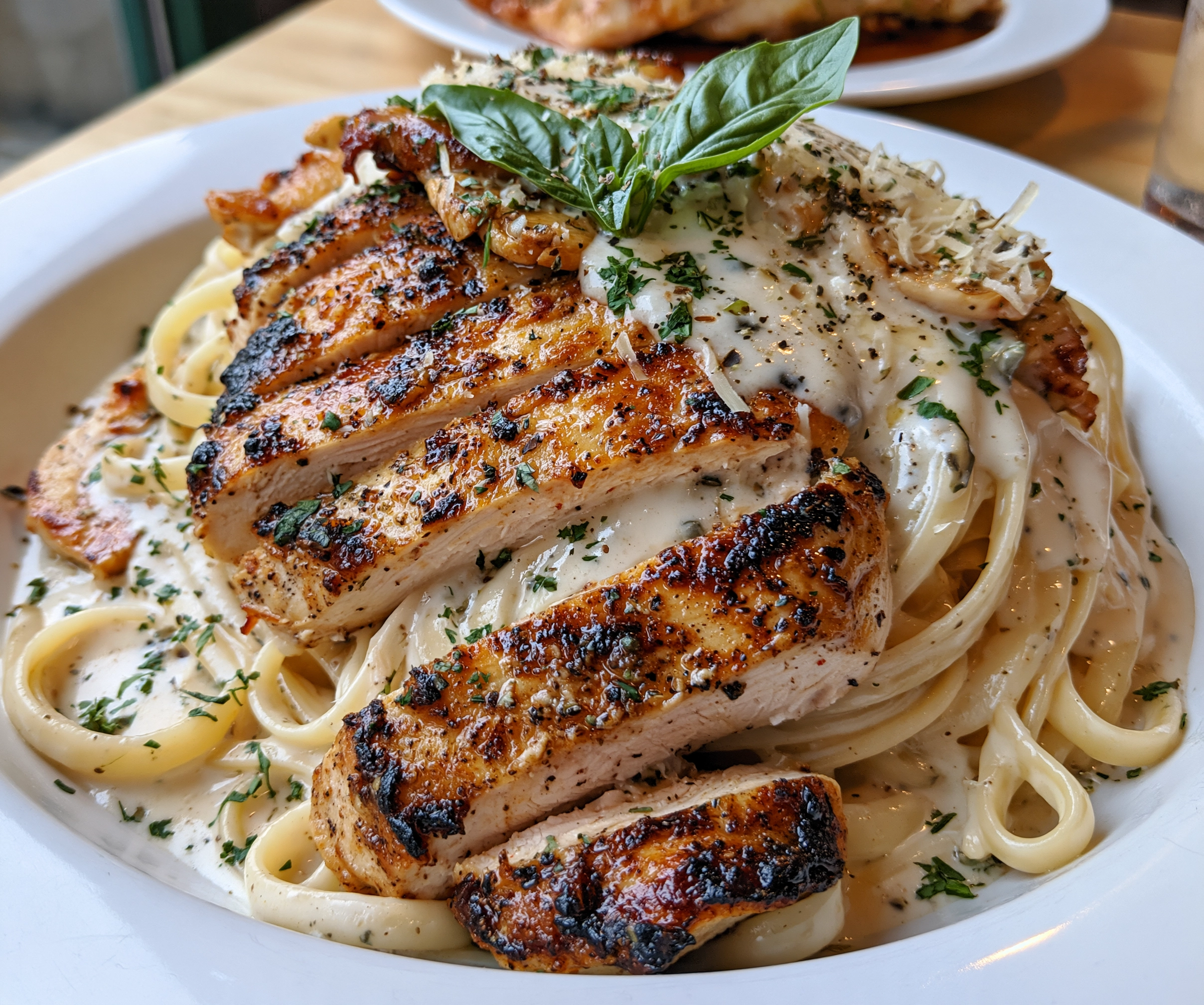
A light green salad or garlic bread cuts the richness beautifully, giving the plate contrast without competing with the sauce. The photo shows a single pasta bowl, so keep sides simple and let the Alfredo stay the star. For more pasta bases, browse our pasta and rice recipes, our chicken recipes for more mains, and our salads and sides for fresh pairings.
Nutrition (per serving, approximately):
- Calories: approximately 850
- Protein: approximately 48g
- Carbohydrates: approximately 62g
- Fat: approximately 44g
Values are approximate and vary by brand and substitutions, so treat them as a guide.
Pasta: fettuccine as photo-locked, though penne or linguine work with a different look. Lighter: half cream and half milk changes the texture, so say so honestly. Add-ins: broccoli or mushrooms as optional extras, not in the base recipe. Side: light green salad or garlic bread to cut the richness.
How Do You Store, Make Ahead, and Reheat It?
Store leftovers in an airtight container in the refrigerator for up to 3 days. Reheat gently over low heat with a splash of milk, cream, or reserved pasta water, stirring until the sauce loosens and turns silky again. Never boil the leftovers, since high heat splits the sauce.
Do not freeze this dish, since cream sauces separate on thawing and never fully recover. For make-ahead cooking, sear the chicken ahead and refrigerate it, but make the sauce fresh at serving time, since it takes only minutes. Tossed leftovers reheat best in a skillet rather than the microwave, which heats unevenly.
Why This Chicken Alfredo Earns a Spot in Your Rotation
This chicken alfredo proves that a classic comfort bowl does not require a jar or a complicated method. Butter, cream, and Parmesan, treated gently, deliver silk that no shortcut can match, and the whole dinner takes 25 minutes. It is the kind of recipe that becomes a standard, because it works for family dinners and guests alike.
Browse our chicken recipes when you want another dinner built around the same dependable protein. Give this recipe a try this week, and grate the Parmesan fresh the first time so you taste the difference. I’d love to hear your variations, so share how you made it yours.
Frequently Asked Questions
How do you make alfredo sauce from scratch without a jar?
Melt butter, soften garlic gently, simmer cream briefly, then take the pan off the heat and whisk in freshly grated Parmesan until smooth. That is the whole sauce: no flour, no eggs, no jar. Toss with pasta and loosen with reserved pasta water until every strand glistens.
Why is my sauce grainy or clumpy?
The usual causes are heat too high after the cheese goes in, pre-grated cheese, or no pasta water. Always take the pan off the heat before adding Parmesan, grate the cheese fresh, and keep pasta water handy. A splash of warm pasta water whisked in off the heat usually rescues a grainy sauce.
Can I use milk instead of heavy cream?
You can, but the texture changes: milk makes a thinner, less silky sauce that is more likely to split. Half cream and half milk is a better compromise, keeping some richness while lightening the dish. If you use milk alone, simmer it gently and never boil it after the cheese goes in.
What pasta is best for chicken alfredo?
Fettuccine is the classic and the photo-locked choice, since its wide strands hold the creamy sauce beautifully. Linguine and penne also work, though they change the look and the sauce-to-pasta ratio. Avoid very small shapes, which disappear into the sauce instead of carrying it.
How do you reheat it without the sauce splitting?
Reheat gently over low heat with a splash of milk, cream, or pasta water, stirring until the sauce loosens. Never boil the leftovers, since high heat breaks the emulsion. A skillet beats the microwave here, which heats unevenly and splits the sauce in spots.
25-Minute Creamy Chicken Alfredo
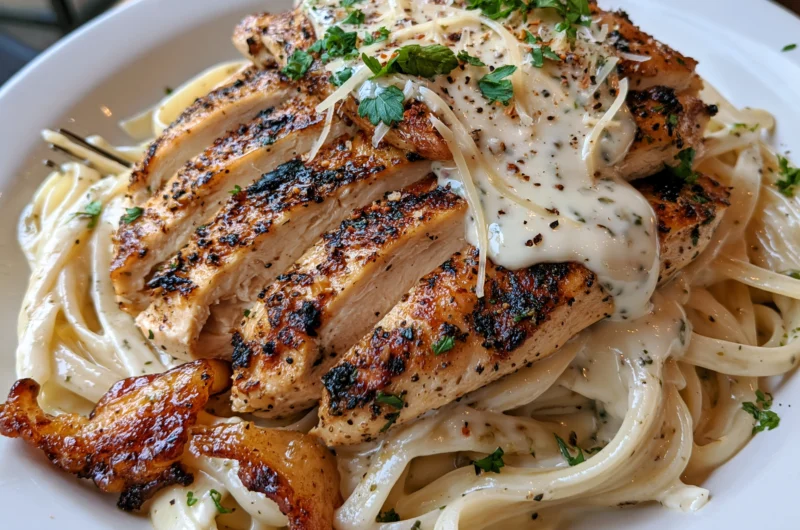
Sliced seared chicken over fettuccine in a silky butter-cream-Parmesan sauce, made from scratch.
4
servings10
minutes15
minutes850
kcal25
minutesIngredients
- For the chicken:
4 boneless, skinless chicken breasts, pounded to even thickness
1 tablespoon olive oil
Salt and black pepper, to taste
1/2 teaspoon garlic powder
- For the pasta:
12 ounces fettuccine
Salt, for the water
- For the sauce:
4 tablespoons butter
4 cloves garlic, minced
1 1/2 cups heavy cream
1 1/2 cups freshly grated Parmesan, plus extra for serving
1/2 teaspoon black pepper
Chopped fresh parsley, for garnish
Directions
- Sear the Chicken to Golden Perfection: Season the breasts with salt, pepper, and garlic powder, then sear in olive oil over medium-high heat for 5 to 6 minutes per side until deep golden. The chicken is done at 165°F in the thickest part; rest it for 5 minutes, then slice across the grain into strips. Resting keeps the juices in the meat, so the slices stay tender instead of dry.
- Boil the Fettuccine and Reserve Pasta Water: Boil the fettuccine in well-salted water until al dente, following the package time minus 1 minute, since it will finish in the sauce. Before draining, reserve 1/2 to 2 cups of the starchy pasta water, which is liquid gold for loosening the sauce. Drain the pasta without rinsing, since rinsing washes away the starch that helps the sauce cling.
- Melt Butter and Soften the Garlic Gently: Melt the butter in a large skillet over medium heat, then cook the garlic for 30 seconds to 1 minute, stirring constantly, without browning. Browned garlic turns bitter and darkens the sauce, while gently softened garlic perfumes the butter. Keep the heat moderate and the garlic moving, and pull the pan off the heat if it colors too fast.
- Simmer Cream, Then Whisk in Parmesan Off the Heat: Pour in the cream and simmer for 2 to 4 minutes until slightly thickened, then take the pan off the heat entirely. Whisk in the Parmesan a handful at a time, stirring until each addition melts smoothly before adding the next. Taking the pan off the heat is the critical step, since high heat after the cheese goes in turns the sauce grainy.
- Toss Pasta and Chicken in Sauce and Serve: Add the drained fettuccine to the sauce with a splash of reserved pasta water, tossing until every strand glistens. Fold in the sliced chicken, loosening with more pasta water as needed until the sauce coats rather than pools. Serve immediately with extra Parmesan and parsley, since Alfredo waits for no one and thickens as it cools.
Notes
- Store leftovers in an airtight container in the refrigerator for up to 3 days. Reheat gently over low heat with a splash of milk, cream, or reserved pasta water, stirring until the sauce loosens and turns silky again. Never boil the leftovers, since high heat splits the sauce. Do not freeze this dish, since cream sauces separate on thawing and never fully recover. For make-ahead cooking, sear the chicken ahead and refrigerate it, but make the sauce fresh at serving time, since it takes only minutes. Tossed leftovers reheat best in a skillet rather than the microwave, which heats unevenly.