No Gimmicks, Just Perfect: Classic Homemade Meatloaf

No twists, no gimmicks — just a truly classic homemade meatloaf: pure ground beef, pantry seasonings, and a glossy red tomato glaze brushed on in two thin layers. The loaf bakes free-form on a sheet pan, rests before slicing, and comes out tender, flavorful, and juicy every single time. It serves eight in about 75 minutes, and ketchup on top is traditional for a reason.
There is a version of meatloaf that needs no introduction, no upgrade, and no clever twist, and this classic homemade meatloaf is exactly that. Pure ground beef, plain breadcrumbs soaked in milk, onion, garlic, and a glossy tomato glaze — nothing added that the classic does not need, and nothing taken away that it does. It is the loaf that tastes like it should, the one that brings everyone to the table, and the one you will make again without ever opening a cookbook. If you love our beef recipes, this is the reliable, comforting, timeless dinner to learn first.
What I love about this loaf is its honesty. It does not hide behind cheese, bacon, or a fancy sauce, because the basics are done right. The meat is mixed gently, the glaze goes on in two thin layers, and the rest keeps every piece juicy. Simple cooking at its best, and simple is exactly the point.
Why Simple Wins with Classic Homemade Meatloaf
Simple wins here because pure beef and pantry staples are all a classic loaf needs, and every extra ingredient would only distract from the flavor that makes it timeless. Nothing added, nothing missing, nothing to fix.
The classic works on restraint, and restraint is a skill in itself. A short list means each ingredient has room to shine: the beef tastes like beef, the onion and garlic add savoriness, and the ketchup glaze brings the sweet tang that ties it together. When a recipe asks for nothing exotic, there is nothing to get wrong, which is why I recommend this loaf to anyone making meatloaf for the first time.
Ingredients for This Meatloaf
The list is short on purpose, and every item is a pantry staple.
For the Meat:
- 2 lbs ground beef, 80/20
- 2 large eggs, lightly beaten
- 1 medium onion, finely chopped
- 2 garlic cloves, minced
- 1/4 cup ketchup, for the mix
- 1 Tbsp Worcestershire sauce
- 1 tsp kosher salt
- 1/2 tsp black pepper
For the Panade and Binder:
- 3/4 cup plain breadcrumbs
- 1/2 cup whole milk
For the Glossy Tomato Glaze:
- 1/2 cup ketchup
- 2 Tbsp brown sugar
- 1 Tbsp red wine vinegar
- 1 tsp Dijon mustard
The ketchup in the mix keeps the meat seasoned all the way through, not just on the surface. Use plain breadcrumbs here, not seasoned ones, since the classic keeps its seasoning simple. Per serving, this dish is approximately 410 calories, and values vary by brand.
How to Make Classic Homemade Meatloaf Step by Step
Soak the crumbs in milk, mix the meat gently by hand, shape a free-form loaf, glaze in two thin layers, bake, and rest before slicing.
1. Soak the Crumbs into a Soft Panade
Stir the breadcrumbs and milk together and rest for 5 minutes, until the crumbs turn soft and swollen. The mixture should look like wet, fluffy crumbs, and this short rest is what keeps the finished loaf tender.
2. Mix Gently by Hand with Love
Add the eggs, onion, garlic, ketchup, Worcestershire, salt, and pepper to the panade, then crumble in the beef. Mix with your hands just until everything comes together, stopping the moment you no longer see streaks of plain meat. Overmixing is the fastest way to a tough, dense loaf, so use a light touch.
3. Shape a Free-Form Loaf
Turn the mixture onto a lined sheet pan and shape it into a loaf about 9 inches long and 4 inches wide, with a slightly domed top. Keep your hands damp so the meat does not stick, and do not pack it into a loaf pan, since the open shape lets the edges brown and the glaze turn glossy all over.
4. Glaze in Two Thin Layers to Glossy Perfection
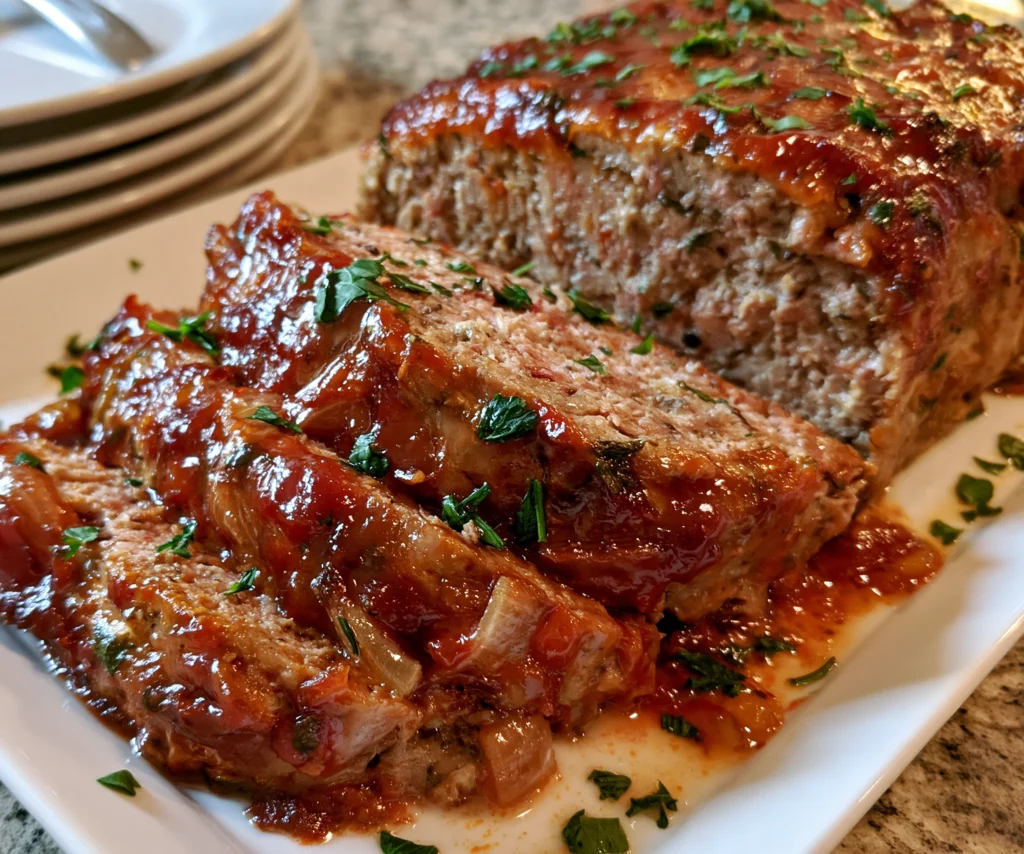
Whisk the ketchup, brown sugar, vinegar, and mustard into a smooth glaze, then brush a thin layer over the loaf. Bake at 350°F for 30 minutes, then brush on the remaining glaze. Two thin coats turn glossy and bright red without cracking, while one thick coat would slide off or split.
5. Bake Until the Center Reads 160°F
Bake 50 to 55 minutes total, until the center reads 160°F and the glaze is glossy and bubbling at the edges. The outside should be deeply browned with a bright red, shiny coating. If the glaze darkens too fast, tent the loaf loosely with foil for the last 10 minutes.
6. Rest, Then Slice Cleanly
Rest the loaf on the pan for 10 to 15 minutes before slicing, so the juices settle back into the meat. Slice in 3/4-inch pieces and serve with mashed potatoes and green beans while the glaze is still glossy. Ketchup on top is traditional for a reason.
The Glaze in Two Thin Layers
The glaze goes on in two thin layers because a thin coat before baking and the rest at 30 minutes turns glossy without cracking the loaf. One thick layer would pool, slide, and split as the meat shrinks.
The first layer is mostly protection, sealing the top while it bakes and giving the second layer something to grip. The second layer is the shine, added when the loaf is already hot, so it sets into a bright, glossy red finish. Keep both layers thin, and the glaze will look painted on rather than poured.
Serving and Storage
Mashed potatoes and green beans first, sandwiches second, and the freezer for the rest. Serve thick slices with creamy mashed potatoes and green beans for the full classic plate, and put a little extra ketchup on the table for anyone who wants it.
The leftovers are just as good, since cold slices stack beautifully into sandwiches with a smear of mustard and a slice of soft white bread. Keep leftovers covered in the refrigerator for 4 days, or wrap individual slices and freeze them for up to 3 months. Reheat gently at 325°F with a spoonful of water in the pan, so the slices stay moist.
For another timeless beef dinner, our slow-simmered classic beef stew is a wonderful next choice, and our salads and sides have easy green beans to go with it.
Mistakes That Make It Dry
Most dry loaves trace back to four habits: overmixing, too-lean beef, overbaking past 160°F, and slicing before the rest. Each one is simple to fix once you know what to watch for.
Overmixing is the first and most common problem, because every extra squeeze tightens the meat and squeezes out the juices. Too-lean beef is the second trap, since fat keeps a loaf moist through a long bake, so choose 80/20. Overbaking past 160°F is the third mistake, and a thermometer is the only honest way to know when to stop. Slicing before the rest is the fourth, and the 10 to 15 minute wait is the easiest fix of all.
A Reliable, Timeless Dinner
This classic homemade meatloaf proves that a reliable dinner does not require twists, gimmicks, or a single fancy ingredient. Pure beef, pantry seasonings, and a glossy tomato glaze in two thin layers give you a loaf that is tender, flavorful, and exactly as it should be, every single time.
If you are hungry for more timeless beef dinners, browse our soups for a warming bowl to go with it. Give this recipe a try this week, with mashed potatoes ready on the side, and let me know how it turns out. I would love to hear your variations, whether you add a little extra garlic, stir in some fresh herbs, or keep it exactly as written because the classic needs nothing more.
Frequently Asked Questions
What makes this the “classic” meatloaf?
The classic is defined by what it leaves out as much as what it puts in. Pure ground beef, plain breadcrumbs soaked in milk, onion, garlic, and a simple ketchup glaze — no cheese, no bacon, no exotic seasonings, and no shortcuts. It is the version that has been on American tables for generations, and it tastes exactly like it should.
Can I use lean ground beef?
You can, but the loaf will not be as juicy, since fat keeps the meat moist through a long bake. If you use 90/10, add an extra egg and a splash more milk to the panade, and watch the thermometer closely. For the best result, 80/20 is the blend I recommend.
Why does the glaze go on in two layers?
Two thin layers turn glossy without cracking, while one thick layer pools, slides, and splits as the meat shrinks in the oven. The first layer seals the top while the loaf bakes, and the second layer, added at 30 minutes, sets into a bright, shiny finish. Thin coats also let the glaze cling to the loaf instead of running off onto the pan.
How do I keep meatloaf from cracking?
Cracks usually come from a loaf packed too tightly or baked too hot, so shape it gently and keep the oven at 350°F. A free-form loaf cracks less than a pan-packed one, since the heat reaches it evenly. The two thin glaze layers also help, because they flex instead of forming a stiff shell that splits.
What is the best way to reheat meatloaf?
The oven is the best way, since it warms the slices gently without drying them out. Place the slices in a baking dish with a spoonful of water or broth, cover loosely with foil, and heat at 325°F for 15 to 20 minutes. The microwave works in a pinch, but use short bursts at half power and cover the plate so the slices stay moist.
No Gimmicks, Just Perfect: Classic Homemade Meatloaf
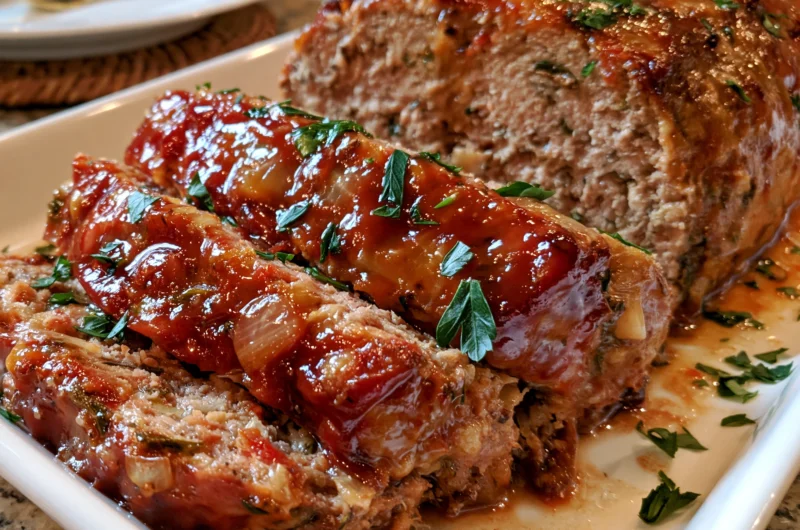
Pure ground beef with a milk-soaked breadcrumb panade and pantry seasonings, finished with a glossy red tomato glaze brushed on in two thin layers.
8
servings15
minutes1
hour410
kcal1
hour15
minutesIngredients
- For the Meat:
2 lbs ground beef, 80/20
2 large eggs, lightly beaten
1 medium onion, finely chopped
2 garlic cloves, minced
1/4 cup ketchup, for the mix
1 Tbsp Worcestershire sauce
1 tsp kosher salt
1/2 tsp black pepper
- For the Panade and Binder:
3/4 cup plain breadcrumbs
1/2 cup whole milk
- For the Glossy Tomato Glaze:
1/2 cup ketchup
2 Tbsp brown sugar
1 Tbsp red wine vinegar
1 tsp Dijon mustard
Directions
- Stir the breadcrumbs and milk together and rest for 5 minutes until soft and swollen.
- Add the eggs, onion, garlic, ketchup, Worcestershire, salt, and pepper to the panade, crumble in the beef, and mix gently by hand just until combined.
- Shape into a free-form loaf about 9 inches long and 4 inches wide on a lined sheet pan.
- Brush with a thin layer of tomato glaze, bake at 350°F for 30 minutes, then brush with the remaining glaze.
- Bake 50 to 55 minutes total until the center reads 160°F and the glaze is glossy and bubbling.
- Rest 10 to 15 minutes, then slice in 3/4-inch pieces and serve with mashed potatoes and green beans.
Notes
- The 75 minutes total includes a 10-minute rest. Use 80/20 ground beef; leaner beef dries out. Mix gently and never pack the meat. The glaze goes on in two thin layers so it turns glossy without cracking. Leftovers keep 4 days in the refrigerator and freeze up to 3 months. Calories are approximately 410 per serving, and values vary by brand.