Showstopping Bacon Wrapped Meatloaf
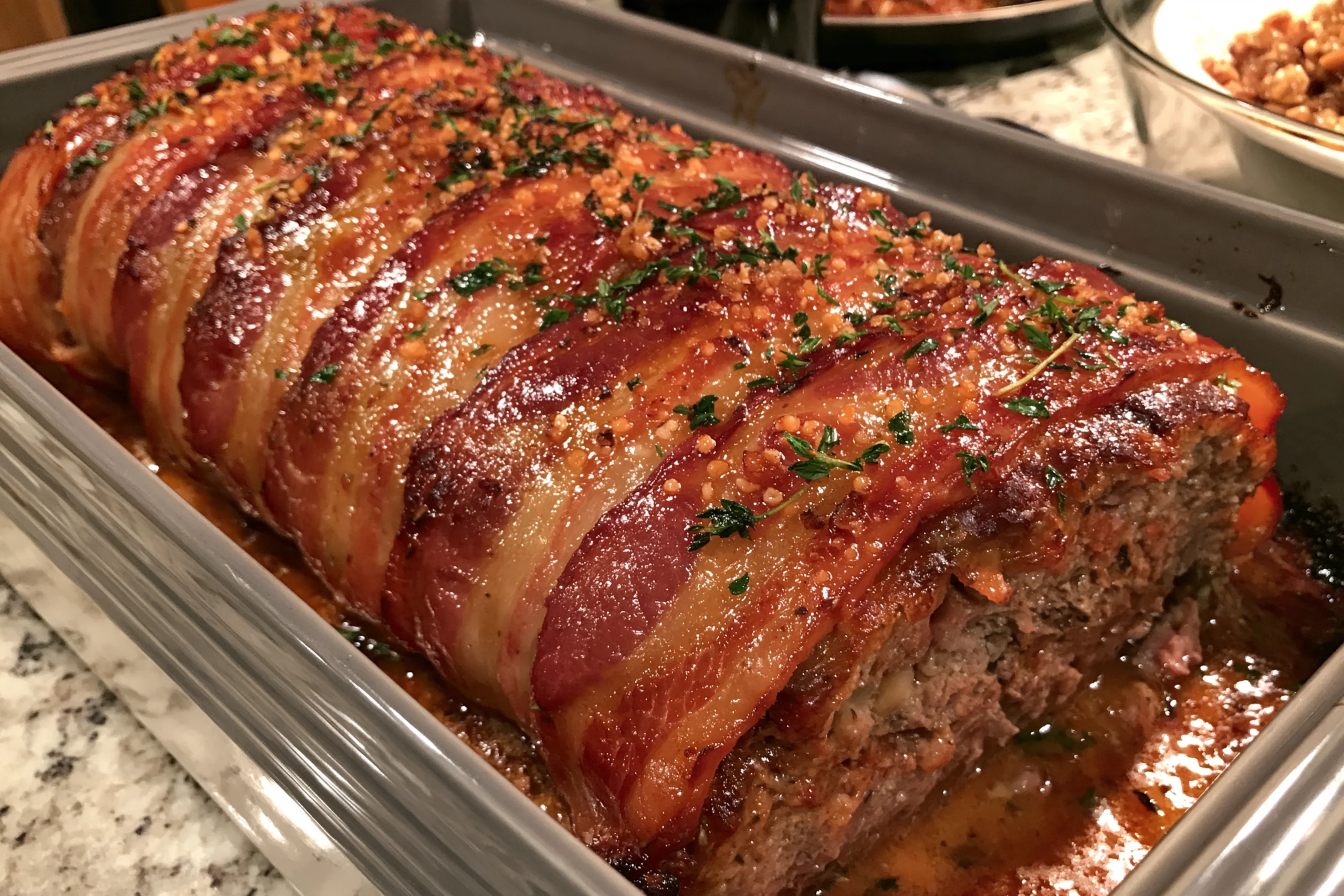
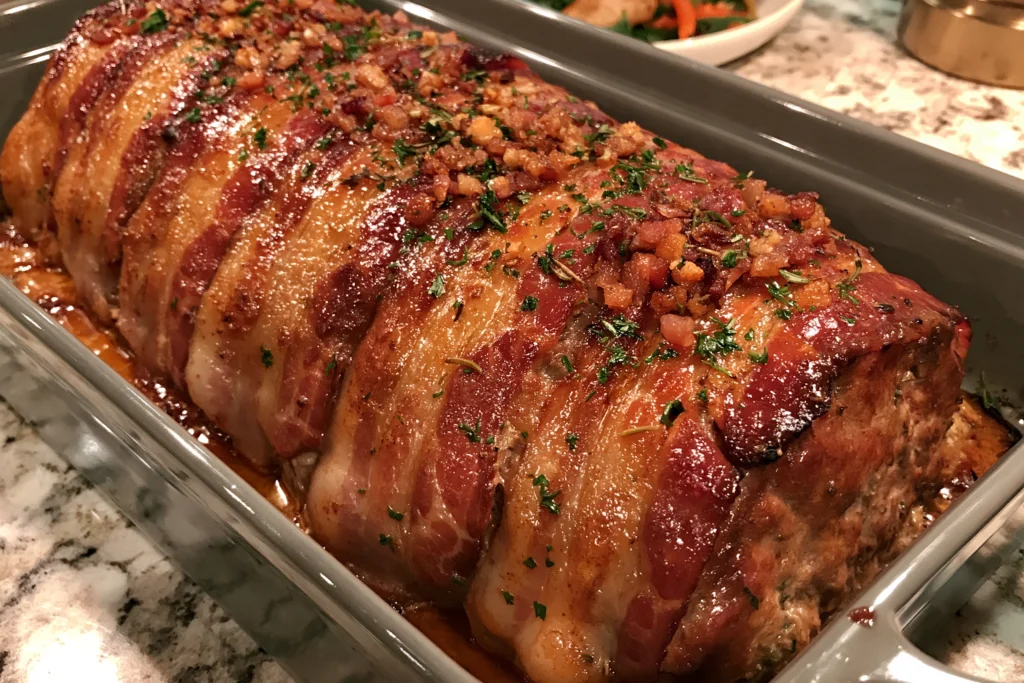
A bacon weave does two jobs at once in this bacon wrapped meatloaf: it bastes the loaf in smoky fat as it cooks and turns crisp and golden on the outside. Inside, a panade of breadcrumbs and milk keeps the ground beef juicy, while a ketchup and brown sugar glaze goes on partway through. Bake at 375°F to 160°F, rest 10 minutes, and slice. It serves 8 and pairs beautifully with mashed potatoes and green beans.
Sunday dinner deserves a centerpiece, and this bacon wrapped meatloaf delivers one without a complicated technique. The bacon weave looks impressive on the table, but its real job happens in the oven, where the rendering fat bastes the meatloaf from the outside in. That steady basting keeps the inside juicy while the outside turns crisp and savory. Thin-cut bacon is the key, because it renders and crisps evenly instead of staying soft and chewy.
The rest of the recipe stays simple on purpose. A gentle hand-mix, a panade that holds moisture, and a sweet and tangy glaze are all the loaf needs beyond the bacon, and the oven does the heavy work while you set the table. Serve it sliced beside mashed potatoes and green beans, or with a bright green salad from our salads and sides to cut the richness.
Why Bacon Wrapped Meatloaf Stays Juicy
This bacon wrapped meatloaf stays juicy because the bacon does the basting for you. As the weave renders in the oven, its fat drips over and into the loaf, keeping the surface moist while the inside cooks gently to 160°F.
Thin-cut bacon matters more than the weave pattern. Thick slices stay soft and pale because they never render fully, while thin slices crisp and brown right along with the glaze. Choose bacon that bends easily, and the weave will tighten slightly as it cooks, hugging the loaf instead of sliding off.
The panade plays the second half of the moisture job. Breadcrumbs soaked in milk swell and hold liquid inside the meat, so the loaf stays tender through the bake. Together, the panade inside and the bacon outside give you a wide margin for error, which is what a Sunday dinner needs.
Ingredients
The list is short, and every item earns its place. Gather everything before you start mixing, because the loaf comes together quickly once you begin.
For the Meatloaf:
- 2 lbs ground beef, 80/20
- 1/2 cup plain breadcrumbs
- 1/2 cup whole milk
- 2 large eggs, lightly beaten
- 1 small onion, finely diced
- 3 garlic cloves, minced
- 1 tbsp Worcestershire sauce
- 1 tsp kosher salt
- 1/2 tsp black pepper
- 1/2 tsp garlic powder
For the Bacon Weave:
- 10 to 12 slices thin-cut bacon
For the Glaze:
- 3/4 cup ketchup
- 3 tbsp brown sugar
- 1 tsp smoked paprika
Use 80/20 ground beef for the juiciest result, because leaner beef dries out over the long bake, so add an extra splash of milk to the panade if you only have 85/15. The glaze is sweet and tangy by design, and a spoonful of Dijon mustard stirred in gives it a sharper edge. Prep takes 15 minutes, the bake runs 65 minutes, and the total is 80 minutes including the rest. Per serving, this bacon wrapped meatloaf is approximately 640 calories, and values vary by brand and bacon choice.
How to Make Bacon Wrapped Meatloaf Step by Step
Mix the panade and beef gently, shape the loaf, weave the bacon over the top, glaze partway through, and bake at 375°F until the center reads 160°F. Rest the loaf for 10 minutes before slicing so the juices settle.
1. Build the Panade First
Stir the breadcrumbs into the milk in a large bowl and let the mixture sit for 5 minutes until it turns soft and porridge-like. This soaking step is what makes the panade work, because dry breadcrumbs would steal moisture from the meat instead of adding it. The panade should look wet and slightly loose, not dry or crumbly.
2. Mix Gently by Hand
Add the ground beef, eggs, onion, garlic, Worcestershire, salt, pepper, and garlic powder to the bowl, and mix with your hands just until everything is evenly combined. Stop as soon as the last streak of breadcrumb disappears, because overworking the beef squeezes out moisture and turns the loaf dense. The mixture will feel soft and slightly tacky, and that is exactly what you want.
3. Shape a Firm, Even Loaf
Turn the mixture onto a parchment-lined sheet pan and shape it into a loaf about 10 inches long and 4 inches wide, with a gently domed top. Keep the thickness even from end to end so the center cooks at the same pace as the edges, and smooth the surface with wet hands so the bacon lies flat against it. An even loaf is what keeps every slice the same thickness.
4. Weave the Bacon with Care
Lay 5 or 6 bacon slices vertically across the loaf, then weave the remaining slices over and under them to form a lattice, tucking the ends underneath the loaf. If a lattice feels fussy, lay the slices overlapping instead, because the flavor is the same either way. The weave tightens as it cooks, so do not worry if it looks slightly loose.
5. Glaze Halfway Through the Bake
Stir the ketchup, brown sugar, and smoked paprika together, then brush half the glaze over the bacon after 30 minutes in the oven. Waiting matters here, because glaze brushed on too early darkens and burns before the bacon crisps. Brush on the rest of the glaze during the final 10 minutes, when the bacon is nearly done.
6. Bake to 160°F and Watch the Bacon
Bake at 375°F for 60 to 70 minutes, until the center of the loaf reads 160°F on an instant-read thermometer and the bacon looks deeply golden and crisp at the edges. If the bacon browns faster than the loaf cooks, tent the pan loosely with foil. The thermometer is the only reliable test, because the bacon hides the color of the meat underneath.
7. Rest Before You Slice
Let the loaf rest on the pan for 10 minutes before you cut into it, so the juices redistribute instead of running out onto the cutting board. Use a sharp serrated knife and cut slices about 1 inch thick, wiping the blade between cuts so the bacon stays attached to each slice. The loaf will feel firm and slice cleanly when it is ready.
The Weave That Holds
The weave holds because the bacon shrinks and tightens as it renders, gripping the loaf instead of sliding off. A lattice spreads that grip in two directions, while overlapping strips hold in one, and both work when the ends are tucked underneath.
Set the loaf on a rack over the sheet pan or on a parchment-lined pan so the rendered fat drains away instead of pooling around the base. If the loaf sits in its own fat, the bottom of the bacon stays soft no matter how crisp the top gets. A rack is the simplest fix, and it also lets hot air reach the underside of the weave. Check the ends before baking, because a loose end is the one that curls up and burns first.
Serving and Storage
One batch serves 8 generously, so plan the table before you slice.
Serve the loaf sliced beside mashed potatoes and green beans, with the glaze spooned over each slice. A simple soup from our soups makes a fine first course for a Sunday table, and our slow-simmered classic beef stew is a natural next recipe when you want another slow, comforting beef dinner. Leftovers keep for 4 days in the refrigerator or 3 months in the freezer, in slices. Reheat slices in a skillet over medium-low heat, which crisps the bacon again, instead of the microwave, which softens it.
Mistakes That Dry Out Meatloaf
Most dry meatloaf comes from four avoidable mistakes: overmixing, lean beef without a panade, skipping the rest, and slicing hot. Each one is easy to prevent once you know what to watch for, and none of them needs a new ingredient.
Overmixing is the most common culprit, because every extra squeeze of the beef presses out moisture and tightens the texture. Mix only until the ingredients disappear into each other, then stop. Lean beef without a panade is the second trap, because there is not enough fat to carry the loaf through an hour in the oven. Skipping the rest is the third, because hot slices lose their juices the moment the knife goes in, so let the loaf stand the full 10 minutes.
Why This Dish Earns a Spot in Your Rotation
This bacon wrapped meatloaf proves that a showstopping Sunday dinner does not require complicated technique or a long ingredient list. A gentle mix, a simple weave, and a well-timed glaze give you a crisp, smoky exterior and a juicy center.
Browse our beef recipes for another dinner that works this hard for you. Give this recipe a try this Sunday, and start with thin-cut bacon so the weave crisps the way it should. I would love to hear your variations, whether you lean on a spicy glaze, tuck herbs under the weave, or serve it a completely different way.
Frequently Asked Questions
Do I have to weave the bacon or can I lay it flat?
No, a lattice is not required, because the flavor and the basting work the same either way. Lay the slices overlapping in a single direction and tuck the ends underneath, and the loaf will taste identical. The weave is worth the extra two minutes only for the look, so choose whichever feels easier on the day.
What ground beef works best?
80/20 ground beef works best, because its fat keeps the loaf moist through the long bake and carries the flavor of the glaze. Leaner beef such as 90/10 can work if you add an extra splash of milk to the panade, but it will never be quite as juicy. Avoid very lean ground beef for this recipe, since the long bake dries it out.
How do I know the meatloaf is done?
An instant-read thermometer is the only reliable test, because the bacon hides the color of the meat underneath. The center of the loaf should read 160°F, and the juices should run clear when you press the top gently. If the bacon is deeply golden but the center is under 160°F, tent the pan with foil and keep baking.
Can I make it ahead?
Yes, and it holds up well. Shape the loaf and weave the bacon the night before, then cover the pan tightly and refrigerate it overnight. Bake it straight from the refrigerator the next day, adding about 5 minutes to the bake time. The glaze can be mixed ahead too and kept in a covered bowl in the refrigerator.
How do I keep the bacon crisp instead of soggy?
Use thin-cut bacon and bake the loaf on a rack so the rendered fat drains away instead of pooling underneath. Glaze only after 30 minutes in the oven, because early glaze traps moisture against the bacon. Let the loaf rest before slicing, and reheat leftovers in a skillet, since the microwave softens the bacon again.
Showstopping Bacon Wrapped Meatloaf
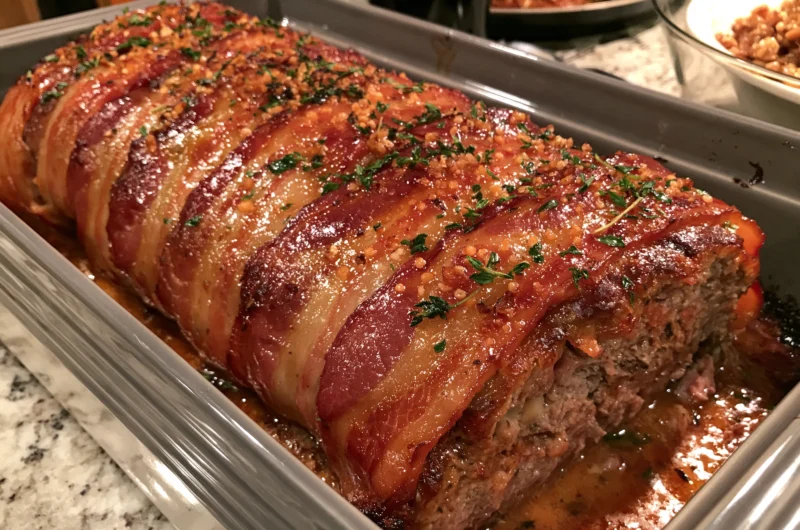
A juicy meatloaf wrapped in a crisp bacon weave with a sweet and tangy ketchup and brown sugar glaze, baked to 160°F and rested before slicing.
8
servings15
minutes1
hour5
minutes640
kcal1
hour20
minutesIngredients
- For the Meatloaf:
2 lbs ground beef, 80/20
1/2 cup plain breadcrumbs
1/2 cup whole milk
2 large eggs, lightly beaten
1 small onion, finely diced
3 garlic cloves, minced
1 tbsp Worcestershire sauce
1 tsp kosher salt
1/2 tsp black pepper
1/2 tsp garlic powder
- For the Bacon Weave:
10 to 12 slices thin-cut bacon
- For the Glaze:
3/4 cup ketchup
3 tbsp brown sugar
1 tsp smoked paprika
Directions
- Stir the breadcrumbs into the milk and let the mixture sit for 5 minutes until soft and porridge-like.
- Add the beef, eggs, onion, garlic, Worcestershire, salt, pepper, and garlic powder, and mix gently by hand just until combined.
- Shape the mixture into a loaf about 10 inches long and 4 inches wide on a parchment-lined sheet pan.
- Weave the bacon over the loaf in a lattice, or lay the slices overlapping, tucking the ends underneath.
- Bake at 375°F; after 30 minutes brush on half the glaze, then brush on the rest during the final 10 minutes.
- Bake 60 to 70 minutes total, until the center reads 160°F and the bacon is deeply golden and crisp.
- Rest the loaf for 10 minutes, then slice about 1 inch thick with a sharp serrated knife.
Notes
- Use thin-cut bacon so it crisps evenly. The glaze goes on partway through, never at the start, so it does not burn. Calories are approximately 640 per serving, and values vary by brand and bacon choice. Serve with mashed potatoes and green beans. Fridge 4 days, freezer 3 months; reheat slices in a skillet, not the microwave.