Slow-Simmered Classic Beef Stew

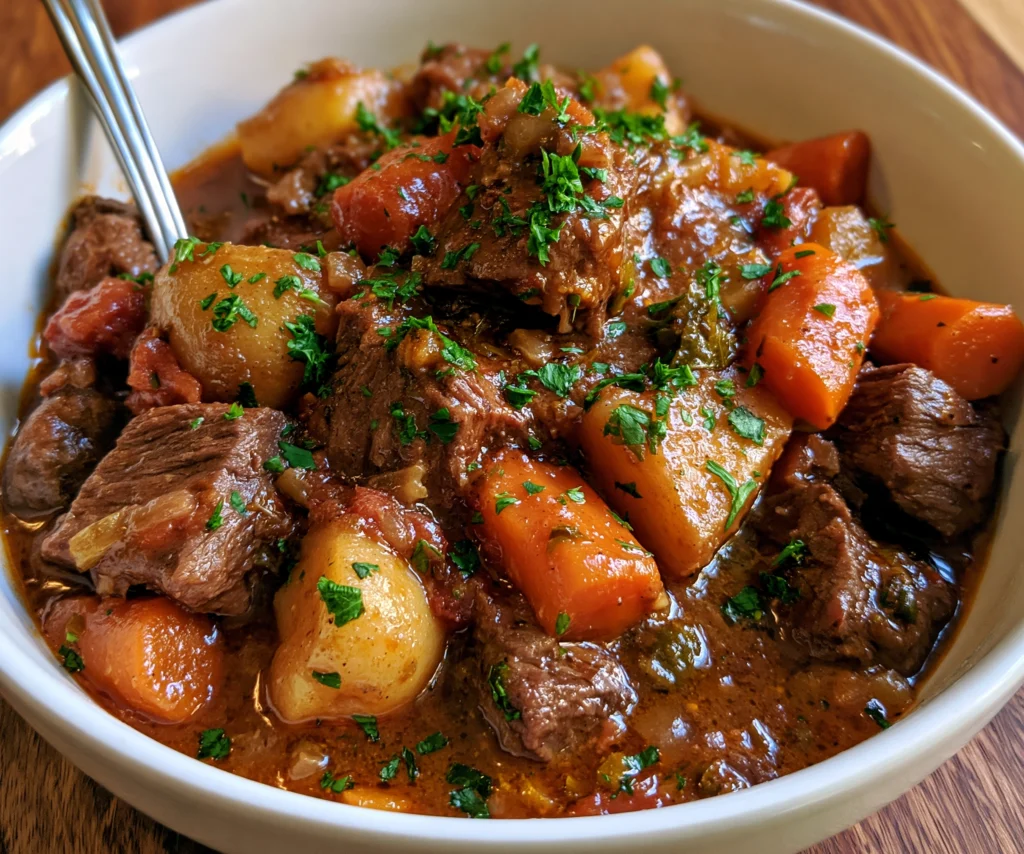
Beef Stew is chuck seared in batches, simmered low with thyme and bay, and finished with vegetables added late so they stay intact. The gravy turns thick and savory, the beef turns fall-apart tender, and the whole pot tastes even better the next day. Serve it with crusty bread for dunking, and let one pot carry a cold evening.
Beef Stew is the cold-day bowl I return to every winter, the one that rewards patience rather than effort. Chuck, vegetables, and a savory broth simmer quietly into something far greater than their parts. It is the bowl you crave when the weather turns, best served with crusty bread for dunking.
The method is simple but not rushed: sear well, simmer low, and add the vegetables late. That patience is what separates a rich, thick stew from a thin, tired soup. If you enjoy slow-simmered beef dinners, browse our Beef recipes for more comfort cooking.
What I love most is how little active work this stew demands. The oven or stovetop does the long simmer while you go about your day, and the pot greets you with deep flavor at dinner. It is a recipe worth keeping, and one that improves overnight.
It also stretches beautifully, which matters when the table grows. A second pot of broth and a few more vegetables turn the same method into dinner for a crowd, and the pot itself asks for nothing more than an occasional stir. That generosity is part of why this stew has stayed a winter staple for so long.
Why Chuck Makes the Best Beef Stew
Chuck makes the best Beef Stew because its connective tissue and marbling slowly melt into gelatin during a long simmer, giving both tender meat and a rich, full-bodied gravy. Lean cuts dry out over the same time, turning stringy instead of silky. Chuck starts tough and finishes spoon-tender, which is exactly the transformation a stew promises.
Cut the chuck into 1 and 1/2-inch cubes, keeping the fat and connective tissue attached, since those are what enrich the sauce. Uniform cubes cook evenly, so take a minute to trim only the driest outer bits and leave the marbling alone. That marbling is flavor, and it pays off after two hours of gentle heat.
The flour dusting deserves a note too, since it does more than brown the meat. It dissolves into the braising liquid and gives the gravy its first body, so the sauce starts thickening long before any slurry. Keep the dusting light, since too much flour turns pasty rather than silky.
Ingredients
For the Beef:
- 2 lb beef chuck, cut into 1 and 1/2-inch cubes
- Salt and black pepper, to taste
- 2 tbsp flour, for dusting
- 2 tbsp olive oil
For the Vegetables:
- 1 onion, diced
- 3 carrots, cut into 1-inch pieces
- 3 celery stalks, cut into 1-inch pieces
- 1 lb potatoes, cut into 1 and 1/2-inch chunks
- 3 garlic cloves, minced
For the Braising Liquid:
- 2 tbsp tomato paste
- 4 cups beef broth
- 1 tbsp Worcestershire sauce
- 2 tsp fresh thyme leaves (or 1 tsp dried)
- 2 bay leaves
To Serve:
- Crusty bread, for dunking
- Chopped fresh parsley, for garnish
Step-by-Step Method
Beef Stew follows a simple rhythm: sear, soften, simmer low, then add vegetables late for a thick, chunky finish.
1. Sear the Chuck in Batches
Pat the chuck dry, season with salt and pepper, and dust lightly with flour. Sear in olive oil over medium-high heat in batches, browning each side without crowding the pot. Deep browning builds the gravy’s color and flavor, so do not rush this step or wash the browned bits away.
2. Soften the Aromatics
Lower the heat to medium and cook the onion, carrots, and celery for 5 minutes until the onion turns translucent. Add the garlic in the last minute until fragrant, then stir in the tomato paste and cook until it darkens to brick red. That darkening step deepens the whole stew.
3. Deglaze and Simmer Low
Pour in the beef broth and Worcestershire, scraping up every browned bit from the pot bottom. Return the beef with its juices, add the thyme and bay leaves, and bring to a gentle simmer. Skim any foam that rises in the first minutes, since it keeps the broth clear and clean-tasting. Cover and cook on low for 1 to 1 and 1/2 hours, until the beef starts to yield to a fork.
4. Add the Vegetables Late
Add the potatoes and carrots only now, then simmer covered for 35 to 45 minutes more, until the vegetables are tender but intact. Late addition is the whole secret, since vegetables added at the start dissolve into mush over two hours. Taste and adjust salt and pepper before serving.
5. Rest and Serve
Rest the stew covered for 10 minutes off the heat so the gravy settles and thickens slightly. Remove the bay leaves and thyme stems, spoon into warm bowls, and garnish with parsley. Serve with crusty bread, which is non-negotiable for sopping up the thick gravy.
When to Add the Vegetables
Beef Stew vegetables belong in the pot late, after the beef has already simmered for over an hour, because potatoes and carrots turn mushy in a two-hour braise. Adding them for the final 35 to 45 minutes cooks them through while keeping their shape and bite. The stew stays chunky and hearty instead of dissolving into a uniform mash.
Cut the potatoes and carrots into generous 1 to 1 and 1/2-inch pieces, since small dice overcooks even in the shorter window. Waxy potatoes hold their shape better than russets here, though russets work if you like a slightly thicker, starch-enriched gravy. Check tenderness with a fork at 35 minutes rather than guessing.
Thickening Beef Stew Gravy
Thickening Beef Stew gravy starts with the flour dusting on the beef, which dissolves into the braising liquid and gives the sauce its first body. If the gravy still looks thin at the end, stir a slurry of 1 tablespoon cornstarch and 2 tablespoons cold water into the simmering pot and cook 2 to 3 minutes. The gravy should coat a spoon without turning gluey.
If the gravy turns too thick, loosen it with a splash of warm broth rather than water, which keeps the flavor rich. Simmering uncovered for the last 15 minutes also reduces and concentrates the sauce, though it needs occasional stirring so nothing catches. Taste before serving, since reduction concentrates salt as well as flavor.
A wooden spoon test tells you when the gravy is right: drag the spoon through the sauce and watch how slowly the line fills back in. A slow fill means a coating gravy, while a fast flood means it needs more time or a slurry. Trust the spoon over the clock.
Serving, Next-Day and Freezing
Beef Stew serves beautifully with crusty bread and a simple green salad, letting the thick gravy and tender beef take center stage. A spoonful of horseradish cream or a sprinkle of parsley on top adds brightness without changing the classic character. Keep servings generous, since this is comfort food that invites seconds.
Beef Stew tastes even better the next day, as the overnight rest deepens the gravy and melds the flavors. Store it in the fridge for 3 to 4 days and reheat gently, adding a splash of broth if the gravy thickened overnight. Each serving has approximately 420 calories, though values vary by brand and cut. For freezing, cool completely and freeze for up to 3 months, then thaw overnight and reheat low and slow.
For a different bowl in the same family, try Old-Fashioned Vegetable Beef Soup, which is a vegetable-forward soup rather than this chunky chuck stew. For more brothy comfort, explore our soup recipes and our salads and sides.
Conclusion
Beef Stew proves that the best comfort food does not require complicated technique, only good beef, a hot pot, and patience. Sear well, simmer low, add the vegetables late, and the pot rewards you with fall-apart beef and thick, savory gravy. It is the bowl worth keeping in your winter rotation. Keep this pot in your winter rotation, since few dinners reward patience as generously as this one does.
Give this recipe a try this cold season, and I would love to hear your variations — your vegetables, your herbs, or your own gravy trick. For more slow-simmered comfort, browse our Beef recipes and our soup recipes.
Frequently Asked Questions
What cut of beef is best for stew?
Beef Stew needs chuck, since its connective tissue and marbling melt into gelatin over a long simmer and enrich the gravy. Lean cuts like sirloin dry out and turn stringy over the same time. Cut the chuck into 1 and 1/2-inch cubes and keep the marbling attached for the richest result.
Why are my vegetables mushy?
Mushy vegetables almost always mean they went in too early and simmered for the full two hours. Add potatoes and carrots only for the final 35 to 45 minutes, and cut them into generous 1 to 1 and 1/2-inch pieces. Waxy potatoes also hold their shape better than russets in a long braise.
Should I add wine?
Wine is optional, not required, for a rich stew. If you use it, pour in 1 cup of dry red wine with the broth and let it simmer a few minutes before covering, which cooks off most of the alcohol though it never disappears completely. Without wine, add a tablespoon of red wine vinegar or extra Worcestershire for depth.
Can I make it in a slow cooker?
Yes! Sear the beef and soften the aromatics on the stovetop first, since the slow cooker cannot brown properly. Transfer everything except the potatoes and carrots to the cooker, cook on low for 6 to 8 hours, then add the vegetables for the final hour. The gravy may need a cornstarch slurry at the end, since slow cookers trap more liquid.
How long does it freeze?
Beef Stew freezes well for up to 3 months in airtight containers, cooled completely before freezing. Thaw overnight in the fridge, then reheat gently on the stovetop with a splash of broth if the gravy thickened. Potatoes can soften slightly after freezing, so slightly undercook them if you know a batch is destined for the freezer.
Slow-Simmered Classic Beef Stew
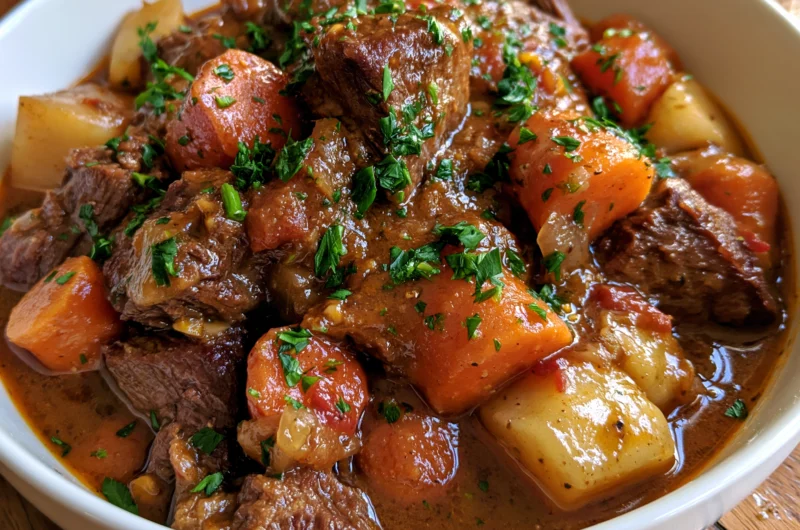
Chuck seared in batches and simmered low with thyme and bay, finished with late-added vegetables in a thick, savory gravy.
6
servings20
minutes2
hours30
minutes420
kcal2
hours50
minutesIngredients
- For the Beef
2 lb beef chuck, cut into 1 and 1/2-inch cubes
Salt and black pepper, to taste
2 tbsp flour, for dusting
2 tbsp olive oil
- For the Vegetables
1 onion, diced
3 carrots, cut into 1-inch pieces
3 celery stalks, cut into 1-inch pieces
1 lb potatoes, cut into 1 and 1/2-inch chunks
3 garlic cloves, minced
- For the Braising Liquid
2 tbsp tomato paste
4 cups beef broth
1 tbsp Worcestershire sauce
2 tsp fresh thyme leaves (or 1 tsp dried)
2 bay leaves
- To Serve
Crusty bread, for dunking
Chopped fresh parsley, for garnish
Directions
- Sear the Chuck in Batches: Pat the chuck dry, season, dust lightly with flour, and sear in batches over medium-high heat until deeply browned.
- Soften the Aromatics: Cook onion, carrots, and celery for 5 minutes, add garlic for 1 minute, stir in tomato paste and cook until brick red.
- Deglaze and Simmer Low: Add broth and Worcestershire, scrape up the browned bits, return the beef, add thyme and bay, cover, and simmer low for 1 to 1 and 1/2 hours.
- Add the Vegetables Late: Add potatoes and carrots and simmer covered for 35 to 45 minutes more, until tender but intact.
- Rest and Serve: Rest covered for 10 minutes, remove bay leaves and thyme stems, and serve in warm bowls with crusty bread.
Notes
- Vegetables go in only for the final 35 to 45 minutes, or they turn mushy. Wine is optional; if used, most alcohol cooks off but never disappears completely. Tastes even better the next day; fridge 3 to 4 days, freezer up to 3 months.




4 Comments